The cup and the mouse

Friends!

There’s this podcast, called the Post Atomic Horror. It reviews Star Trek. Lots of it. In a fun way. And I listen to it, and I giggle. And I steal their greetings 😉

Now, what do you do, when you like a review podcast? You review it of course! So that’s what I’m going to do today.

The short review: It’s great. But that won’t do. We need something longer.

How do you review a podcast with 400+ episodes? You pick a few.

This is the Post Atomic Horror podcast, with Ron “AAlgar” Watt and Matt Rowbotham.

cool-shield-template-coat-of-arms-template-with-banner-blank5

(Click to enlarge.)

Episode #148, “Emissary”

Summary: So, Matt and AAl start out with an impartial and balanced, ahem, intro to this series, Deep Space Nine. A gushing summary of “Emissary” is followed by a brief discussion of spoilers. Then they gush over the pilot, gush over the strangeness of Sisko, gush over the cast, and gush over the number of aliens in the cast. The opening credits disappoint a bit, and Matt loses his train of thought. But you can’t really blame him, he’s about to get married. Gosh!

Good thing: The mnemonic for the quadrants. Which lead me to find this picture. Remember: Good guys in the Gamma Quadrant, dummies in Delta.

star_trek_unity_one_map_wp_by_joran_belar

(Click to enlarge.)

Bad thing: Women being called “chicks”. Which is weird, because they claim to be feminists.

Drink *:

  • The difference between something you hate and something you love to hate.
  • Matt not liking religion.
  • “Without really spoiling anything…”
  • Serialization being new in the 90s.

Quote: This one is better if I don’t set it up. 17:46, AAl: “My house is a bit like [the space station] Deep Space Nine.”

* “Drink” means: You can use this cue in a drinking game.

Congratulations to Matt.

cool-shield-template-coat-of-arms-template-with-banner-blank-bar

Episode #162, “Second Sight” / “Sanctuary”

Summary: After a short meditation on the badness of bad things, the summary of the first episode is presented: Sisko wants to bang someone. We discuss the happiness of Sisko and the age of Jake, and then detour to Community. Arrogance can be fun and Sisko is a builder. Matt and AAl count their Irish friends, laugh attack #1. The second episode is summarized. The hideous dress was fun. Ingratitude is bad. Don’t look gift horses etc., laugh attack #2. Kira shouts, AAl’s wife shouts, Kira/Dax, Bert/Ernie, John/Paul, segue!

Good thing: So much laughing. But I could say that with most episodes.

Bad thing: So. These aliens show up and say “according to our prophecies, your planet is our new home”, and they are not welcomed, and they are surprised/angry. They should be happy! The Federation found them another planet! – Guys, I know you don’t like the whole religion thing. But saying they should be happy, that’s not cool. – This is related to the bitching about The Maquis. – Sometimes I just don’t agree with Matt and AAl.

Drink:

  • Colm Meaney is off making movies.
  • “Chose poorly.”
  • Noh-Jah Industries.

Quote: Regarding the origin of some very alien aliens. 43:40, AAl: “This is a whole other side of the galaxy.” Said with great enthusiasm.

AAl made a segue, that worked. And then called attention to it. But still. Great! (And I learned how to spell segue. Great!)

cool-shield-template-coat-of-arms-template-with-banner-blank-bar

Episode #176, “Past Tense”

Summary: We start with some important information: Matt is about to have a garage sale. Then comes the summary: Men are wearing hats. AAl reminisces (not) about seeing this episode the first time. Then we go through all the problems with the episode. The main characters are not characteristic and they don’t learn anything. Show, don’t tell. No solution is presented. Inconsistencies with other parts of the franchise. Oh, and it’s boring and preachy. Interlude: Matt checks his email. We briefly touch on talk of other people liking this episode. (So, this isn’t really a spoiler: This is the beginning of something, that spans many later podcast episodes.) Finally: The news.

Good thing: Apparently “Past Tense” references “City on the Edge of Forever”. Didn’t know that.

Bad thing: Okay, so some episodes fail, because we don’t know the persons in trouble. I’ve heard that particular issue so many times in basically the same (numerous) words. I tire of it a little.

Drink:

  • “San Francisco, the only city on Earth.”
  • “This isn’t really a spoiler.”
  • “Mullety rebels.”

Quote: About the preachy no-solutionness. 9:10, AAl. “I’m pretty sure there’s nobody in the world who’s pro homeless.”. Unfortunately there are.

Let’s never speak about this again. Yeah, right.

cool-shield-template-coat-of-arms-template-with-banner-blank-bar

Episode #184, “The Way of the Warrior”

Summary: One is excited about Worf joining DS9. One summarizes some of the double episode. One summarizes some more, including a phone call. One can’t tell the difference between Scots and Klingons. One validates and is in turn validated. One produces Star Wars fanfic. One giggles. One Worfs! One nostalgizes about long distance relationships. One plans to kill Alexander. One plays the quotes. One spoils. One signs off wrong. One realizes, that if one wants things done correctly, one has to do it oneself. – One should have thought about the limitations of this format a little longer.

Good thing: There’s a reference to a math/Trek joke I love.

Bad thing: Loving space battles. What to say. I don’t love space battles.

Drink:

  • Worf can’t remember Wesley’s name.
  • Sisko can’t count.
  • Worf always takes vacations.
  • “I don’t give a damn!”

Quote: Imagine Gowron getting his head stuck in a bannister. 10:43, Nate: “Somebody get the blood butter!”

Lots of laughing, giggling and happy improvisation. This can’t go on.

cool-shield-template-coat-of-arms-template-with-banner-blank-bar

Episode #207, “Soldiers of the Empire” / “Children of Time”

Summary: After some talk about drinking and a little summarizing we get to the existential questions: Are Klingons boring? How do spaceships work? Would Harry Mudd be friends with Penguin? Further summarizing leads to further questions: Is Lost bad? Did Old Odo go quietly crazy? Is Dax a timelord? Are freestanding ladders important?

Good thing: A short discussion finds, that Sisko is adorable with kids. I like guys understanding that kind of thing.

Bad thing: The chick thing. Sigh.

Drink:

  • Worf needs a vacation.
  • “We’ve said before…”
  • Sisko can’t count.
  • Worf can’t remember Alexander.
  • “This isn’t really a spoiler…”

Quote: An old Klingon being atypical. 3:54, Flonk: “He even let a Jem’Hadar baby keep his candy.” Just a tiny bit of a funny and energetic summary.

Will AAl and Matt recover from the reset button in that episode?

cool-shield-template-coat-of-arms-template-with-banner-blank-bar

Episode #219, “In the Pale Moonlight” / “His Way”

Summary: Greatness ahead! Summary! Wonderment! Squeeing! Quoting! Crying at this climax! Historicizing! Batmanning! Defining principles by their absence! Summary! Punning! Improvising! Music appreciating! Fanficcing! Quoting! Plugging! Disclaiming!

Good thing: Breaking the rule of always having a bad thing. They are your rules, break them if you want to.

Bad thing: A lot of this episode is jubilation that Sisko and Garak lied and cheated. While I find that kind of stuff fascinating, ultimately I condemn lying and cheating and couldn’t wholeheartedly like an episode, that depicts it as necessary.

Drink:

  • “Major.”
  • “Wesley has killed a guy.”
  • “Who says there is?” (Or isn’t.)
  • Shipping Garak and Bashir.

Quote: Garak intimidates a guy by saying “I’ll come by your quarters to check on you later.” 18:03, Gav: “Imagine how Julian feels when he says that to him.”

The hosts certainly didn’t cheat out of recording that episode.

cool-shield-template-coat-of-arms-template-with-banner-blank-bar

Episode #235, “What You Leave Behind”

Summary: AAlgar Productions! We just have time to debate this being the end of DS9, and then we get a summary from Speedy AAl and Musical Matt. There’s also a poem. Ship porn leads to drooling. Of course Bashir and Garak are shipped. (A different kind of ship porn.) (If they do it on the Defiant, space ship porn.) Oprah hands out ambassadorships. We learn through punning that kanar is made from (bespooned) eagle juice. Is that spunning? Pooning? Weyoun apparently died a million times. I just think AAl can’t count. Oh, there should have been more Jack and Sisko. Quick, what’s the difference between the Gorn and the Breen? Between Garak and Bashir? (And if you can’t tell the difference, is Garak just a narcissist?) Is Dukat the best villain ever?

Good thing: That poem is just superb.

Bad thing: The podcast has already covered Nemesis. I would’ve done the podcast in chronological order. I think.

Drink:

  • Shipping Garak and Bashir.
  • “I don’t give a damn!”
  • “Honey.” (Like “muffin”, rare, take 2 drinks.)
  • Sisko can’t count.
  • Keeping an open mind about Voyager. (Without the jingle, only half a drink.)

Quote: 1.03.00, AAl: “I will say, I do love, all of the listeners, and I’ve heard this a lot, the listeners who are like, yeah, I’ve just never watched that one, but you guys are so enthusiastic about it, I gave it a shot and it’s great.” Hurray for more Star Trek being watched! Hurray for people watching stuff, before dismissing it!

So, that’s 7 episodes for 7 seasons of trek, right? I don’t know, I can’t count.

cool-shield-template-coat-of-arms-template-with-banner-blank-bar

So. What else to say? There are some memorable episodes spread out over the whole run. The ones where AAl was jingling an open mind about Voyager (maybe episode 225 was one of them?). The one Matt did while being dead (episode 64). The one AAl did from a bucket (episode eh). The one where Matt simply wrote a fanfic instead of a summary (episode hm). All the episodes with a live audience, and among them I especially recommend this one:

Yeah, that’s video! Although I really could use a good video interview as well.

And then I haven’t mentioned the supplementals. I’ve just discovered I’m mentioned in #28. Squee! Surprise! ETA: And in #43, at 0.52. And #46, at 32.30. (Woohoo!)

Maybe you have a burning question now. Cup and mouse? Listen to episode 148 and on, just a few episodes, and you’ll get it. For those who haven’t listened to a lot of PAH, this review is also a pastiche of their style. And the shield above is fanart. And of course there’s the beginning of a drinking game. And a review!

A review from tvtropes.

And some more of my stuff:

See you, folks.

Spredte akademikere og afrofuturisme

Vi har allerede haft Akademikere og afrofuturisme og Nyere akademikere og afrofuturisme. Den her gang ser vi på et par artikler, der strækker sig over forskellige kilder og årstal.

02-2018-forside-page-001-e1520327843668.jpg

CR The New Centennial Review Volume(2) · June 2003 – Kodwo Eshun. Further Considerations on Afrofuturism

https://www.researchgate.net/publication/27225560_Further_Considerations_on_Afrofuturism, gratis

Abstractish – Imagine a team of African archaeologists from the future—some silicon, some carbon, some wet, some dry—excavating a site, a museum from their past: a museum whose ruined documents and leaking discs are identifiable as belonging to our present, the early twenty-first century. Sifting patiently through the rubble, our archaeologists from the United States of Africa, the USAF, would be struck by how much Afrodiasporic subjectivity in the twentieth century constituted itself through the cultural project of recovery. In their Age of Total Recall, memory is never lost. Only the art of forgetting. Imagine them reconstructing the conceptual framework of our cultural moment from those fragments. What are the parameters of that moment, the edge of that framework? […] To conclude: Afrofuturism may be characterized as a program for recovering the histories of counter-futures created in a century hostile to Afrodiasporic projection and as a space within which the critical work of manufacturing tools capable of intervention within the current political dispensation may be undertaken. The manufacture, migration, and mutation of concepts and approaches within the fields of the theoretical and the fictional, the digital and the sonic, the visual and the architectural exemplifies the expanded field of Afrofuturism considered as a multimedia project distributed across the nodes, hubs, rings, and stars of the Black Atlantic. As a tool kit developed for and by Afrodiasporic intellectuals, the imperative to code, adopt, adapt, translate, misread, rework, and revision these concepts, under the conditions specified in this essay, is likely to persist in the decades to come.

“Power now deploys a mode the critic Mark Fisher () calls SF (science fiction) capital. SF capital is the synergy, the positive feedback between future-oriented media and capital. The alliance between cybernetic futurism and “New Economy” theories argues that information is a direct generator of economic value. Information about the future therefore circulates as an increasingly important commodity. It exists in mathematical formalizations such as computer simulations, economic projections, weather reports, futures trading, think-tank reports, consultancy papers—and through informal descriptions such as sciencefiction cinema, science-fiction novels, sonic fictions, religious prophecy, and venture capital. Bridging the two are formal-informal hybrids, such as the global scenarios of the professional market futurist.”

Et nyt begreb, jeg ikke er stødt på før. I det hele taget er den her artikel lidt abstrakt. Lidt teoretisk. Og samtidig et stykke fiktion noget af vejen.

Heldigvis er der også konkrete eksempler. Kunstnere: Georges Adeagbo, Meshac Gaba.

Nogen siger, at fremtiden er grum for afrikanere. Og udtalelser af den slags kan gå i opfyldelse. Afrofuturisme er et forsøg på at sige noget andet.

Flere navne: Sun Ra. The Last Angel of History. Juan Atkins, Derrick May. Osv.

Science Fiction Studies, Vol. 37, No. 1 (March 2010), pp. 107-109Review: Feminism, Afrofuturism, and the Redefinition of Science Fiction. Reviewed Work: Afro-Future Females: Black Writers Chart Science Fiction’s Newest New-Wave Trajectory by Marleen Barr – Review by: Ritch Calvin

https://www.jstor.org/stable/40649589

Bogen indeholder både essays og fiktion.

Er sf af sorte “i virkeligheden” fantasy? Hvem definerer virkeligheden?

De 3 vigtige essays, gratis:

https://saciesite.files.wordpress.com/2017/07/afro-future0afemales0ablack-writers0achart-science-fiction_s-newest0anew-wave-trajectory.pdf

Indhold, fiktion

Scenario 2, 2018, Afrofuturisme, Barbara Hilton

http://www.scenariomagazine.com/product/afrofuturism/

Afrofuturism is on the rise. It is both a genre and a way of thinking that blends Afro-culture, science fiction, magical realism, technology, and traditional African mysticism. It takes many forms, and tells many different stories, but one common feature is that Afrofuturists fight for equality and black people’s right to a place in the future. This issue’s main feature takes a closer look at the cultural movement and its frontline fighters.

Bladet findes både på dansk og engelsk. Jeg har læst artiklen på dansk. 🇩🇰🇩🇰🇩🇰

Diverse fakta + interview med ca. 3 eksperter.

  • Ytasha Womack, manuskriptforfatter, forfatter, afrofuturist.
  • Osborne Macharia, fotograf.
  • Niels Dalgaard, ph.d i nordisk litteratur, ekspert i science fiction, forfatter og redaktør på det danske science fiction-tidsskrift Proxima. 👍🏻👍🏻👍🏻

SFRA Review, vol. 327, Winter 2019, pp. 48-51. – “Afrofuturism’s Specter: Alternate History, Racial Capitalism, and Nisi Shawl’s Everfair.” Sean Guynes

https://seanguynes.files.wordpress.com/2019/03/afrofuturisms-specter.pdf gratis

Everfair is about the creation of a multi-racial, intergenerational, queerfriendly, disability-championing, anti-colonial state in Central Africa, in and around the land formerly known as the Belgian Congo, and which is today in our world occupied by the Democratic Republic of the Congo, Rwanda, and Burundi. The novel spans the years 1889 to 1919, telling the story of the initial impetus behind the creation of Everfair by the British socialist Fabian society, together with a black American orator and former slave (modeled on George Washington Williams), and some money from a black missionary society, all the way up to the integration of indigenous tribal governments into the new state, and the decolonial revolution that the socialists, Christians, and indigenous Africans of Everfair lead against King Leopold of Belgium, with the novel ending shortly after WWI and a series of treaties that ratify Everfair’s existence in the international legal sphere.

“I want to […] suggest that Afrofuturism, particularly in the American black diaspora, is at its core a response to formations of racial capitalism.”

“Shawl’s novel charts the birth of a utopian Afrofuturist project by asking not “what could be, in the future, if” but instead “what if” the most devastating genocide in modern African history had become the cause for anti-colonial struggle and decolonization half-a-century early.”

Nyere akademikere og afrofuturisme

For ikke så længe siden kiggede jeg på Science Fiction Studies #102, July 2007, der altså er 12 år gammel. Den her gang kigger jeg på et tidsskrift, som ligger gratis på nettet og  er fra sidste år.

MOSF Journal of Science Fiction
Vol 2, No 2 (2018)
Special Issue on #Afrofuturism

https://publish.lib.umd.edu/scifi/issue/view/31/showToc

Jeg læste også der her nummer, da det var nyt.

Screenshot from 2019-05-05 16-33-56.png

Aisha Matthews. Foreword to the Special Issue on Afrofuturism

Forskellige definitioner.

Essay

Lidia Kniaź. “A Glitch in the Matrix”: A Reflection on Shabazz Palaces’ “Welcome to To Quazarz” or a New Wave of Afrofuturist Music Videos

Noget om musik-videoer, jeg vist ikke kunne finde.

Melanie Marotta. Nnedi Okorafor’s Afrofuturism and the Motif of Hair

Okorafor har oplevet, at fremmede bare rørte ved hendes “mærkelige” hår. Hår breder sig også i nogle af hendes værker. Bintis hår er vigtigt, bl.a. fordi hun smører sit hjemlands jord i det. Senere bliver hendes ændrede hår tegn på, at hun selv er blevet fundamentalt ændret. Hun kan gemme sig bag sit hår. I “Hello, Moto” bærer hovedpersonen paryk.

Jalondra A Davis. Power and Vulnerability: Black Girl’s Magic in Black Women’s Science Fiction

Abstract – #Blackgirlmagic has become a mode of digital resistance against the devaluing of black women and girls. But it has also raised criticism by black feminists who question the political potential of its focused on glamorized, and often commercialized black femininity, its ableism and centering of beauty and, most of all its reinscription of a strong black woman narrative that trivializes black women’s pain and demands their labor rather than addressing the conditions that necessitate their allegedly superhuman strength (Hobson, 2016). This analysis of Black women’s science fiction proposes a different consideration of magic and Black girls, and identifies an archive of BlackGirlMagic that locates power within vulnerability and otherhuman possibility.

Parable of the Sower er en populær ting at analysere. Brown Girl in the Ring. Who Fears Death.

Amandine Faucheux, Isiah Lavender III. Tricknology: Theorizing the Trickster in Afrofuturism

Abstract – The antithetical convergences of myth and science, nature and technology, male and female, even human and animal create the liminal spaces from which the technological trickster emerges in Afrofuturism. Borrowing ideas from critical race, cyborg, and feminist theories along with thinking from animal studies, this essay outlines a few of the many possibilities of a trickster technology where this mutable and mythic figure triggers the breakdown of race and gender anxieties leading to the end of these interlocking oppressions in one kind of Afrofuture. Trickster technology may be defined as a black character’s pragmatic application of biopolitical knowledge to manipulate the environment to his or her own benefit. Blackness itself effectively counteracts the “racializing assemblages” of the white world that produced “a conglomerate of sociopolitical relations that discipline humanity into full humans, not-quite-humans, and nonhumans” (Weheliye, 2014, p. 3). Put simply, we explore types of shape-shifting as a trickster technology which revises ideologies of difference with respect to race, gender, and class to actualize Afrofuturism’s promise of freedom in Octavia Butler’s Wild Seed (1980), and Nalo Hopkinson’s “Ganger (Ball Lightning)” (2001) and Midnight Robber (2000).

‘… with race understood “as a labor-based technology”.’ Ouch.

Ganger: “an electro-sex suit that transforms into a trickster figure with the ability to challenge the two protagonists’ identities.”

Jeg er ikke helt sikker på, hvordan dragterne bliver en “trickster”.

Granny Nanny i Midnight Robber er bl.a. opkaldt efter Anansi, en stor filur. Men vi bliver også snydt af den mindre ai, eshu.

Johan Lau Munkholm. Promises of Uncertainty: A study of afrofuturistic interventions into the archive

Abstract – The concept ‘Afrofuturism’ was a subversive offspring of an enthusiastic celebration of the Internet’s imagined potentiality in the 1990s in white tech-circles. It has since become a multifaceted and complex gathering of artistic expressions, political interventions and imaginative speculation in diasporic culture. In this article, it is especially explored as a temporal disruption of the official archives of history that organize and represent temporality in an ordered and rigid fashion for the benefit of the imperial powers that have historically subjugated the African Diaspora with consequences for the past and the future. The temporal revisionist practices akin to afrofuturistic epistemology are investigated through two figural prisms: The Data Thief from John Akomfrah’s film The Last Angel of History and jazz legend Sun Ra. These figures represent different yet overlapping examples of temporal rebellion against official history by upsetting historical linearity and creating futuristic paths of unknown virtuality. The temporal field that the Data Thief and Sun Ra open for exploratory enquiry is further explored through Walter Benjamin’s meditations on weak messianism and Jacques Derrida’s musings on the archive and spectrology.

Det lyder som om, afrofuturisme også kan indeholde rumvæsner, men de vil nok opføre sig på en anden måde.

Slaver blev bogstaveligt kidnappet af fremmede (alien abduction).

Sarah Olutola. Blood, Soil and Zombies: Afrofuturist Collaboration and (Re-)Appropriation in Nalo Hopkinson’s Brown Girl in the Ring

Abstract – In her Afrofuturist novel, Brown Girl in the Ring, Nalo Hopkinson unravels the psychological, cultural and historical trauma of the zombie figure. More than simply a supernatural element of the text, the zombie, and more particularly the latent psycho-social trauma it fantastically embodies, forms the very bedrock of the Afrocentric setting in a way that exposes and critiques the continued suffering of African diasporic peoples under racialized economic structures. While the origins of the zombie document Haitian anxieties surrounding slave labor, the zombie’s contemporary form, in reflecting middle class preoccupations with global capitalist consumption, highlights the ways in which cultural appropriation of Afrocentric culture helps perpetuate a larger systemic cycle of violence that erases black pasts while collapsing black futures into an uncertain present. This paper will explore the ways in which Hopkinson uses her vision of a dystopian Toronto that entraps and vilifies its poor racialized citizens (for the protection of its larger population) to challenge neoliberal global dominance. Through her re-privileging of Afro-Caribbean spiritual systems and knowledge frameworks, Hopkinson suggests that only by challenging and seeking alternatives to the epistemologies inherited by European modernity can we hope to counteract the violence they continuously enact upon global populations and revive hope for the prosperity of black life in the future. However, while her novel implicates cultural appropriation as part of a larger, white supremacist institutional regime, her novel’s framing of Afrocentricity on diasporic Indigenous soil highlights further challenges of Afrocentric representation in Afrofuturist literature.

Zombien symboliserer den fattige. Og på en måde, hvor den fattige er problemet, ikke symptomet på kapitalisme.

Når en tekst placerer afroamerikaneren centralt, risikerer den at glemme indianeren.

John Gordon Russell. Frozen Journey: Science Fiction, Blacks, Race, and the Limits of Speculative Practice

Abstract – This paper examines the pre-afrofuturistic representation of blacks in science fiction, who for much of the genre’s history have been presented through the distorted prism of racial stereotypes. I argue that despite characterizations of the genre as progressively liberal, its engagement with issues of race and racism has largely been, like the larger society of which it is part, characterized by alternating periods of stasis and momentum. When the genre has dealt with race and racism, it has generally preferred to do so in the form of allegory and metaphor in which alien and robotic others substitute for real-world others. Moreover, despite its lofty “sense-of-wonder” pledge to explore vast, uncharted imaginative ideoscapes, when it comes to race, the genre has traditionally been remarkably grounded, rearticulating rather than subverting tired tropes, its depiction of blacks and other people of color mired in predictable clichés not sublime paradigm shattering, visionary splendor, In the end, the treatment of race in science fiction has largely articulated an abstract, intellectual antiracism that does not necessarily apply to an authentic racial tolerance toward actual racial or ethnic groups and by an inability to write beyond the very intolerance it ostensibly critiques.

Silverberg-bashing! Stadig en populær sport.

Star Trek-bashing. Hm. Men korrekt. Hvis man er racistisk overfor borger, så kommer de ikke rendende og klager. (Nyt ord: xenoface.) Og i fremtiden er alle racer lige, på en udpræget amerikansk måde. Fordi det stræber alle jo efter.

Resnick-bashing!

Books in Review

Courtney Novosat, Paul Piatkowski, Tom Lubek. Afrofuturism 2.0: The Rise of Astro-Blackness

11 essays. De fleste mangelfulde, lader det til.

Speculative Blackness: The Future of Race in Science Fiction

Hm. Terry Carr udgav sig en overgang for at være sort. En detalje i bogens undersøgelse af bl.a. fanzines og fjernsyn.

The Racial Horizon of Utopia: Unthinking the Future of Race in Late Twentieth-Century American Utopian Novels

Det er svært at skrive utopier. Her bliver der bl.a. kigget på forsøg af Delany og Butler.

Når kultur bliver overtaget, lidt

Cultural appropriation. Det er et lidt svært begreb for mig. Er det noget, jeg er udsat for? Lad mig se.

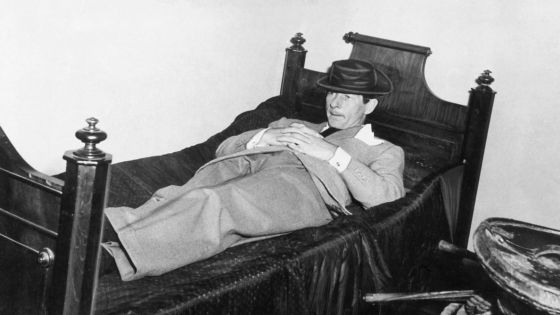
Danny Kaye synger om København. Fuck sådan en som mig, der helst vil kalde byen København, men kan leve med “Copenhaygen”. Men næ nej, det ender med at blive “Copenhahgen”.

Nåh ja. Der var også det der med sengen. Men det var vist ikke hans idé.

Jeg vil ikke begynde at lave en liste over de film og serier, der lader skuespillere tale dårligt tysk, dansk, svensk osv.

Vi behøver ikke tale korrekt kode

Mifunes sidste sang er på nogle måder en bemærkelsesværdig film. Men det er også en film om, at Lolland er fattigt, sølle, langt ude på landet. Faktisk ved festlige lejligheder også evnesvagt, ildelugtende og manipulerende. Mums. Som eksil-lollik: Det er altså ikke det eneste, man kan sige.

ETA: Jeg havde nær glemt, at som trekkie og i det hele taget fan af science fiction, så er der fordomme om mig. Hm. Men kan man tælle det med? Nå jo. Når “jeg” er med i Big Bang Theory, fordi jeg er morsom.

Okay, det er ikke helt afrofuturisme det her. Det er bare mig, der prøver at forestille mig afrofuturismes grundlag. Ligesom i det tidligere indlæg Er jeg med?

Vores eget arkiv

Archive of Our Own, en hjemmeside med fanfic, er blevet finalist til en Hugo i kategorien best related work. Det er kategorien for ting, der ikke kan nomineres i nogle andre kategorier.

Nu er de, i god tid, kommet med deres eget bidrag til Hugo-pakken, de dokumenter mange af os bruger til at vurdere finalisterne ud fra.

2019 Hugo Awards Voter Packet: Archive of Our Own (AO3).

Jeg og andre har spekuleret på, hvad det betyder, at de er en finalist. Er det al fanfic fra 2018, de skal bedømmes på, eller hvad?

Deres eget bidrag trækker i retning af en anden fortolkning, som andre også har slået på: Det er hjemmesiden, der er finalist. Ikke indholdet, men softwaren. Det er i den her sammenhæng relevant, at hjemmesiden har fået ny funktionalitet sidste år. Men pakken peger også på, at hjemmesiden bestyres på en bestemt måde: stor lydhørhed overfor brugernes ønsker, fx. Alle indtægter er donationer.

Der er også lidt historie.

Det er en spændende finalist, det her.

Midnatstyven

Anmeldelse af Midnight Robber, af Nalo Hopkinson.

Skitse: Oho. Like it starting, oui? Don’t be frightened, sweetness; is for the best. I go be with you the whole time. Trust me and let me distract you little bit with one anansi story.

Toussaint er en planet, der bestyres (tror jeg) af Marryshow Corporation. (Via et dimensionsslør kan man komme til planetens fætter, New Half-Way Tree, der ikke er nær så velordnet.)

Tan-Tans far er borgmester. Mor er måske far utro.

Huset har en ai, kaldet eshu. (Den er ikke så smart og forstår fx ikke jalousi.) Planeten har en ai, kaldet Granny Nanny, Granny Nansi’s web, Grande Nanotech Sentient Interface eller Grande ‘Nansi Web. Mennesker kommunikerer med begge dele via noget indbygget. Desuden kan man synge til GN, via nannysong. En lille gruppe fravælger alt det her computer-snavs.

Tilsyneladende er alle på planeten sorte. Forbrydere bliver sendt til fætter-planeten.

Tan-Tan leger, at hun er Midnight Robber, en fiktiv (?) person. Det bliver ekstra vigtigt, da far forlader mor.

Er det science fiction? Ja.

Temaer: Jeg vidste lidt om bogen på forhånd. Granny Nanny osv. (som man kunne kalde cyberpunk) fyldte en del i hovedet på mig. Automatisering er helt normalt, og eneste undtagelse er kokke og andre kunstnere, der arbejder frivilligt. (Obs. Det er okay at være kok. Det er ikke okay at løbe foran en rickshaw.) Jeg blev overrasket, da vi pludselig forlod alt det.

Jeg vidste også godt, hvad forbindelsen er mellem Tan-Tan og bogens titel. Igen kom det bag på mig, at det spillede en mindre rolle.

Det var til gengæld en stor overraskelse, at Tan-Tan har elendige forældre. At hendes far på et tidspunkt lader en duel afgøre sit forhold til moderen. At en intelligent art på New Half-Way Tree så åbenlyst bliver udsat for racisme. Og at Tan-Tan får ptsd eller noget i den retning. Øv.

Er det godt? Nemlig. Som jeg antyder, skal man dog kunne leve med et (for os) uvant engelsk. Og så skal man ikke tænke så meget over, at vi 2 gange kommer over i et nyt hjørne af verden via flugt.

Hobbit-doku

Der ligger noget spændende på Youtube.

Her har du første afsnit. Men der er et par stykker til.

Det første afsnit gør noget, masser af andre også gør. Hvorfor virker trilogien om hobbitten ikke, sammen med masser af klip, der illustrerer problemerne.

Men i slutningen af første afsnit sker der noget nyt. Værten tager faktisk til New Zealand. I første omgang for at interviewe en (skuespiller der spillede) dværg. Der er nemlig masser at sige om at have en rolle, der langsomt bliver mindre, fordi store selskaber ændrer filmenes fokus, klipper lidt her, klistrer lidt derovre.

Siden bliver feltet udvidet. Film-trilogien involverede regeringen, fagforeninger og meget andet godtfolk, og rigtig mange af de ansatte føler sig snydt.

Jeg tror, det her er lavet af en amatør, en fan. Men niveauet er professionelt. Og rigtig spændende.

Note: Dokumentaren er nomineret til en Hugo.

Mest afrofut!

(Og hvor går man hen efter den titel?)

Er Nalo Hopkinson afrofuturist? Tja? Afrofuturism: Synecdoche is Not the Same as Solidarity.

Ret nyt tweet.

Samantha Bee snakker afrofuturisme! Black Future Month.

Er Nnedi Okorafor afrofuturist? Noget af tiden. In Conversation: Nnedi Okorafor on Venom, George R.R. Martin and Why Artists Can’t Have Mentors.

I øvrigt har jeg læst Report From Planet Midnight. En god, lille bog. Den indeholder bl.a. et essay, der oprindeligt var en tale, med visse teater-elementer. Så noget af talen er hun ikke sig selv, men et rumvæsen, der ikke kan forstå vores måde at tale om race på.