Science fiction predictions XXIV

Exploring Creativity with Ursula K. Le Guin: (22:40)

“People say science fiction is about the future. Most science fiction isn’t about the future. It’s simply a sort of alternative world, and it’s not a serious prediction. There are some people in science fiction who say they are predicting what they think’s going to happen, but most of us don’t. We are simply saying: What if the world went this way? What if this happened? And you’re not supposed to take it seriously as prediction.”

#ThisWeeksFiddler, 20240927

This week the question is: Can You Win at “Rock, Paper, Scissors, Lizard, Spock?”

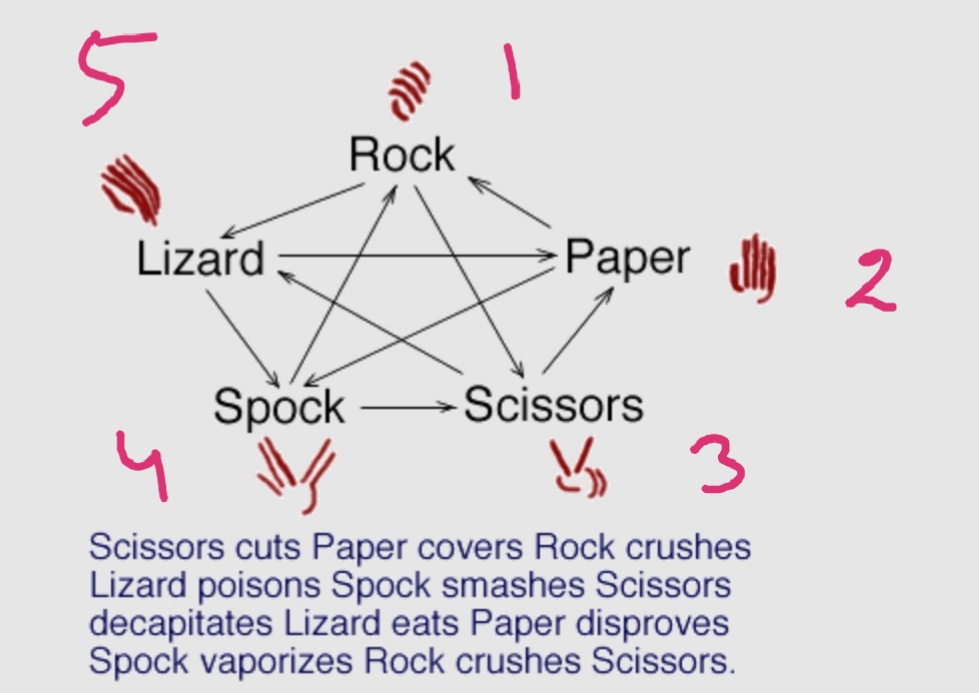
In a game of “Rock, Paper, Scissors,” each element you can throw ties itself, beats one of the other elements, and loses to the remaining element. In particular, Rock beats Scissors beats Paper beats Rock.

“Rock, Paper, Scissors, Lizard, Spock” (popularized via The Big Bang Theory) is similar, but has five elements you can throw instead of the typical three. Each element ties itself, beats another two, and loses to the remaining two. More specifically, Scissors beats Paper beats Rock beats Lizard beats Spock beats Scissors beats Lizard beats Paper beats Spock beats Rock beats Scissors.

Three players are playing “Rock, Paper, Scissors, Lizard, Spock.” At the same time, they all put out their hands, revealing one of the five elements. If they each chose their element randomly and independently, what is the probability that one player is immediately victorious, having defeated the other two?

And for extra credit:

The rules for “Rock, Paper, Scissors” can concisely be written in one of the following three ways:

  • Rock beats Scissors beats Paper beats Rock
  • Scissors beats Paper beats Rock beats Scissors
  • Paper beats Rock beats Scissors beats Paper

Each description of the rules includes four mentions of elements and three “beats.”

Meanwhile, as previously mentioned, a similarly concise version of the rules for “Rock, Paper, Scissors, Lizard, Spock” (and adapted from the original site) is:

  • Scissors beats Paper beats Rock beats Lizard beats Spock beats Scissors beats Lizard beats Paper beats Spock beats Rock beats Scissors

In this case, there are 11 mentions of elements and 10 “beats.” Including the one above, how many such ways are there to concisely describe the rules for “Rock, Paper, Scissors, Lizard, Spock

Læs mere: #ThisWeeksFiddler, 20240927

For my own sanity:

Highlight to reveal (possibly incorrect) solution:

Program solution.

And for extra credit:

Program assistance.

#ThisWeeksFiddler, 20240920

This week the question is: Can You Make a Toilet Paper Roll?

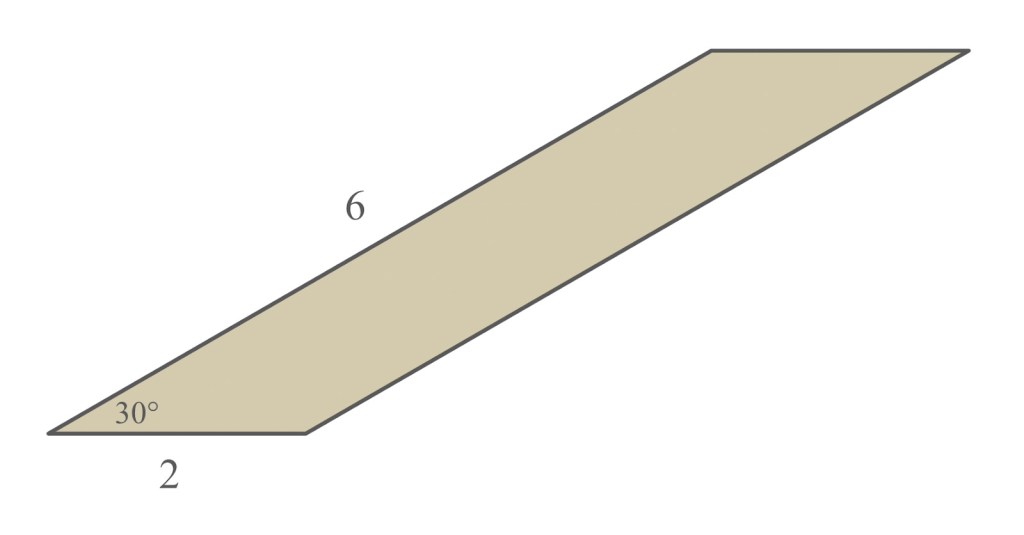
Suppose you have the parallelogram of cardboard shown below, which has side lengths of 2 units and 6 units, and angles of 30 degrees and 150 degrees:

By swirling two edges together, it’s possible to neatly (without any overlap) generate the lateral surface of a right cylinder—in other words, a toilet paper roll! (If you’re not convinced, try gently tearing a toilet paper roll along its diagonal seam and then unwrapping it into a flat shape. You get a parallelogram!)

Determine the volume of a cylinder you can make from this particular piece of cardboard.

And for extra credit:

Suppose you have a parallelogram with an area of 1 square unit. Let V represent the average volume of all cylinders whose lateral surface you can neatly make by swirling two edges of the parallelogram together.

What is the minimum possible value of V?

Læs mere: #ThisWeeksFiddler, 20240920

Highlight to reveal solution:

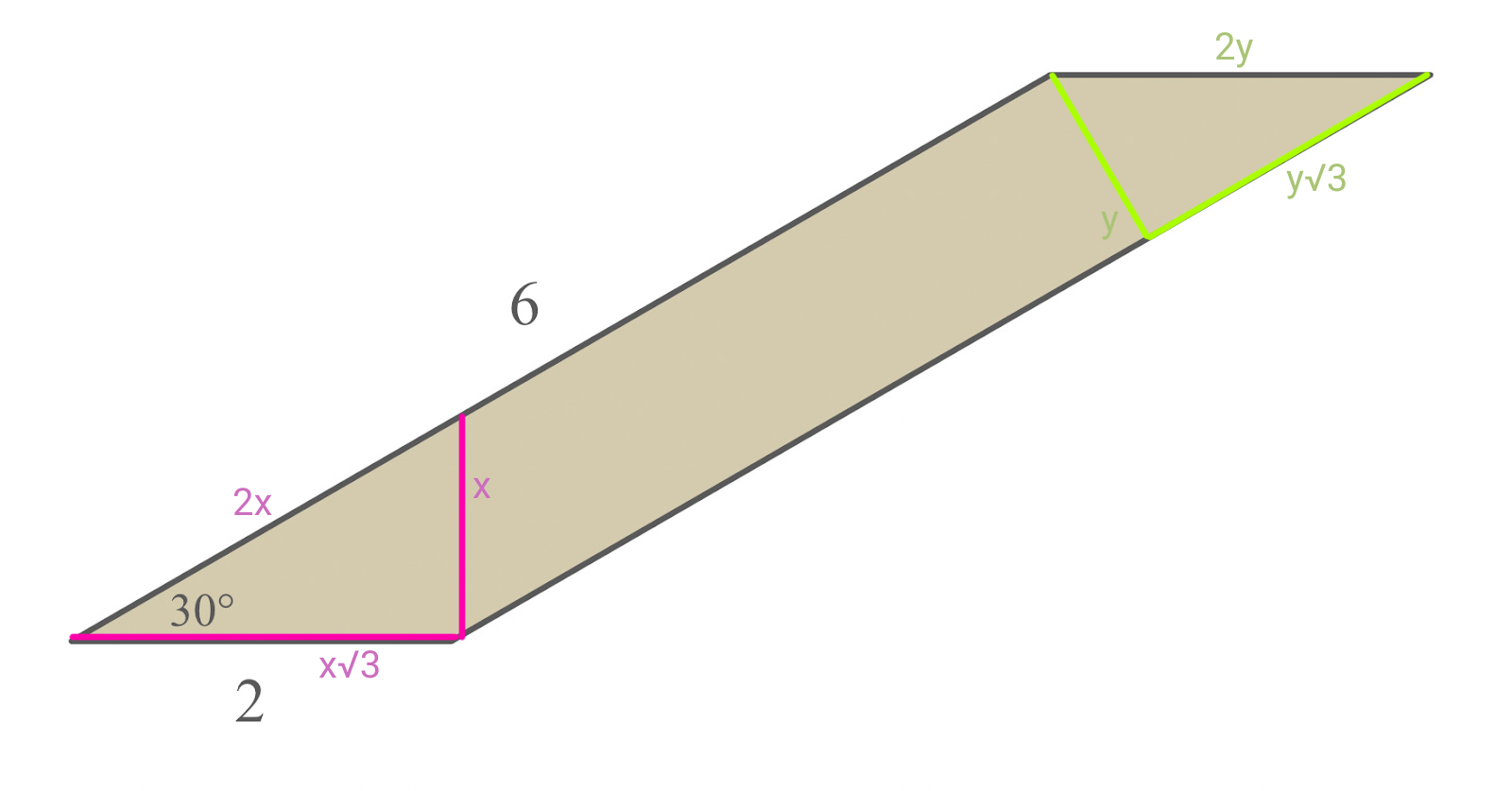
Figure 1.

Figure 1 shows, that if I construct my cylinder the traditional way, it will have a base with circumference 2. Therefore the radius of the base will be 2/2π = 1/π. Meanwhile the height h of the cylinder depends on x. The pink triangle demonstrates, that the length of the long edge, 2x, gives a height of x. 2x = 6 <=> x = 3. This means the volume of the cylinder is πr2h = π(1/π)2*3 = 3/π, about 0.955.

But there’s another way to construct a cylinder. The base could have circumference 6. (It would end up tilted in space, where the first one rests nicely on its base.) This base has radius 6/2Ď€ = 3/Ď€. The green triangle shows, that the height h of this cylinder is y, and 2y = 2 <=> y = 1. The volume of this cylinder is Ď€r2h = Ď€(3/Ď€)2*1 = 9/Ď€, about 2.865.

The way this riddler is worded, both solutions should be valid.

This seems too easy! Like there are other solutions. But for now, these should be 2 valid solutions.

And for extra credit:

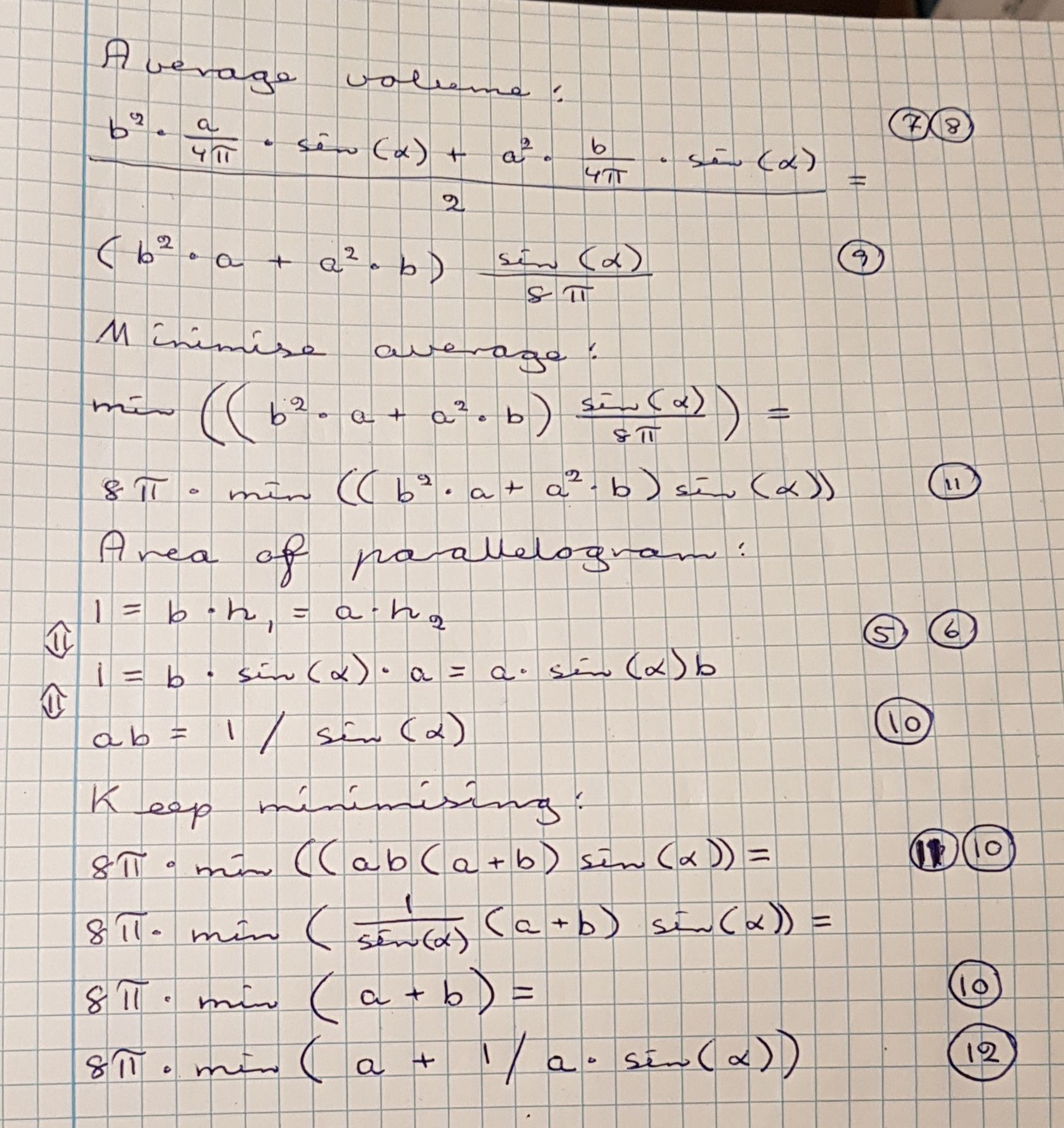
Calculation sheet 1 and 2. Wolfram Alpha result.

Let’s do the whole thing in more general terms. The parallelogram has sides a and b, a >= b, and angle α. b corresponds to height h1, a corresponds to height h2. In a small triangle, I have sides a*, b and h*. Further sin(α)/h* = sin(90°-α)/b = sin(90°)/a*. Rearranging gets h* = b * sin(α)/sin(90°-α) and a* = b * 1/sin(90°-α). Also, h1/h* = a/a* <=> h1 = h* * a/a* = b * sin(α)/sin(90°-α) * a * sin(90°-α)/b = sin(α) * a.

For symmetry reasons, h2 = sin(α) * b.

(Sanity check: a = 6, b = 2, α = 30°. h1 = sin(30°) * 6 = 0.5 * 6 = 3. h2 = sin(30°) * 2 = 0.5 * 2 = 1. Same result as before.)

The first cylinder has circumference b, radius b/2π, height h1 = sin(α) * a, volume πr2h = π * (b/2π)2 * sin(α) * a = b2 * a / 4π * sin(α). The other has circumference a, radius a/2π, height h2 = sin(α) * b, volume πr2h = π * (a/2π)2 * sin(α) * b = a2 * b / 4π * sin(α).

Let’s take the average of these two: (b2 * a / 4Ď€ * sin(α) + a2 * b / 4Ď€ * sin(α))/2 = (b2 * a + a2 * b) * sin(α)/8Ď€. And let’s try to minimise it. 8Ď€ is a constant and can be thrown away. Minimise (b2 * a + a2 * b) * sin(α).

The area of the parallelogram is 1. b * h1 = a * h2 = 1. From what we know about the heights, b * sin(α) * a = a * sin(α) * b = 1 <=> ab = 1/sin(α).

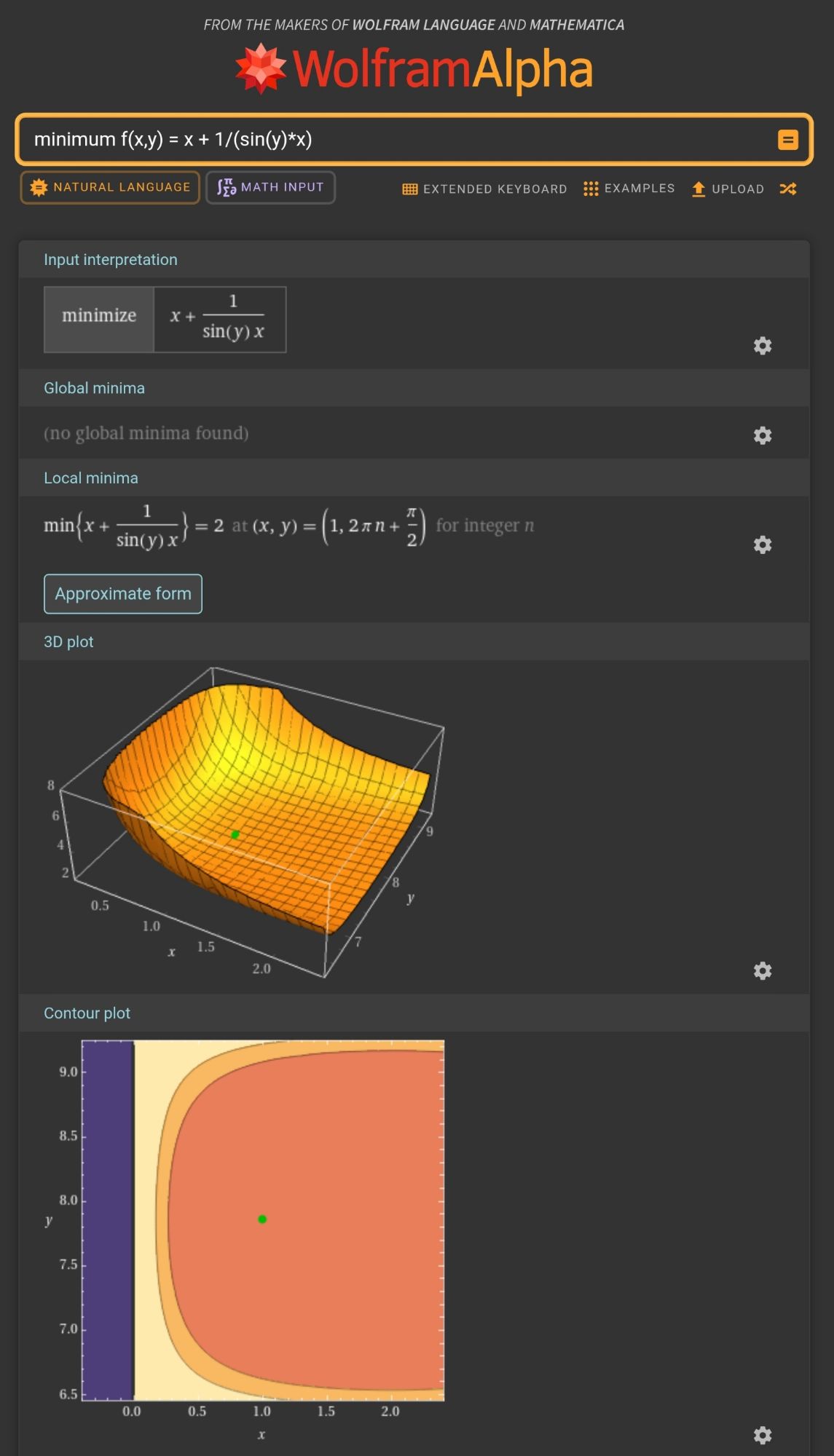
We’re minimising (b2 * a + a2 * b) * sin(α) = ab * (b + a) * sin(α) = 1/sin(α) * (b + a) * sin(α) = b + a. Using the expression for ab one more time, we’re minimising a + 1/(sin(α)*a). A quick trip to Wolfram Alpha later, and we find a minimum at a = 1, α = 90°, hence also b = 1. So min(a + b) = 2, and this occurs when the parallelogram is actually a square. ETA: Therefore the volume is 2/8Ď€, approximately 0.0796.

All of this still based on: Every parallelogram can be turned into at most 2 cylinders.

And previously:

I didn’t get around to doing the fiddler last week. But it turns out I had the right idea. Here’s a sketch.

Denote the state of the tiles like this: xxxxxx. This means all 6 tiles have been flipped, and I won.

If the state is 1xxxxx, and I roll a 1, I win, otherwise I lose. So in this state p(win) = 1/6.

Similarly for x2xxxx, xx3xxx etc.

If the state is 12xxxx, and I roll a 1, move on to x2xxxx. Roll a 2 and move to 1xxxxx. Roll a 3 and win. Otherwise lose. Here p(win) = 1/62 + 1/62 + 1/6 = 8/36 = 2/9.

If the state is 123xxx, and I roll a 3, I have a choice. If I flip 1 and 2, I move to xx3xxx and p(win) = 1/6. If I flip 3, I move to 12xxxx and p(win) = 2/9. So the optimal strategy is to flip 3.

Build a big table with all the states and all the probabilities and all the rolls. Begin with 6 flipped tiles, then 5 flipped tiles etc. Every time a roll gives me more than 1 choice, consider p(win) for the states, I can go to, choose the best one and make a note of it. My optimal strategy is all these good choices.

Finally I can read in this table what p(win) is for the state 123456. And that’s the probability I’m looking for.

The extra credit version has 9 tiles and 2 dice. Otherwise it’s the same procedure.

En ubegrænset magt

Anmeldelse af A Power Unbound, af Freya Marske. Roman, del af serie. 2023. Hugo-finalist.

IMG_20240910_060909

Før vi begynder. De 3 bøger i serien har visse stærke træk tilfælles. Trilogien som sådan er én lang mission. Der er 3 magiske dimser, og i hver bog går jagten på én af dem. Vi får undervejs samlet en gruppe unge mennesker. I hver bog finder et par sammen, den ene en (nuværende eller tidligere) magiker, den anden umiddelbart ikke. Edwin er ikke nogen stor magiker, Robin bliver ret tilfældigt rodet ind i missionen. Edwin ~ Robin. Edwin kender (Jack) Hawthorn, tidligere magiker. Robin har en søster, Maud. Jack kender Violet, magiker, og sammen render de på Maud, bl.a. fordi Violet også er blevet viklet ind i missionen. Trioen render i øvrigt også ind i Alan. Maud ~ Violet. Oveni er der Adelaide, der er Robins sekretær, men hun er lidt mere på sidelinjen.

Skitse: Alan er sådan set ikke del af holdet, men da han stikker hovedet ind, så kan de sagtens finde på noget at bruge ham til. Jagten på den tredje dims er nemlig koncentreret om det hus, Violet har arvet. De gode leder huset igennem fra kælder til kvist. De onde prøver at bryde ind, for at gøre det samme. Jack og Alan sender absolut ikke intense blikke til hinanden, nej nej.

Er det science fiction? Selvfølgelig ikke.

Temaer: Hvor Robin og Edwin er noget med tillid, som i hvert fald en af dem har meget svært ved, og Violet og Maud er noget med at være ærlig og legesyg, så havner Alan og Jack i små rollespil.

Jack har meget lidt kontakt med nogen, inklusive familien. Alan er derimod tæt pĂĄ sin halvstore og voksende familie. Til gengæld har de en “hobby” tilfælles, og de opdager, at de pĂĄ sin vis har kendt hinanden længe.

Den ønskeliste, jeg har nævnt før, bliver fortsat krydset af. I et enkelt tilfælde irriterer det mig lidt.

Er det godt? Tja. Jeg kan lidt bedre lide den end nr. 2. Der var både overraskelser og absolut forudsigelige hændelser. Der var nogle virkelig mærkelige sætninger, se nedenfor. Alligevel vil jeg sige: 👽👽👽

Note: Så mange citater! Efterordet snakker om, at den her bog blev lavet forrygende hurtigt. Det kan til tider mærkes.

“Jack slipped his much-thumbed copy of Bootblacks and Groundskeepers into an inner pocket of his jacket to read on the train. He also bought a newspaper to disguise it in, on the slim chance that any of the other denizens of his first-class compartment on a midweek train heading to the southeastern corner of Essex were also readers of the Roman. … He had the compartment to himself after changing to the older, pokier car of the local line.”

“The blue eyes he’d inherited regarded him thoughtfully, hungrily, from within his mother’s face.”

“I stole opportunity. If the world were different, I wouldn’t have had to, but it’s the way it is, and so I’ve been scared my whole life and angry for even longer.”

“Oliver made a noise of outraged pride, but all of Jack’s eyes were for the way Alan’s face came alive with challenge.”

“They’d set out today to be ahead by two pieces and had instead lost all of them in a handful of minutes.” (Start: 1-1. Goal: 2-1. End: 0-3.)

“He did what everyone else was doing: racing full-tilt towards the huge wooden doors out onto the street, which had been flung entirely wide.”

“Alan glared and did not open his mouth in return. He was too busy breathing through it.”

En rastløs sandhed

Anmeldelse af A Restless Truth, af Freya Marske. Roman, del af serie. 2022. Hugo-finalist.

IMG_20240829_190141

Skitse: Historien fra bind 1 fortsætter. Denne gang møder vi Maud (Robins søster) og Violet. Maud er angiveligt her, ombord på et skib mellem New York og Southampton, for at en ældre dame kan have lidt hjælp og selskab. Men i virkeligheden er alle mulige på jagt efter endnu en magisk genstand.

Er det science fiction? Fantasy.

Temaer: Maud og Violet har pĂĄ hver deres mĂĄde et skidt forhold til deres familie. En registrering af, at de begge er minumum biseksuelle, udvikler sig til et dybere forhold.

“He eyed Maud with the familiar alarm of a man unsure if the girl in front of him was about to burst into tears. He decided to err on the side of assuming that Maud was too upset and too feminine to know what she needed, and directed the nearest steward to bring a cup of tea at once.”

Er det godt? Jeg bliver slĂĄet af, at bind 1 og 2 har meget tilfælles. Men naturligvis mĂĄ der være nye hovedpersoner, ellers kan vi jo ikke endnu en gang opleve “den første forelskelse”. 👽👽👽

Et vidunderligt lys

Anmeldelse af A Marvellous Light, af Freya Marske. Roman, del af serie. 2021. Hugo-finalist.

IMG_20240825_031246

Skitse: Reggie bliver tortureret og myrdet, fordi han kender en kostbar hemmelighed. Robin overtager hans job som den ikke-magiker, der orienterer premierministeren om magiske tiltag. Det kræver samarbejde med den svage magiker Edwin. Årstallet er i øvrigt 1908, og vi er i et miljø, hvor man lige smutter væk fra London og på landstedet i weekenden.

Er det science fiction? Fantasy.

Temaer: Robin og Edwin har på hver deres måde et skidt forhold til deres familie. En registrering af, at de begge er bøsser, udvikler sig til et dybere forhold.

Nogen tror, at Robin også må kende den der hemmelighed, så han bliver belemret med en forbandelse. Edwin kaster sig ud i arbejdet med at prøve at fjerne den.

Allerede de her par linjer skitserer et par ønskelister, Robin og Edwin kunne skrive. Bogen påtager sig at opfylde i hvert fald nogle af ønskerne.

Vi hører lidt om, hvordan magi virker. Hvordan Edwin bruger en snor til at danne figurer mellem hænderne, der bliver til trylleformularer. Hvordan magi er forskellig pga. grænser mellem lande og sprog, og hvordan briterne er bagud. Hvordan de fleste ikke-magikere ikke ved, at magi eksisterer. (Hilsener til Harry Potter?)

Det dukker jævnligt op, at kvinder betragtes som dumme og svage, men snarere er anderledes. Et andet moderne element er samtykke.

Og sĂĄ et par citater:

“Afterwards, they were shown up to rooms that had the musty and faintly surprised air of places where the dustcovers had only just been whisked off the furniture.”

“Edwin didn’t care for this warm-voiced near-stranger’s opinion either; he didn’t, but surely he was allowed to hate that Hawthorn had made Edwin’s inferiority so clear right in front of the man’s face. And now they were headed to a place where that inferiority would be made even more obvious.”

“Robin managed to hold his tongue on something truly unwise like You look like a Turner painting and I want to learn your textures with my fingertips. You are the most fascinating thing in this beautiful house. I’d like to introduce my fists to whoever taught you to stop talking about the things that interest you. Those were not things one blurted out to a friend. They were their own cradles of magic, an expression of the desire to transform one thing into another. And what if the magic went awry?”

Er det godt? Jeg skulle lige i gang, men så blev det dejligt. Både hovedpersonerne og fortælleren kan spinde en smuk og/eller overraskende sætning. Den gryende kærlighed har bl.a. nogle smukke øjeblikke, hvor parterne egentlig bare taler sammen, men stemningen er meget intim. Mums. 👽👽👽

Note: Det her er første bind i en trilogi, der altså var finalist til en Hugo for bedste serie. Jeg har ikke specielt god adgang til resten af finalisterne.

#ThisWeeksFiddler, 20240906

This week the question is: Can You Turn a Right Triangle Into an Isosceles Triangle?

Beginning with a 3-4-5 right triangle, it’s possible to append another triangle to one of its sides, thereby making an isosceles triangle. For example, here is how you can make a 5-5-8 isosceles triangle:

Including the one given above, how many distinct ways can you append a triangle to a 3-4-5 right triangle to make an isosceles triangle?

And for extra credit:

Now suppose you have a right triangle with legs of length a and b and a hypotenuse of length c. And suppose further that there are N distinct ways to append a triangle to this abc right triangle to make an isosceles triangle.

What are all the possible values of N? (Note that any appended triangle may not be degenerate, meaning it must have a positive area. Also, some of the resulting isosceles triangles may be congruent to each other, but they should be counted as distinct if the appended triangles are attached to different sides, or have different positions or orientations.)

Læs mere: #ThisWeeksFiddler, 20240906

ETA: I’m already partially proved wrong.

New triangles 1a, 2, 3 and 4.

The first triangle has sides a = 3, b = 4 and c = 5. Opposite side a is angle A etc. Angle C is 90°.

Highlight to reveal solution:

And for extra credit:

And for super extra credit?

A few triangles without a right angle. This also illustrates travelling on the extended side, looking for a new corner.

Science fiction predictions XXIII

Aldous Huxley: Brave New World – Foreword:

“But Brave New World is a book about the future and, whatever its artistic or philosophical qualities, a book about the future can interest us only if its prophecies look as though the might conceivably come true.”

“One vast and obvious failure of foresight is immediately apparent. Brave New World contains no reference to nuclear fission.”

#LastDecadesRiddler, 20151229

(Related to #ThisWeeksFiddler.) 9 years ago the question was: How Long Before You Can Use Your 2015 Calendar Again?

Calendars are as predictable as the march of time itself — the major thing that changes is the day of the week a date is on. Jan. 1 was a Thursday in 2015, for example, but in 2016 it will be a Friday, requiring a one-day shift and making 2015’s calendar pretty useless.

Calendars’ predictability makes them ripe for mathy questions. Here are six to chew on:

  1. How many different calendars would you need to represent all possible years — accounting for all day and date combinations? (Don’t forget about leap years!)
  2. Now that we have all the calendars we could possibly need, it’d be nice to know how often we’re using them. When is the next time we’ll use the 2015 calendar?
  3. What is the smallest total number of years that will pass between using the same non-leap-year calendar twice?
  4. What is the largest?
  5. What is the smallest total number of years that will pass between using a leap year calendar twice?
  6. What is the largest?
Læs mere: #LastDecadesRiddler, 20151229

Highlight to reveal solution, that I swear I didn’t look up, before writing my own: [Argh! Got 3-6 wrong.]

Calendar sheet.

    Science fiction predictions XXII

    Ursula K. Le Guin: “Science Fiction and the Future”:

    “When we look at what we can’t see, what we do see is the stuff inside our heads. Our thoughts and our dreams, the good ones and the bad ones. And it seems to me that when science fiction is really doing its job that’s exactly what it’s dealing with. Not “the future.” It’s when we confuse our dreams and ideas with the non-dream world that we’re in trouble, when we think the future is a place we own. Then we succumb to wishful thinking and escapism, and our science fiction gets megalomania and thinks that instead of being fiction it’s prediction, and the Pentagon and the White House begin to believe it, and we get True Believers conquering the future by means of SDI.”