Rant, week 9+10 / Brok, uge 9+10

It is time to rant some! The internet doesn’t contain enough ranting!

Oscars

Sigh. Why do you do In Memoriam wrong every time? Or are the names, the pictures etc. only intended for the audience in the room?

đŸ‡©đŸ‡°đŸ‡©đŸ‡°đŸ‡©đŸ‡°

IndlÊg pÄ Facebook og kommentarer

Mere suk.

Jeg siger: “Det ville klĂŠde pov at fĂ„ en balance i de her indlĂŠg, sĂ„ vi ikke kun (nĂŠsten?) hĂžrer fra den ene side.”

Og sÄ bliver jeg beskyldt for cancel culture, og jeg kan jo bare selv skrive et indlÊg. At fortalere for transpersoners rettigheder er lige sÄ gode som dem, der tror, Jorden er flad.

Bare suk.

At rejse er at vĂŠre forvirret

Jeg har lige vÊret ude at flyve med Norwegian. PÄ nogle mÄder en interessant oplevelse. FÞrst fik jeg fra anden side noget, der udtrykkeligt sagde, at det ikke var en billet. Hos Norwegian selv kunne jeg sÄ hente et sÄkaldt rejsedokument. Det ligner en billet? TÊt nok pÄ rejsen checkede jeg ind online. Og det var sÄ her, jeg skulle regne ud, at hvis jeg hentede rejsedokumentetet igen, sÄ havde det Êndret sig og indeholdt et boarding pass. Ikke intuitivt.

En eller anden reklame

Der vist prĂžver at vĂŠre morsom. Den taler i hvert fald om “bĂŠredygtighed der holder”. SĂ„ … BĂŠredygtighed der er bĂŠredygtig? Ha ha?

Politiken om ordet stealthing

I forbifarten skal det lige nÊvnes, at steak ikke udtales stiiik. Hvilket desvÊrre er forkert. Jeg har oplevet fÊnomenet pÄ Lolland. Og ordbogen godkender det ogsÄ.

Oscar

De danske vÊrter har ikke helt styr pÄ at udtale Dolby.

#ThisWeeksFiddler, 20250228

This week the question is: How Many Rabbits Can You Pull out of a Hat?

I have a hat with six small toy rabbits: two are orange, two are green, and two purple. I shuffle the rabbits around and randomly draw them out one at a time without replacement (i.e., once I draw a rabbit out, I never put it back in again).

Your job is to guess the color of each rabbit I draw out. For each guess, you know the history of the rabbits I’ve already drawn. So if we’re down to the final rabbit in the hat, you should be able to predict its color with certainty.

Every time you correctly predict the color of the rabbit I draw, you earn a point. If you play optimally (i.e., to maximize how many points you get), how many points can you expect to earn on average?

And for extra credit:

Now, instead of two rabbits of each of the three colors, my hat contains 10. That is, it contains 10 orange rabbits, 10 green rabbits, and 10 purple rabbits. As before, every time you correctly predict the color of the rabbit I draw, you earn a point.

With optimal play, how many points can you expect to earn on average?

This was the 2nd attempt. Scroll down to find the weird 1st attempt.

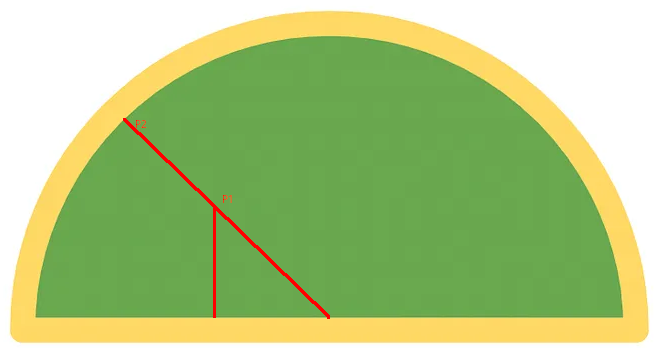
Program. Figure 1, 2, 3.

And for extra credit:

1st attempt.

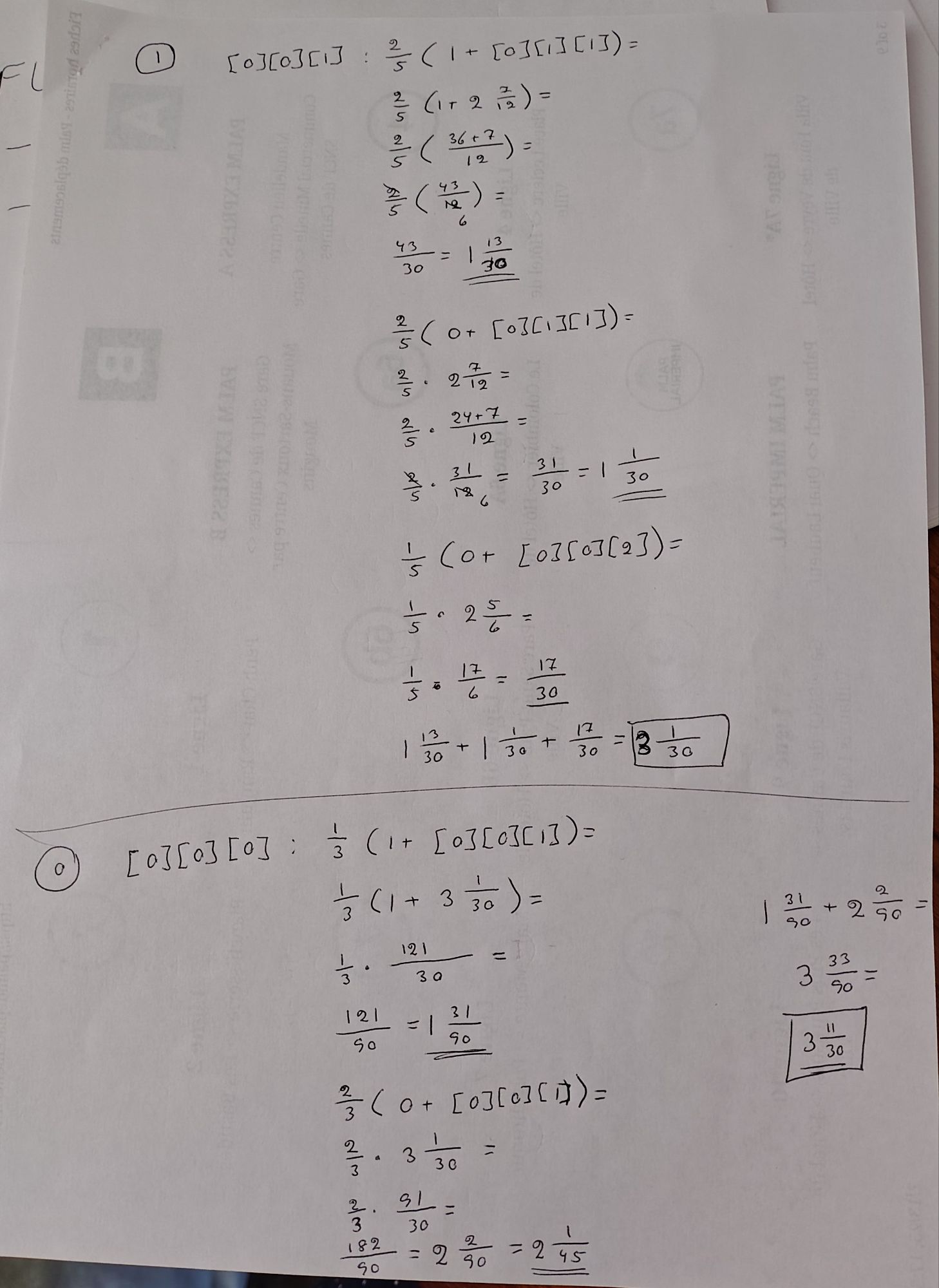
Program.

#ThisWeeksFiddler, 20250221

This week the question is: Can You Defend Your Trivia Knowledge?

A new season of LearnedLeague recently kicked off! Many folks may not be familiar with this daily trivia platform. I learned about it a few years ago and joined after my turn as a game show contestant.

Anyway, here’s how it works: Every day, you and your opponent for the day are presented with the same six trivia questions. You each do your best to answer these, and you assign point values for your opponent, without knowing (until the following day) which questions your opponent answered correctly. You must assign point values of 0, 1, 1, 2, 2, and 3 to the six questions.

For example, suppose I assigned values of 1, 2, 0, 3, 2, and 1 to the six questions, in order. Unbeknownst to me, my opponent answers the first, third, and fourth questions correctly. That means they get 1 + 0 + 3, or 4 points for the match. My own score depends on which questions I got right, and how these were scored by my opponent. If I get more than 4 points, I win the match.

Now, when someone answers three questions correctly, like my opponent just hypothetically did, the fewest points they can earn is 0 + 1 + 1 = 2, while the most points they can earn is 2 + 2 + 3 = 7. The fact that they got 4 points wasn’t great (from my perspective), but wasn’t terrible. In LearnedLeague, my defensive efficiency is defined as the maximum possible points allowed minus actual points allowed, divided by the maximum possible points allowed minus the minimum possible points allowed. Here, that was (7−4)/(7−2), which simplified to 3/5, or 60 percent.

By this definition, defensive efficiency ranges somewhere between 0 and 100 percent. (That is, assuming it’s even defined—which it’s not when your opponent gets zero questions right or all six questions right.)

Suppose you know for a fact that your opponent will get two questions right. However, you have absolutely no idea which two questions these are, and so you randomly apply the six point values to the six questions.

What is the probability that your defensive efficiency for the day will be greater than 50 percent?

And for extra credit:

Now suppose your opponent is equally likely to get one, two, three, four, or five questions correct.

As before, you randomly apply the six point values (0, 1, 1, 2, 2, 3) to the six questions.

What is the probability that your defensive efficiency will be greater than 50 percent?

Highlight to reveal (possibly incorrect) solution:

Program.

And for extra credit.

Program.

Rant, week 8 / Brok, uge 8

It is time to rant some! The internet doesn’t contain enough ranting!

Hark! Two Holiday Puzzles

“For strings of length seven or longer (e.g. a phone number or a Social Security number) it appears you can always find an equation — with a single exception.”

An American phone number, love.

372 Pages We’ll Never Get Back, episode 181

1) Rowling (the Harry Potter one) rhymes with rolling. 2) Go look at my statistics spreadsheet!

đŸ‡©đŸ‡°đŸ‡©đŸ‡°đŸ‡©đŸ‡°

Vestens politiske korrekthed koster kvindeliv og -rettigheder

Politiet er ikke altid lige optaget af at opklare voldtĂŠgter. Ja, det er skidt.

Lovgivningen taler om personer med en livmoder og sÄdan noget. Og det er pÄ en eller anden mÄde lige sÄ skidt, ja, livsfarligt? Jeez.

KĂžbenhavn har fundet pĂ„, at der i februar skal vĂŠre lysfestival. SĂ„ mellem 17 og 22 kan man beskue kunstvĂŠrker med lys i, udendĂžrs, ganske gratis. Egentlig slet ikke sĂ„ dumt. ✅

Da nogle af vĂŠrkerne befinder sig et stykke fra centrum, kan man deltage i en guidet tur, ombord pĂ„ en bus. Rigtig god idĂ©. ✅

Guiderne er ogsĂ„ arrangĂžrerne. De kender vĂŠrkerne og sĂ„dan noget og kan smĂ„ anekdoter. Genialt. ✅

ArrangÞrerne skaffer ogsÄ finansiering til hele apparatet, sÄ de er smaddergode til det sprog. Det fremhÊves, at den tilknyttede app er noget helt sÊrligt. Vi finder ud af, hvordan den her festival adskiller sig fra dem i resten af verden. ForblÞffende mange ting er gode, sjove, fantastiske osv.

Yrk. ❌

En guidet tur skal lĂŠre mig noget om sevĂŠrdighederne. Det her vĂŠrk med lys i, fortĂŠl mig alt! Og hvis der er tid tilovers, sĂ„ mĂ„ du ogsĂ„ godt sige andre ting. FortĂŠl mig til gengĂŠld ikke, at alting er godt, det skal jeg nok selv tage stilling til. ❌

Det er en kunst at vĂŠre en god guide. Har vi alle med? Kan alle hĂžre? Til tider bliver der i bussen berettet om det, vi kommer til om lidt. Og sĂ„ er der 10 minutter til at se tingene, og sĂ„ kĂžrer vi, og hvis du ikke kan finde ud af det, sĂ„ tag s-toget hjem. ❌

Og lad vĂŠre med at trĂŠkke os ind i mĂžrket uden lommelygter, pĂ„ glat grund. ❌

Hvis du ikke er guide, sĂ„ find en. ❌

#ThisWeeksFiddler, 20250214

This week the question is: Can You Squeeze the Heart?

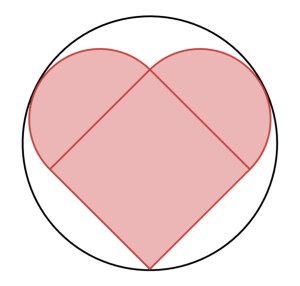
You can generate a heart shape by drawing a unit square (i.e., a square with side length 1), and then attaching semicircles (each with radius 1/2) to adjacent edges, as shown in the diagram below:

What is the radius of the smallest circle that contains this heart shape?

And for extra credit:

Instead of containing one heart shape, now your circle must contain two heart shapes. Again, each heart consists of a unit square and two semicircular lobes. The two hearts are not allowed to overlap.

What is the radius of the smallest circle that contains these two hearts?

Before moving on to the solutions. Last week I did this:

  • Sent in a solution.
  • Realized that while the method was right, the numbers ended up being wrong.
  • Postponed sending in a new solution.
  • Forgot!
  • Felt very sorry for myself.

Sigh.

Highlight to reveal (possibly incorrect) solution:

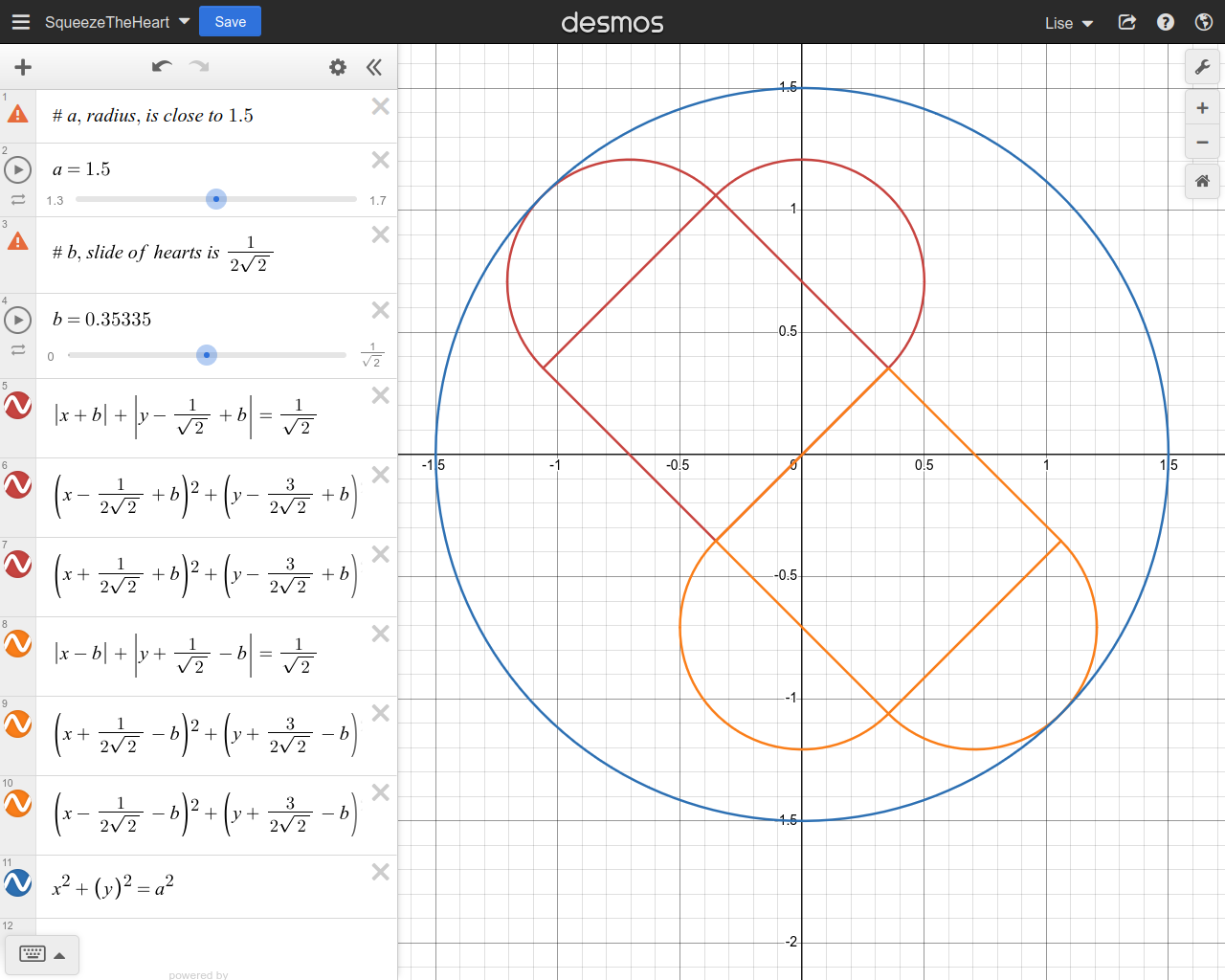
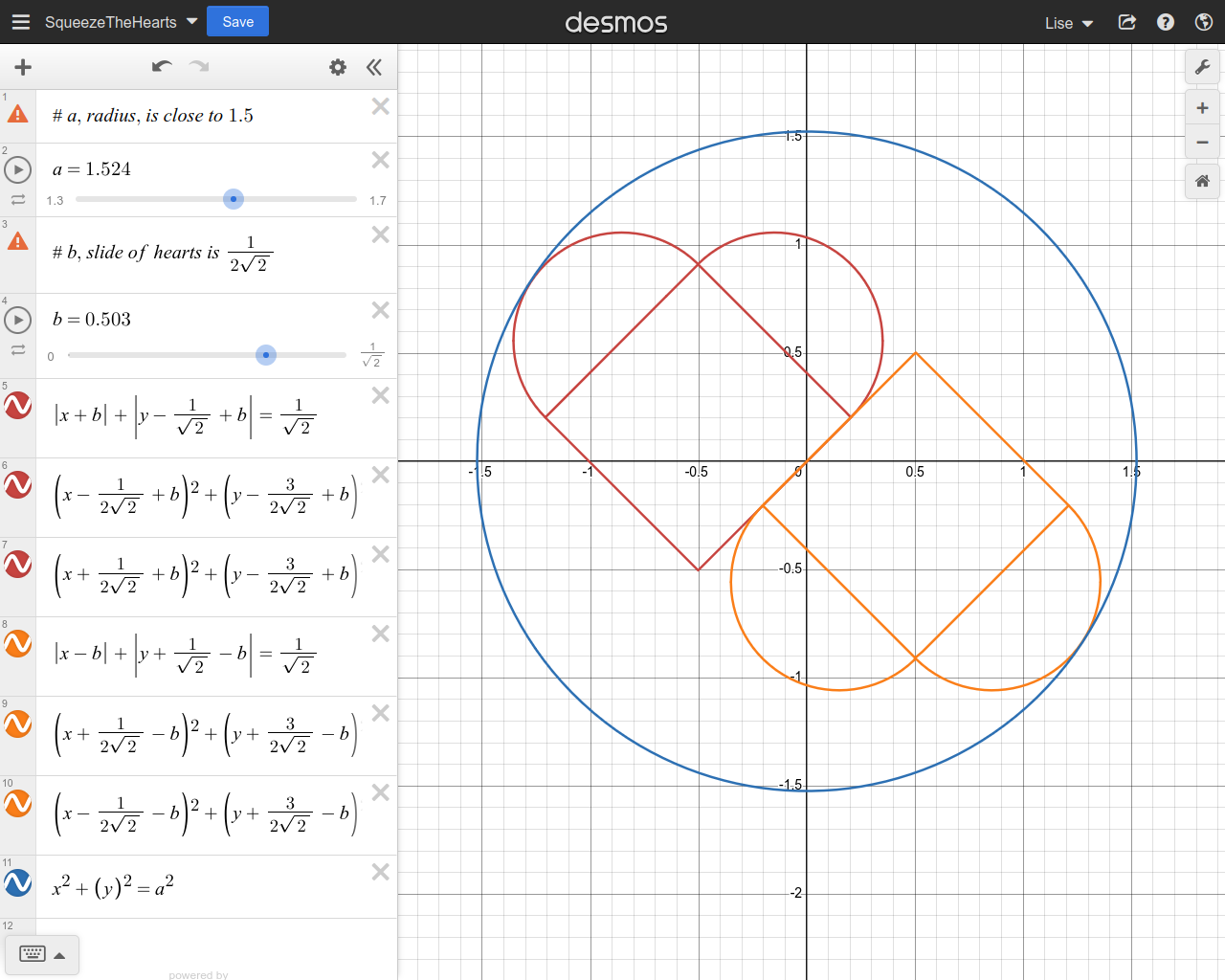
Desmos.

And for extra credit:

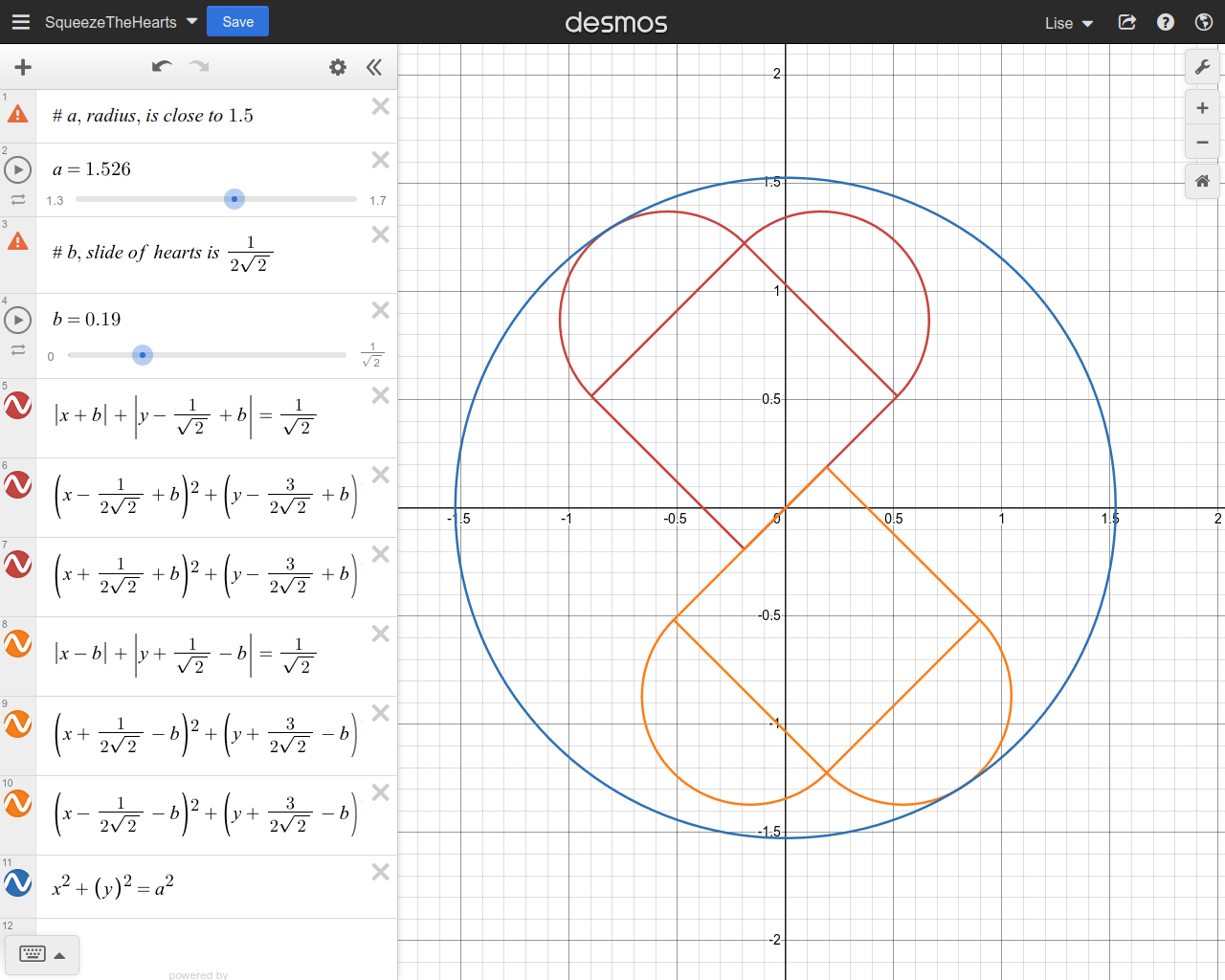
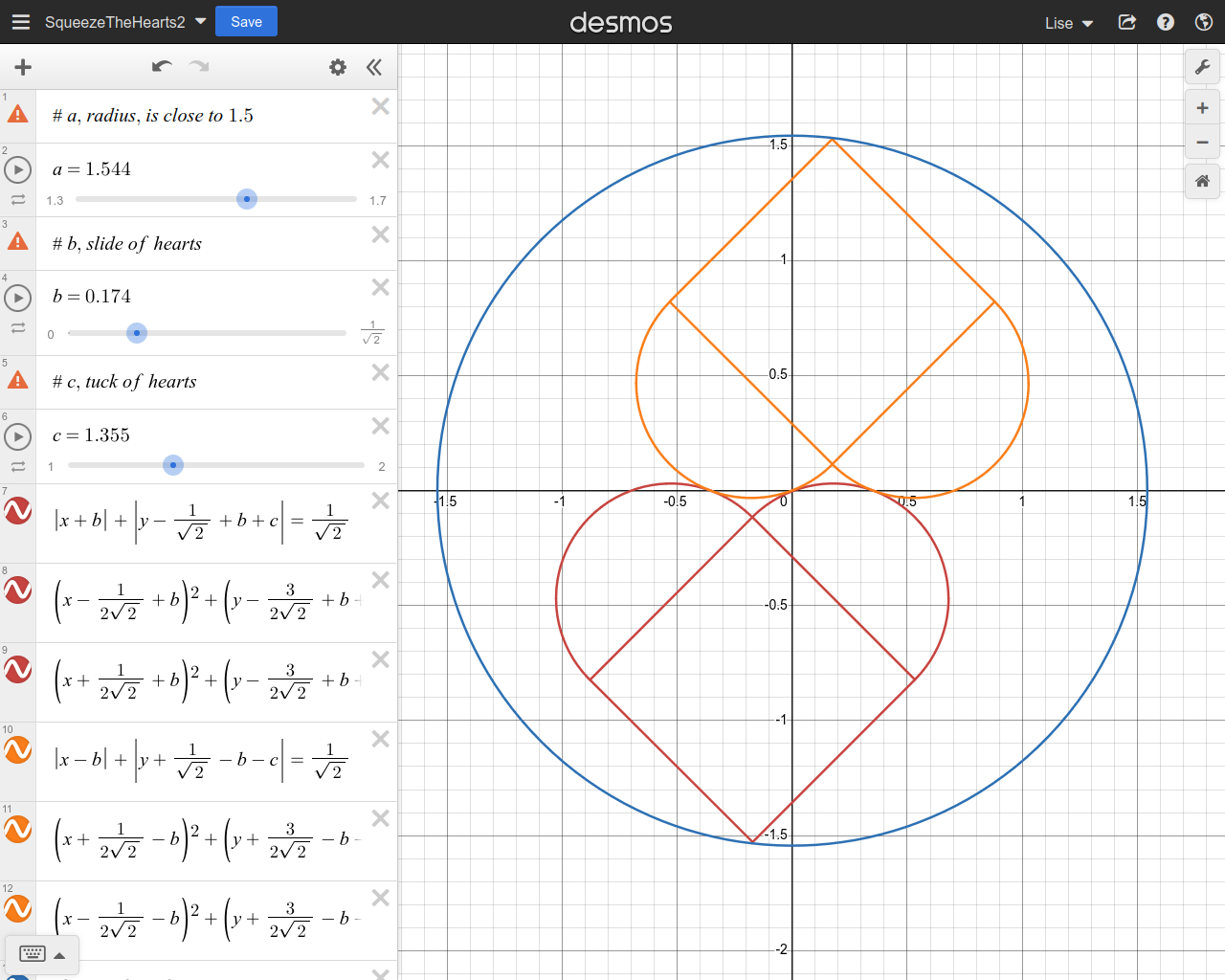
Figure 1, 2, 3, 4. Desmos 1, 2, 3.

No God, no Heaven

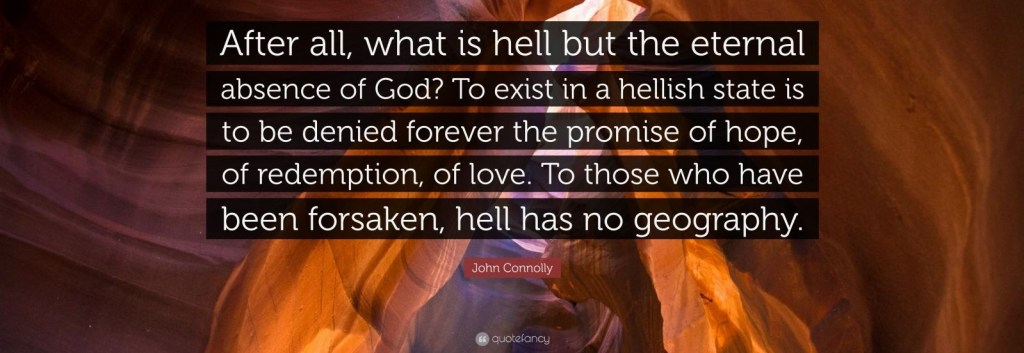
Recently I had to reread ” #Hell Is the Absence of #God “, #TedChiang . Because it’s good. And I became fascinated with the #worldbuilding . So, let me tell you the rules of this world. At least as they appear to the people in the story. Beware spoilers.

  • God exists. (1)
    • As with the rest of these items, faith isn’t involved in the system, everybody knows how it works.
    • God isn’t involved in everything. (1)
  • Heaven (up) exists. (5)
    • Heaven is good. (8)
  • Hell (down) exists. (7)
    • Hell is exile from God. (7)
  • There is an afterlife.
    • Those who love God perfectly go up, including successful light-seekers (see below). (5, 9, 23, 24)
    • Suicides go down. (14)
    • Failed light-seekers (dying in the attempt) go down. (26)
    • Humanists go down. (16)
    • The dead in Heaven can visit Earth. (11,18) They don’t talk, but they seem happy. (11) They don’t have bodies. (25)
    • The dead in Hell can be observed by the living, but not the other way around. (7) They seem mentally content and physically fine. (7, 15)
  • Angels exist. (3)
    • From time to time, angels visit Earth. (1) The timing is random. (10, 26) Some sites (all inhospitable) are visited often. (13, 22, 27)
    • A visit from an angel has a lot of impact: miracles including cures (3, 10), and consequences of the violent entrance and exit (4), including instant knowledge of the existence of God (becoming eyeless) (3, 19, 23), and injury and death (6). All impact is random. (3, 12, 20, 21)
    • Some angels have fallen, their impact seem less violent, and it’s possible to talk to them. (17)
  • Light-seekers seek out angels to become eyeless. (24)

So, those are the rules. On top of that, people try to interpret the visitations etc. They don’t appear to have much success with that (because of the randomness), so that’s a separate part of the world building, and I won’t look at it here.

I bolded 2 parts of the rules above, because the story illustrates, that 2 rules can be in conflict. (28) Leading to Hell feeling unbearable for a few. (29)

For completeness, here are the quotes in the order they appear in the text.

  1. Neil was born with a congenital abnormality that caused his left thigh to be externally rotated and several inches shorter than his right; the medical term for it was proximal femoral focus deficiency. Most people he met assumed God was responsible for this, but Neil’s mother hadn’t witnessed any visitations while carrying him; his condition was the result of improper limb development during the sixth week of gestation, nothing more. In fact, as far as Neil’s mother was concerned, blame rested with his absent father, whose income might have made corrective surgery a possibility, although she never expressed this sentiment aloud.
  2. He became an adult who — like so many others — viewed God’s actions in the abstract until they impinged upon his own life. Angelic visitations were events that befell other people, reaching him only via reports on the nightly news.
  3. It was an unexceptional visitation, smaller in magnitude than most but no different in kind, bringing blessings to some and disaster to others. In this instance the angel was Nathanael, making an appearance in a downtown shopping district. Four miracle cures were effected: the elimination of carcinomas in two individuals, the regeneration of the spinal cord in a paraplegic, and the restoration of sight to a recently blinded person. There were also two miracles that were not cures: a delivery van, whose driver had fainted at the sight of the angel, was halted before it could overrun a busy sidewalk; another man was caught in a shaft of Heaven’s light when the angel departed, erasing his eyes but ensuring his devotion.
  4. […] the angel’s billowing curtain of flame […]
  5. […] her soul’s ascension toward Heaven.
  6. Nathanael hadn’t delivered any specific message; the angel’s parting words, which had boomed out across the entire visitation site, were the typical Behold the power of the Lord. Of the eight casualties that day, three souls were accepted into Heaven and five were not, a closer ratio than the average for deaths by all causes.
  7. Like every other nondevout person, Neil had never expended much energy on where his soul would end up; he’d always assumed his destination was Hell, and he accepted that. That was the way of things, and Hell, after all, was not physically worse than the mortal plane. It meant permanent exile from God, no more and no less; the truth of this was plain for anyone to see on those occasions when Hell manifested itself. These happened on a regular basis; the ground seemed to become transparent, and you could see Hell as if you were looking through a hole in the floor. The lost souls looked no different than the living, their eternal bodies resembling mortal ones. You couldn’t communicate with them — their exile from God meant that they couldn’t apprehend the mortal plane where His actions were still felt — but as long as the manifestation lasted you could hear them talk, laugh, or cry, just as they had when they were alive.
  8. Of course, everyone knew that Heaven was incomparably superior […]
  9. Now that Sarah was in Heaven, his situation had changed. Neil wanted more than anything to be reunited with her, and the only way to get to Heaven was to love God with all his heart.
  10. When Janice’s mother was eight months pregnant with her, she lost control of the car she was driving and collided with a telephone pole during a sudden hailstorm, fists of ice dropping out of a clear blue sky and littering the road like a spill of giant ball bearings. She was sitting in her car, shaken but unhurt, when she saw a knot of silver flames — later identified as the angel Bardiel — float across the sky. The sight petrified her, but not so much that she didn’t notice the peculiar settling sensation in her womb. A subsequent ultrasound revealed that the unborn Janice Reilly no longer had legs; flipperlike feet grew directly from her hip sockets.
  11. Janice’s parents were sitting at their kitchen table, crying and asking what they had done to deserve this, when they received a vision: the saved souls of four deceased relatives appeared before them, suffusing the kitchen with a golden glow. The saved never spoke, but their beatific smiles induced a feeling of serenity in whoever saw them.
  12. There Janice met two individuals with cancer who’d witnessed Rashiel’s visitation, thought their cure was at hand, and been bitterly disappointed when they realized they’d been passed over.
  13. […] the holy sites, those places where — for reasons unknown — angelic visitations occurred on a regular basis […]
  14. If suicide would have ended his pain, he’d have done it without hesitation, but that would only ensure that his separation from Sarah was permanent.
  15. […] she’d seen her husband among the lost souls. […] she had committed suicide to rejoin her husband. None of them knew the status of Robin’s and her husband’s relationship in the afterlife, but successes were known to happen; some couples had indeed been happily reunited through suicide.
  16. […] the humanist movement; its members considered it wrong to love a God who inflicted such pain, and advocated that people act according to their own moral sense instead of being guided by the carrot and the stick. These were people who, when they died, descended to Hell in proud defiance of God.
  17. Visitations of fallen angels were infrequent, and caused neither good fortune nor bad; they weren’t acting under God’s direction, but just passing through the mortal plane as they went about their unimaginable business. On the occasions they appeared, people would ask them questions: Did they know God’s intentions? Why had they rebelled? The fallen angels’ reply was always the same: Decide for yourselves. That is what we did. We advise you to do the same.
  18. […] visions don’t appear just because a person needs one […]
  19. […] few visitations resulted in an eyeless person, since Heaven’s light entered the mortal plane only in the brief moments that an angel emerged from or reentered Heaven […] The light that had brought his soul as close to perfection as was possible in the mortal plane had also deformed his body […] Benny described Heaven’s light as infinitely beautiful, a sight of such compelling majesty that it vanquished all doubts. It constituted incontrovertible proof that God should be loved, an explanation that made it as obvious as 1+1=2. [More about Benny below, at 23.]
  20. Neither of them had ever heard of a previous instance where God had left His mark on a person in one visitation and removed it in another.
  21. There were a few instances of individuals receiving multiple miracle cures over their lifetimes, but their illnesses or disabilities had always been of natural origin, not given to them in a visitation.
  22. Whereas in most of the world one could wait an entire lifetime and never experience a visitation, at a holy site one might only wait months, sometimes weeks. Pilgrims knew that the odds of being cured were still poor; of those who stayed long enough to witness a visitation, the majority did not receive a cure.
  23. […] the absoluteness of Benny’s devotion. No matter what misfortune befell him in the future, Benny’s love of God would never waver, and he would ascend to Heaven when he died.
  24. Every holy site had its pilgrims who, rather than looking for a ­miracle cure, deliberately sought out Heaven’s light. Those who saw it were always accepted into Heaven when they died, no matter how selfish their motives had been […]
  25. [Becoming eyeless:] At an instinctual level, Neil was averse to the idea: it sounded like undergoing brainwashing as a cure for depression. He couldn’t help but think that it would change his personality so drastically that he’d cease to be himself. Then he remembered that everyone in Heaven had undergone a similar transformation; the saved were just like the eyeless except that they no longer had bodies.
  26. […] seeking Heaven’s light was far more difficult than an ordinary pilgrimage, and far more dangerous. Heaven’s light leaked through only when an angel entered or left the mortal plane, and since there was no way to predict where an angel would first appear, light-seekers had to converge on the angel after its arrival and follow it until its departure. To maximize their chances of being in the narrow shaft of Heaven’s light, they followed the angel as closely as possible during its visitation; depending on the angel involved, this might mean staying alongside the funnel of a tornado, the wavefront of a flash flood, or the expanding tip of a chasm as it split apart the landscape. Far more light-seekers died in the attempt than succeeded. Statistics about the souls of failed light-seekers were difficult to compile, since there were few witnesses to such expeditions, but the numbers so far were not encouraging. In sharp contrast to ordinary pilgrims who died without receiving their sought-after cure, of which roughly half were admitted into Heaven, every single failed light-seeker had descended to Hell.
  27. Holy sites were invariably in inhospitable places: one was an atoll in the middle of the ocean, while another was in the mountains at an elevation of twenty thousand feet.
  28. Neil began, slowly but surely, bleeding to death. […] another beam of Heaven’s light penetrated the cloud cover and struck Neil […] the light revealed to Neil all the reasons he should love God. […] So minutes later, when Neil finally bled to death, he was truly worthy of salvation. And God sent him to Hell anyway. [Ethan] saw Neil’s soul leave his body and rise toward Heaven, only to descend into Hell.
  29. Everything Neil sees, hears, or touches causes him distress, and unlike in the mortal plane this pain is not a form of God’s love, but a consequence of His absence.

Rant, week 7

It is time to rant some! The internet doesn’t contain enough ranting!

https://x.com/HandmaidsOnHulu/status/1889721210008654263?t=5yaLLgU-8jNlj8a4cBpZbQ&s=19

Hulu, April 8. So that’s correct in USA? What about the rest of the world?

Arthur C. Clarke: “The Wall of Darkness”.

Brave men do great deeds. Some deeds are dangerous. Some deeds are expensive.

Shervane, the protagonist, apparently has no women in his life. No wife and no children. He also apparently has nobody to say, maybe this risk and that expense should be avoided. To me this leaves a gaping hole in the story.

đŸ‡©đŸ‡°đŸ‡©đŸ‡°đŸ‡©đŸ‡°

KĂžn tildelt ved fĂždsel – nĂ„r sproget forvansker virkeligheden

“KĂžnsdebatten er et minefelt, hvor man hurtigt kan detonere en lavine af karakterbeskyldninger ved ytringen af bestemte ord eller formuleringer.”

Ja, tĂŠnk. Ord betyder noget. Ords betydning ĂŠndrer sig. Visse ord hĂŠnger sammen med visse (forĂŠldede) holdninger og volder smerte, nĂ„r de bliver brugt. Det nyeste her er sĂ„dan set, at det er blevet lettere at hĂžre, nĂ„r der bliver sagt av. “Gider du lige lade vĂŠre med at bruge det der ord?”

Ja, der er nok nogen, der overreagerer. SÄdan er det jo ofte. Ja, der er nok ogsÄ nogen, der reagerer meget voldsomt den 1000. gang, de oplever noget smertefuldt. OgsÄ selvom det den her gang var en Êrlig fejltagelse, en uskyldig smutter.

Ja, jeg taler her om folk, der i stigende grad siger: “Jeg er en kvinde, og det gĂžr enormt ondt, nĂ„r du kalder mig en mand.” Eller omvendt.

Hvis vi ellers antager, at du er et kÊrligt og hensynsfuldt menneske, sÄ er du vel ogsÄ interesseret i ikke at forvolde smerte?

“Man tvinges til at navigere i et sprog, der synes forvirrende og ulogisk, og hvor man hele tiden skal tĂŠnke omvendt for at forstĂ„, hvad der faktisk tales om.”

Bare rolig. Det skal nok falde pÄ plads, nÄr du har lÊrt det. SÄdan er det jo med alt nyt.

“Op er faktisk ned. Ned er faktisk op. Transkvinder er faktisk mĂŠnd. TransmĂŠnd er faktisk kvinder.”

Ja, ja, der er den. En person siger: “Jeg er en (trans)kvinde.” Men du, der ikke har prĂžvet at vĂŠre i hendes hoved, krop eller sko, ved bedre. Fordi den gamle definition pĂ„ kvinde er den rigtige og bĂžr ikke ĂŠndres. Hm.

“Udskiftningen af ord og betydninger er dog et virkelig smart, strategisk greb, hvis man gerne vil ophĂŠve anerkendelsen af de to biologiske kĂžn.”

MĂ„ske er der en strategi her. MĂ„ske er der bare: “Jeg er en kvinde. Vil du vĂŠre sĂžd at bruge det ord?”

SÄ har jeg ogsÄ lyst til at spÞrge, hvordan de biologiske kÞn defineres. Det er vist ikke sÄ nemt.

“Disse to sĂŠtninger beskriver den samme situation, men de opleves forskelligt:

  • Den lyshĂ„rede transpige gik med ind i pigernes omklĂŠdningsrum
  • Den lyshĂ„rede transidentificerende dreng gik med ind i pigernes omklĂŠdningsrum

Igen. Ja, det tager lidt tid at lĂŠre det her. Men det skal nok komme.

“Kommunale familievejledere mĂ„ altsĂ„ forstĂ„, at en borgers subjektive kĂžns-selvopfattelse har fortrinsret over personens objektive, biologiske kĂžn, og at de skal korrigere deres sprog herefter.”

Tja. Hvis jeg skifter navn, adresse, religion eller job, sÄ forventer jeg, at du fÞlger med. At jeg fx skiftede navn bygger pÄ noget subjektivt. Det der navn fÞles mere som mig. Senere fÄr det nogle bureaukratiske fÞlger, fordi vi hertillands registrerer, ja, faktisk godkender folks navne. Men nÄr folkeregistret har registreret det, sÄ er det ligesom mere rigtigt. Objektivt mÄske. I det nÊvnte tilfÊlde ville folkeregistret have pÄpeget, at der var tale om en kvinde. Er det objektivt nok?

“Kvinder er de feminine. Denne mand er feminin. Ergo er manden en kvinde.”

Åh mand. Eller kvinde.

Kvinder er de feminine = kvinder er kvindelige = kvinder er kvinder. Tautologisk.

Denne mand er feminin = denne mand er kvindelig = denne mand er en kvinde. Sludder.

“Udbredelsen af kĂžnsidentitetsideologien pĂ„virker hele vores samfund: NĂ„r sproget kontrolleres, bliver alle berĂžrt.”

Ordet kÞnsidentitetsideologien er interessant. En ideologi er sÄdan noget med, hvor meget hvem skal betale i skat, eller om der skal vÊre et privat sundhedsvÊsen. Det her spÞrgsmÄl er ikke ideologisk. Det har med eksistens at gÞre. Ønsker vi, at samfundet, lovgivningen, og ja, sproget, lader transkÞnnede eksistere, sÄdan som de er?

Eller er det fordi, fascisme ogsÄ kan vÊre en ideologi? SeriÞst, at religion/afstamning kan fÞre til dehumanisering af mennesker, og i sidste ende dÞd, det er bare ideologi?

Æhm. Hele dit indlĂŠg der er da et forsĂžg pĂ„ at kontrollere sproget. Ikke?

Jeg bemĂŠrker i Ăžvrigt, at indlĂŠgget i hĂžj grad taler om transkvinder, der “i virkeligheden” er voldtĂŠgtsmĂŠnd, mandlige mordere osv. Der er ikke sĂ„ meget plads til fredelige, lovlydige transkvinder. Og endnu mindre til fredelige, lovlydige transmĂŠnd. Hm.

#ThisWeeksFiddler, 20250207

This week the question is: Can You Bounce a Ball Like an AI?

… suppose you have a unit square that’s rotating about its center at a constant (nonzero) angular speed, and there’s a moving ball inside. The ball has a constant (nonzero) linear speed, and there’s no friction or gravity. When the ball hits an edge of the square, it simply reflects as though the square is momentarily stationary during the briefest of moments they’re in contact. Also, the ball is not allowed to hit a corner of the square—it would get jammed in that corner, a situation we prefer to avoid.

Suppose the ball travels on a periodic (i.e., repeating) path, and that it only ever makes contact with a single point on the unit square. What is the shortest distance the ball could travel in one complete loop of this path?

And for extra credit:

Again, you have a rotating unit square and bouncing ball inside.

By now, you’ve hopefully found the shortest repeating path for which the ball makes contact with a single point on the square. Let’s call this path length L1.

The next shortest repeating path for which the ball makes contact with a single point on the square has length L2. To be clear, L2 > L1.

What is the length L2?

Highlight to reveal (possibly incorrect) solution:

Spreadsheet.

Oh wait. While a unit circle has radius 1, diameter 2, a unit square simply has width 1, right? Sigh. — All results above should be divided by 2.

#ThisWeeksFiddler, 20250131

This week the question is: Can You Spin the Graph?

You’re taking a math exam, and you’ve been asked to draw the graph of a function. That is, your graph must pass the vertical line test, so that no vertical line intersects your function’s graph more than once.

You decide you’re going to graph the absolute value function, y = |x|, and ace the test.

There’s just one problem. You are dealing with a bout of dizziness, and can’t quite make out the x– and y-axes on the exam in front of you. As a result, your function will be rotated about the origin by a random angle that’s uniformly chosen between 0 and 360 degrees.

What is the probability that the resulting graph you produce is in fact a function (i.e., y is a function of x)?

And for extra credit:

In a more advanced course, you’ve been asked to draw a 3D sketch of the function z = |x| + |y|. As you’re about to do this, you are struck by another bout of dizziness, and your resulting graph is randomly rotated in 3D space.

More specifically, your graph has the correct origin. But the true z-axis is equally likely to point from the origin to any point on the surface of the unit sphere. (Meanwhile, the x-axis is equally likely to point in any direction perpendicular to the z-axis. From there, the y-axis is uniquely determined.)

What is the probability that the resulting graph you produce is in fact a function (i.e., z is a function of x and y)?

Highlight to reveal (possibly incorrect) solution:

And for extra credit:

Desmos. Figure 1, 2, 3, 4, 5, 6, 7.

I am not at all sure about this one. It was hard for me.

#ThisWeeksFiddler, 20250124

This week the question is: Can You Hop to the Lily Pad?

You are a frog in a pond with four lily pads, marked “1” through “4.” You are currently on pad 2, and your goal is to make it to pad 1. From any given pad, there are specific probabilities that you’ll jump to another pad:

  • Once on pad 1, you will happily stay there forever.
  • From pad 2, there’s a 1-in-2 chance you’ll hop to pad 1, and a 1-in-2 chance you’ll hop to pad 3.
  • From pad 3, there’s a 1-in-3 chance you’ll hop to pad 2, and a 2-in-3 chance you’ll hop to pad 4.
  • Once on pad 4, you will unhappily stay there forever.

Given that you are starting on pad 2, what is the probability that you will ultimately make it to pad 1 (as opposed to pad 4)?

And for extra credit:

Once again, you are a frog in a pond. But this time, the pond has infinitely many lily pads, which are numbered “1,” “2,” “3,” etc. As before, you are currently on pad 2, and your goal is to make it to pad 1, which you would happily stay on forever.

Whenever you are on pad k, you will hop to pad k−1 with probability 1/k, and you will hop to pad k+1 with probability (k−1)/k.

Now, what is the probability that you will ultimately make it to pad 1?

Highlight to reveal (possibly incorrect) solution:

Program.

And for extra credit: