This week the #puzzle is: Can You Tile the Hexagon? #counting #hexagon #tiling #macmahon #coding #memoization
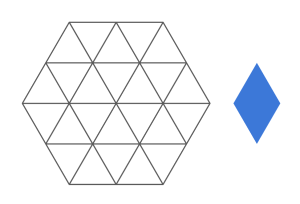
| I’m redoing my kitchen floor using rhombus-shaped tiles composed of two congruent equilateral triangles. One such tile is shown in blue below. How many distinct ways can I use these to tile the outlined region below, which consists of 24 equilateral triangles arranged in a regular hexagon? |
 |
And for extra credit:
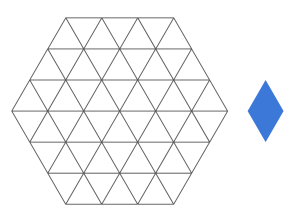
| I’m also redoing my patio, using similar rhombus-shaped stones. How many distinct ways can I tile the outlined region below, which consists of 54 equilateral triangles? |
 |

Solution, possibly incorrect:
Method 1: I quickly whip up a program. And I add memoization to it. And it arrives at a state, where it can find the answer in 3 minutes.
Result: 20.
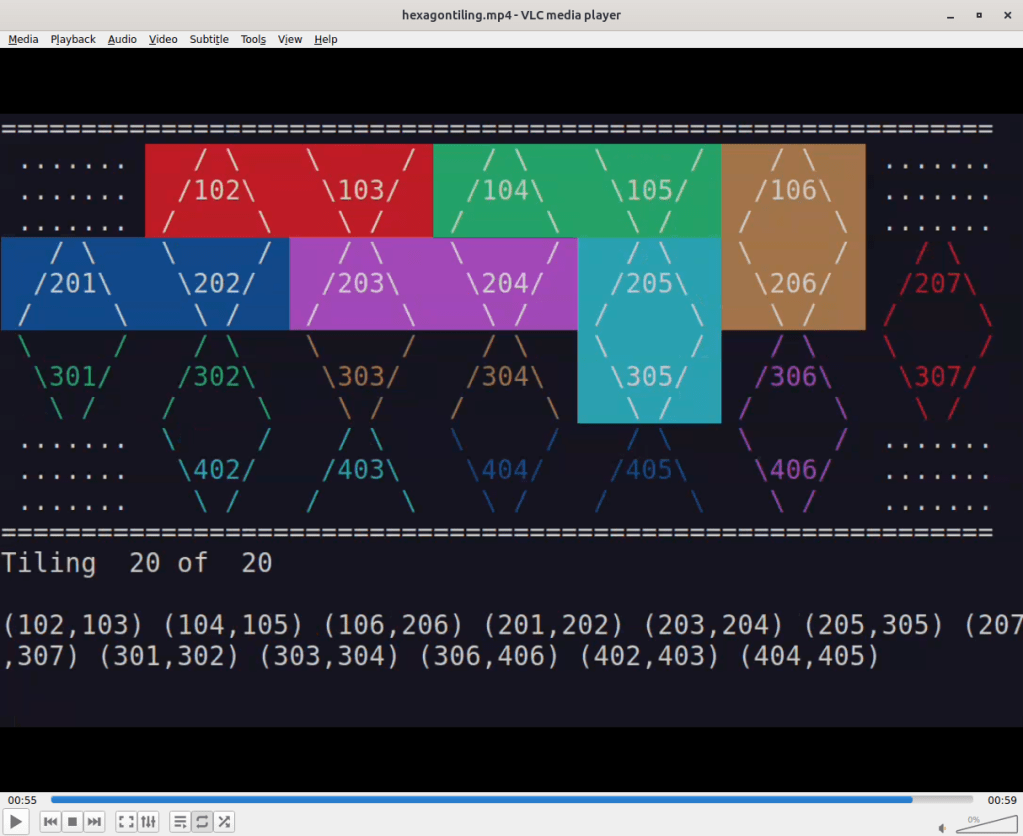
I also produce a video, documenting all the possible tilings. (Beware: this post has a lot of videos and images.)
And just to go nuts, I produce screenshots from that video. Yes, I know, you don’t have to thank me.
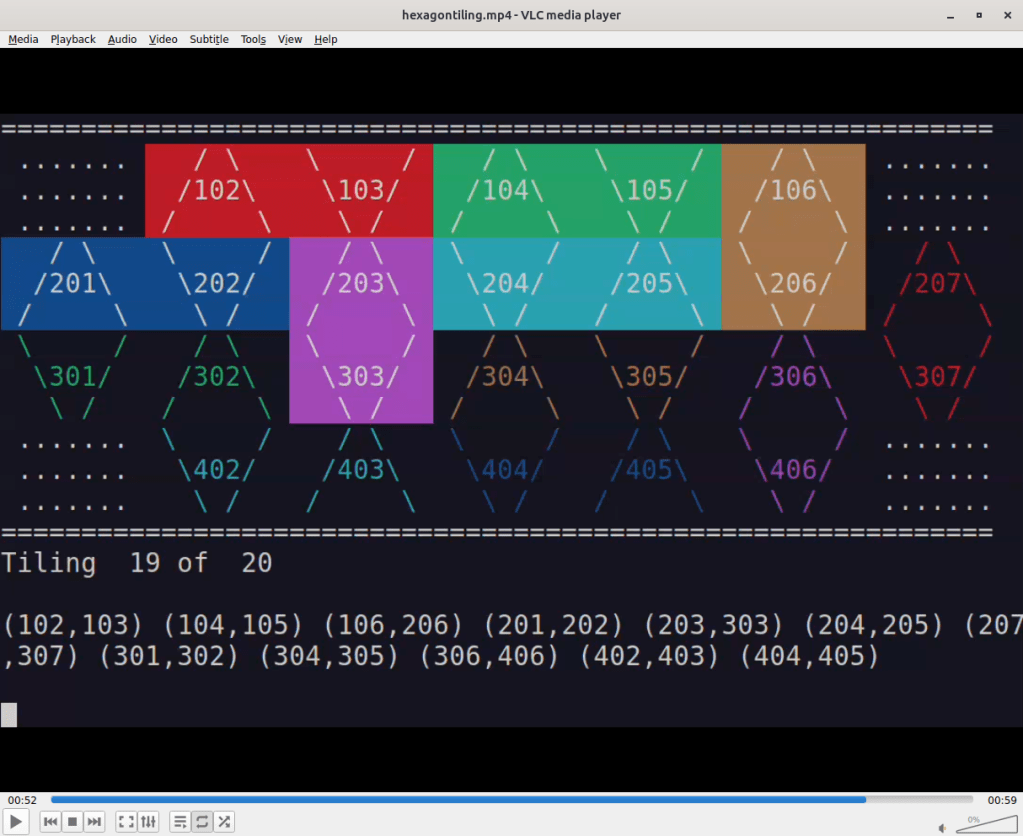
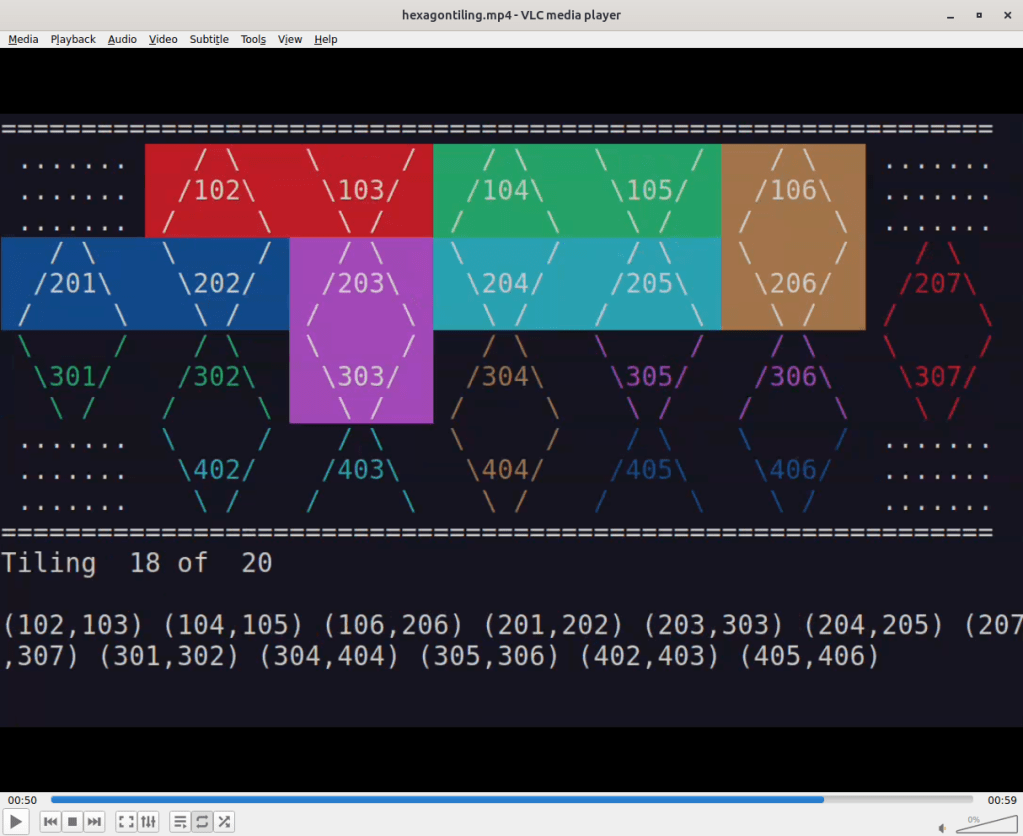
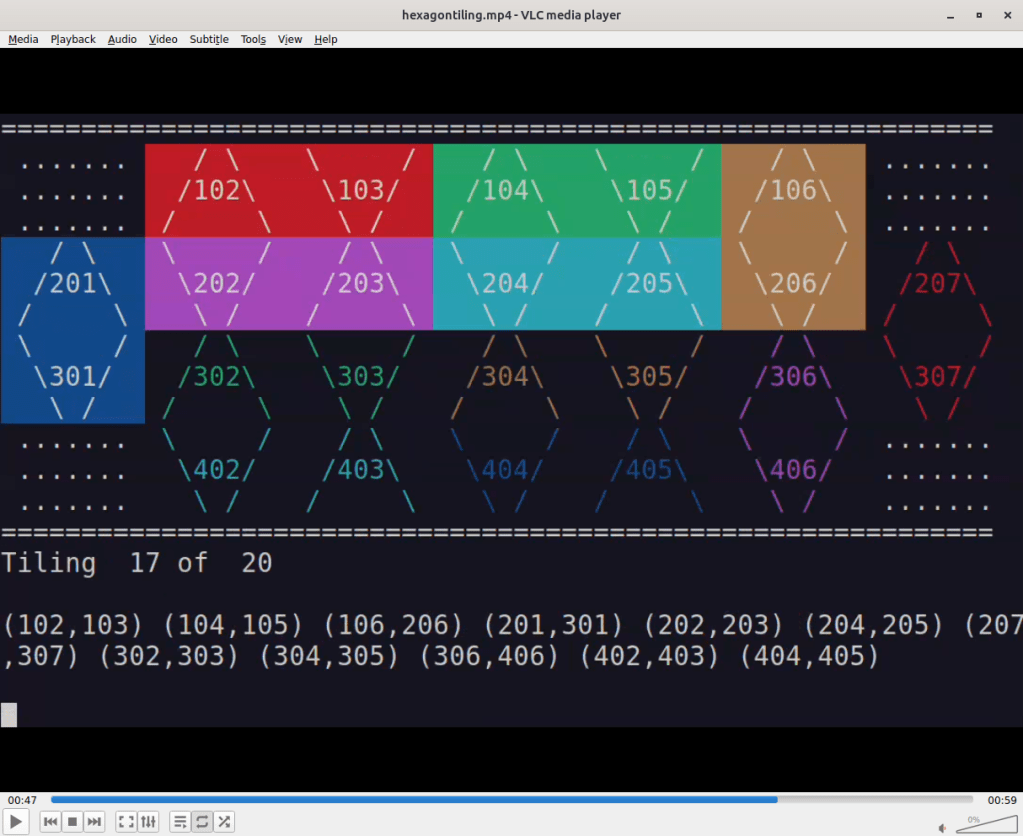
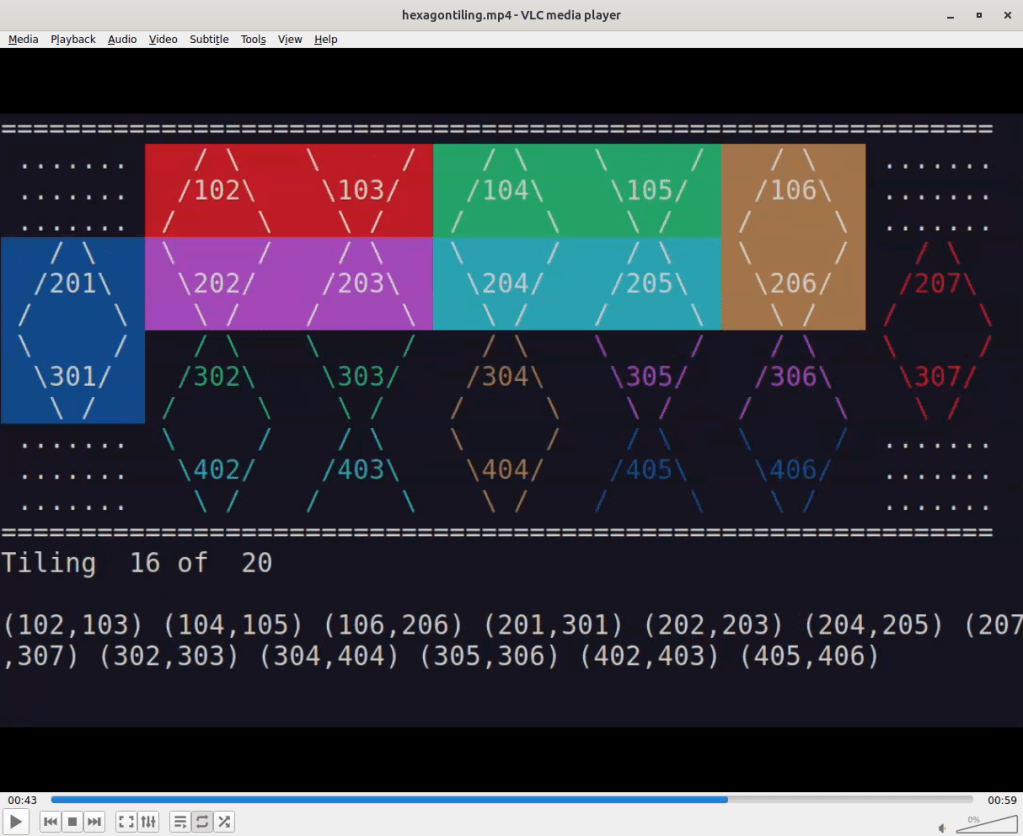
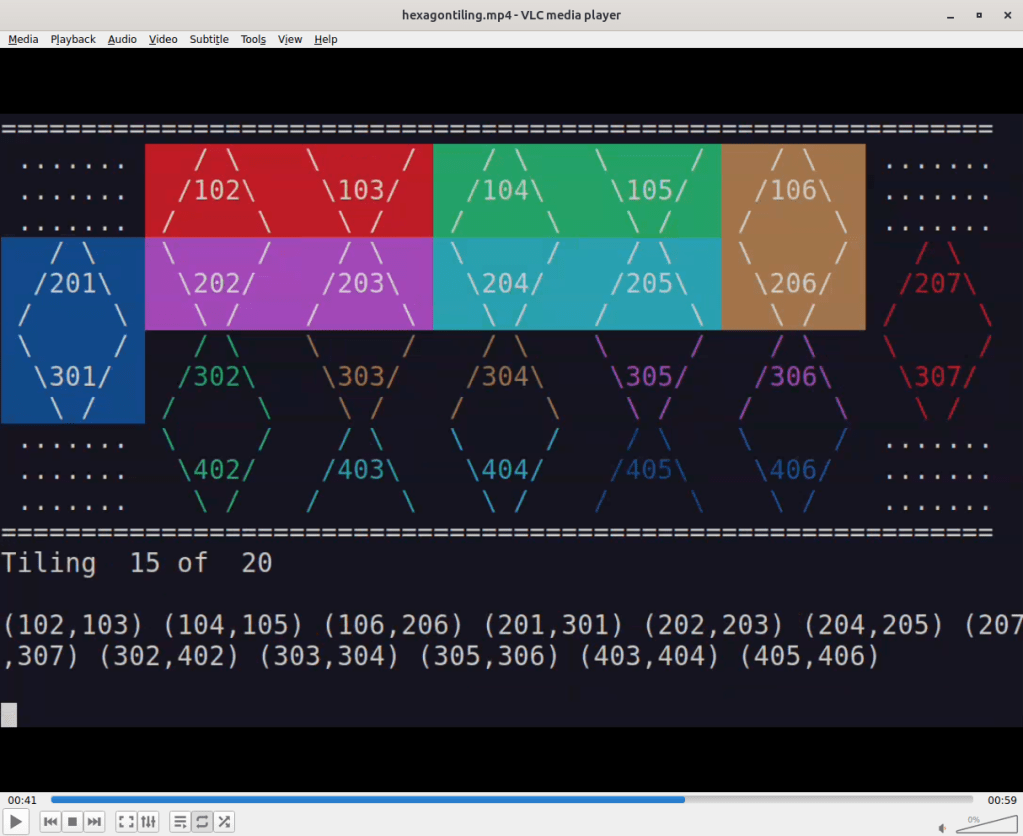
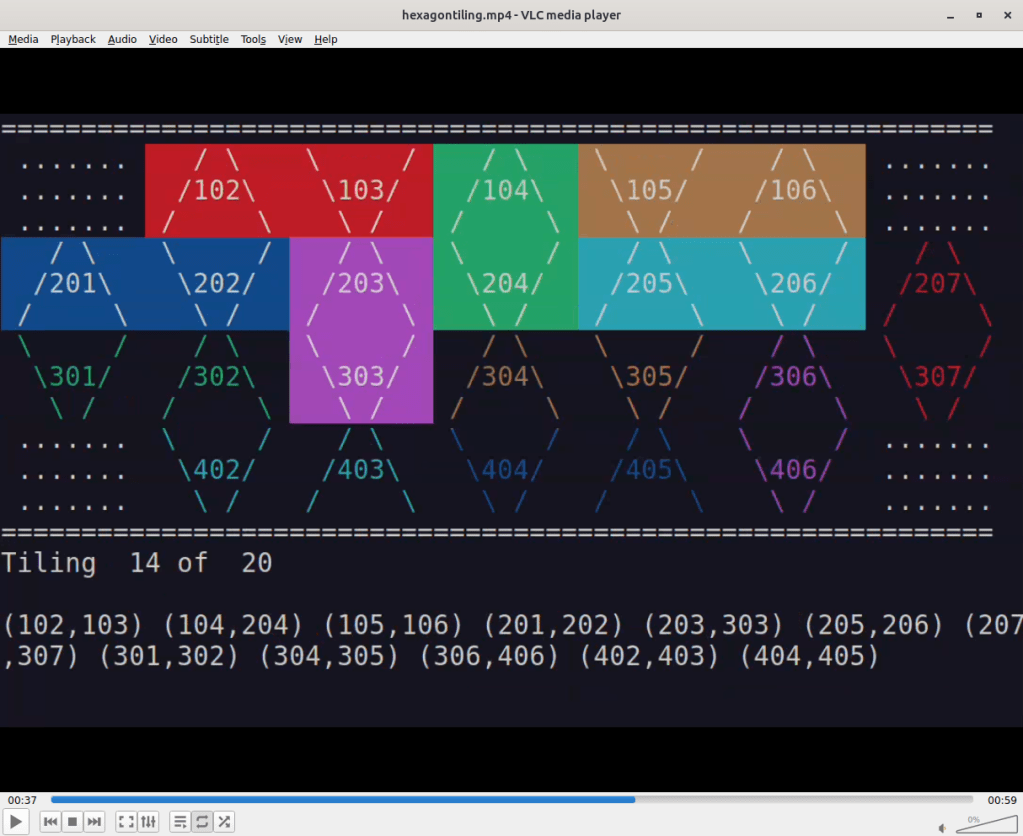
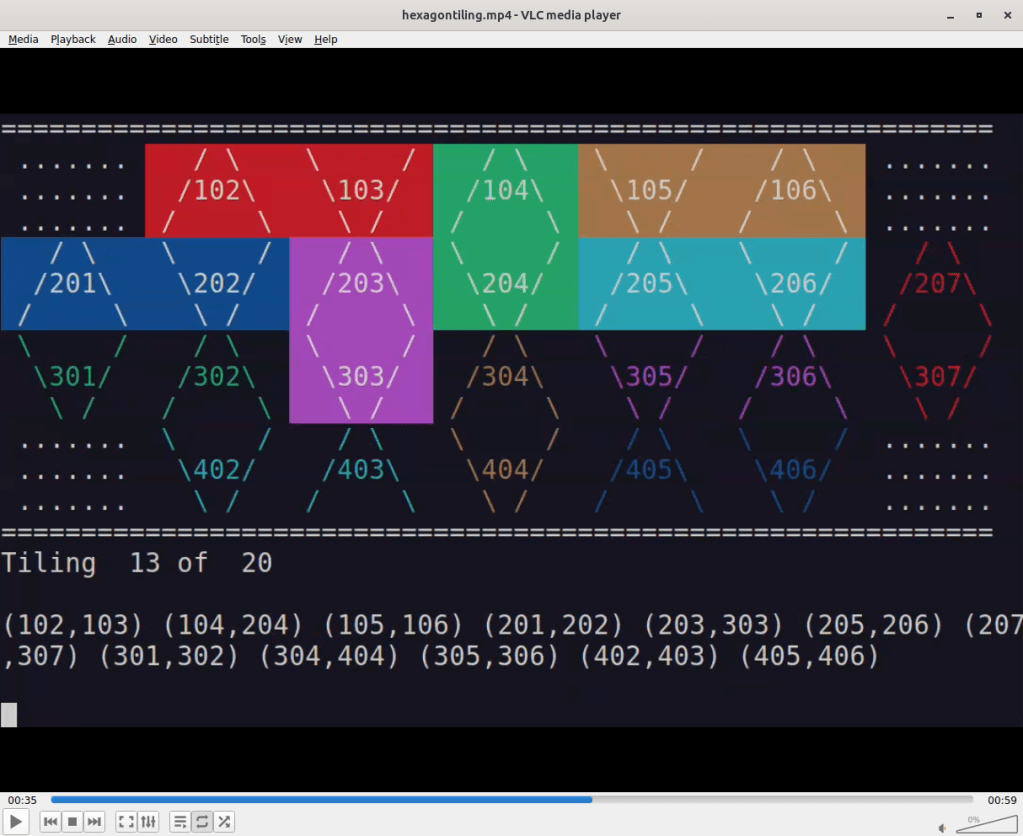
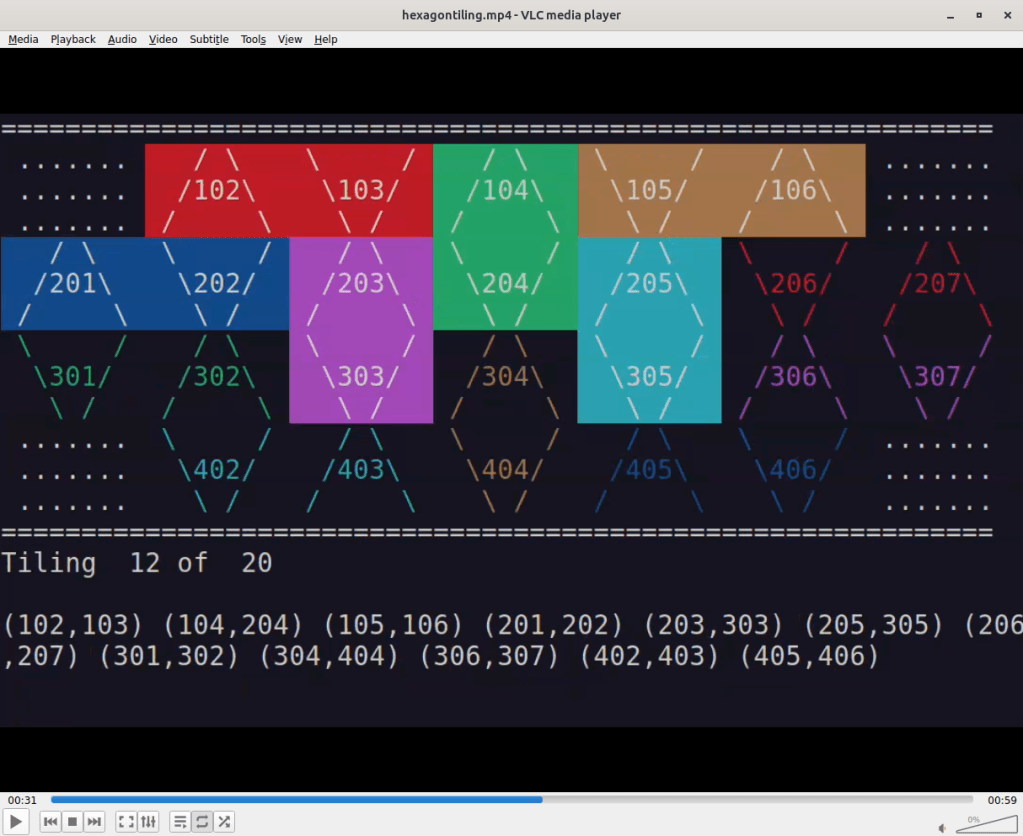
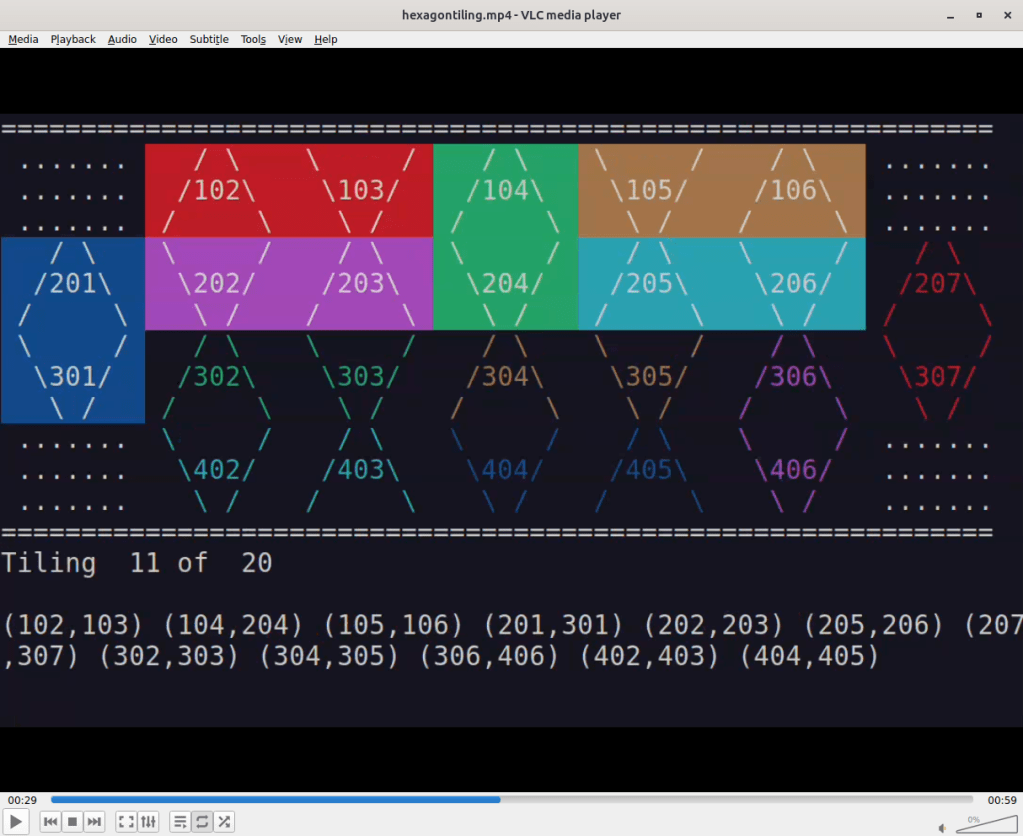
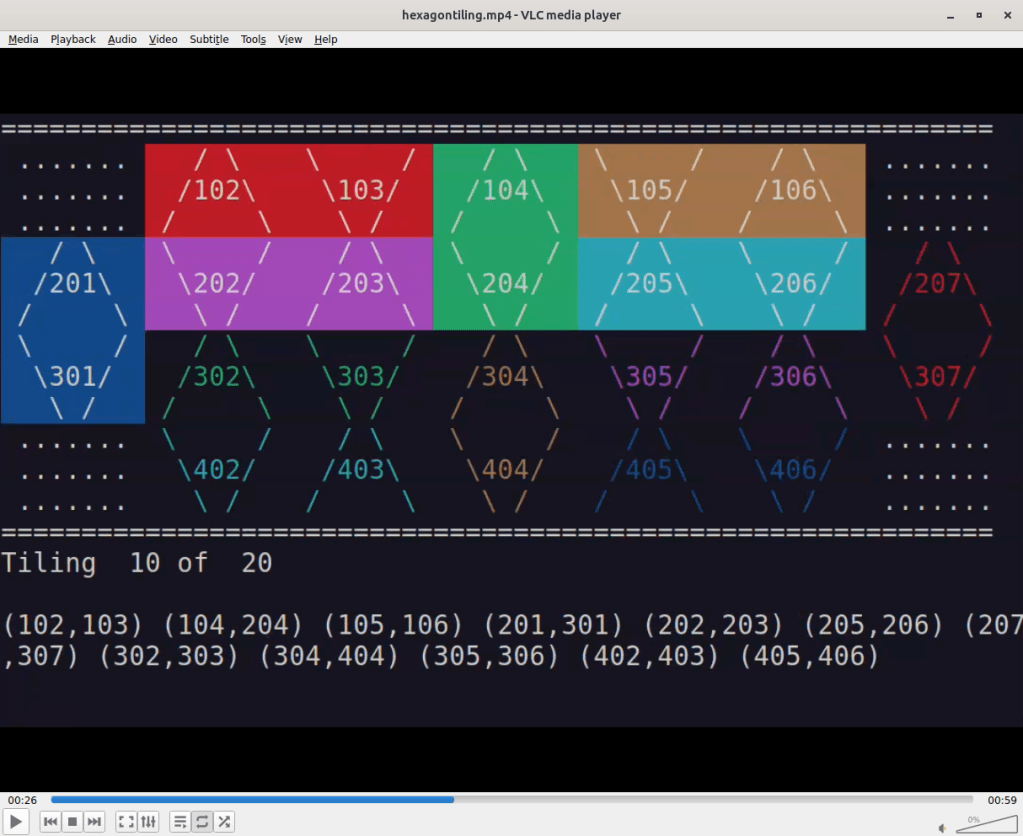
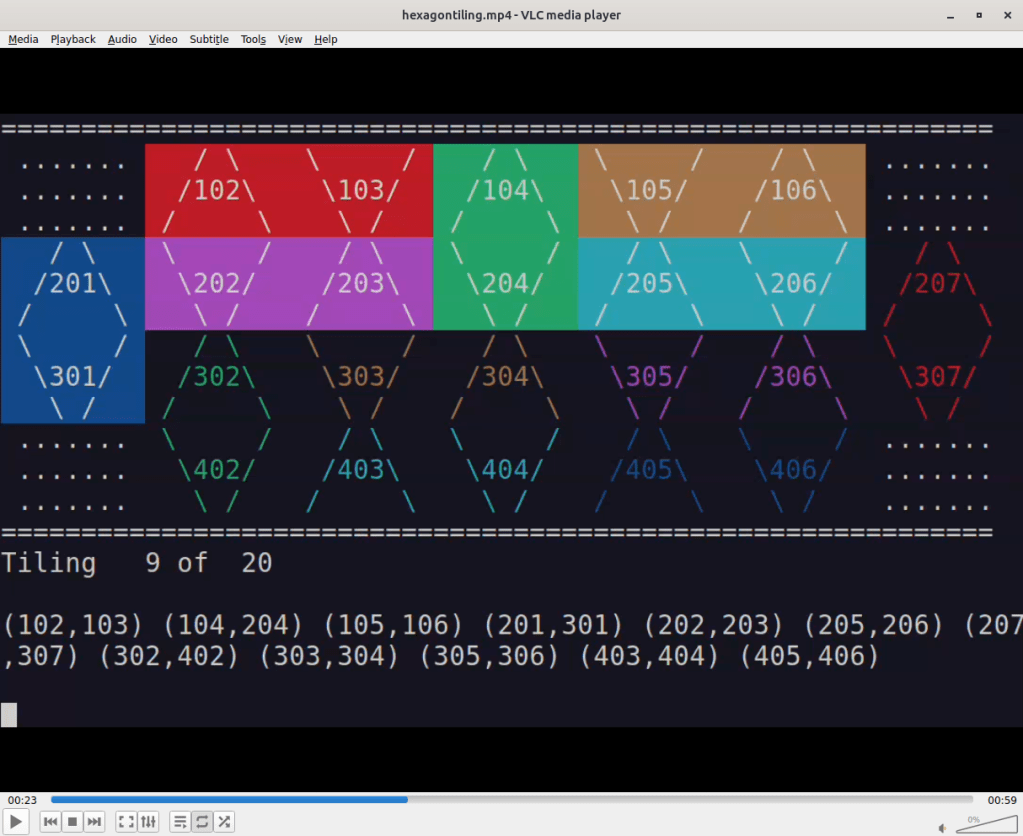
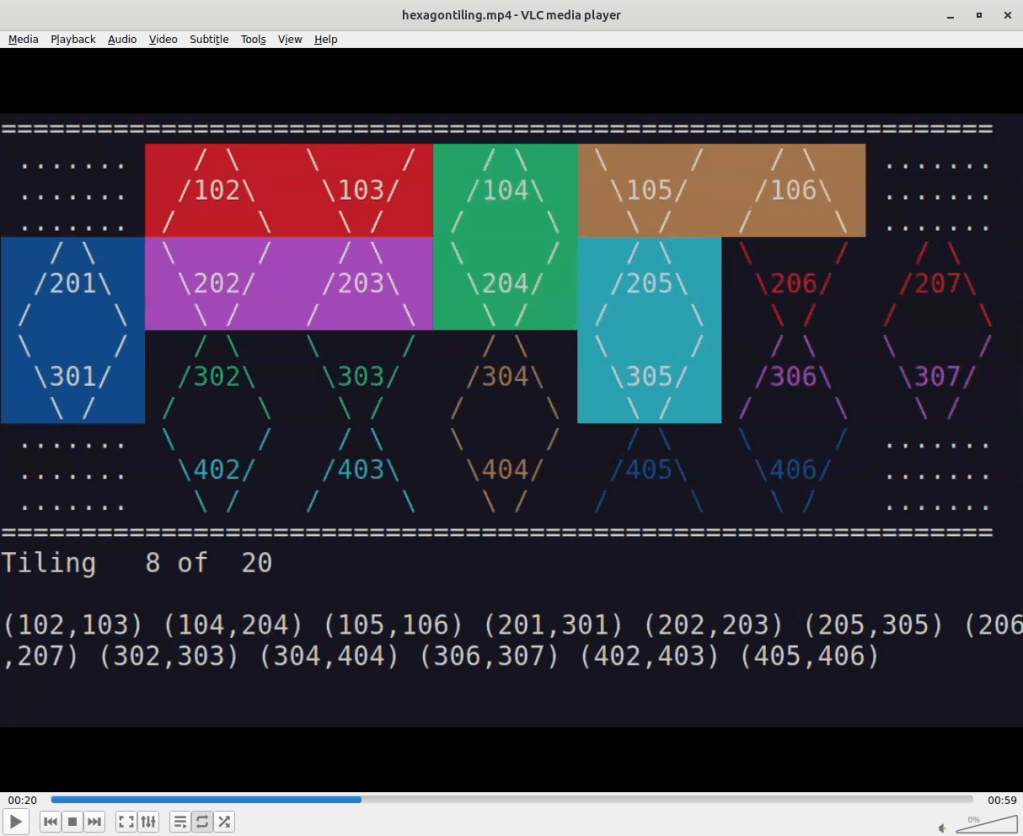
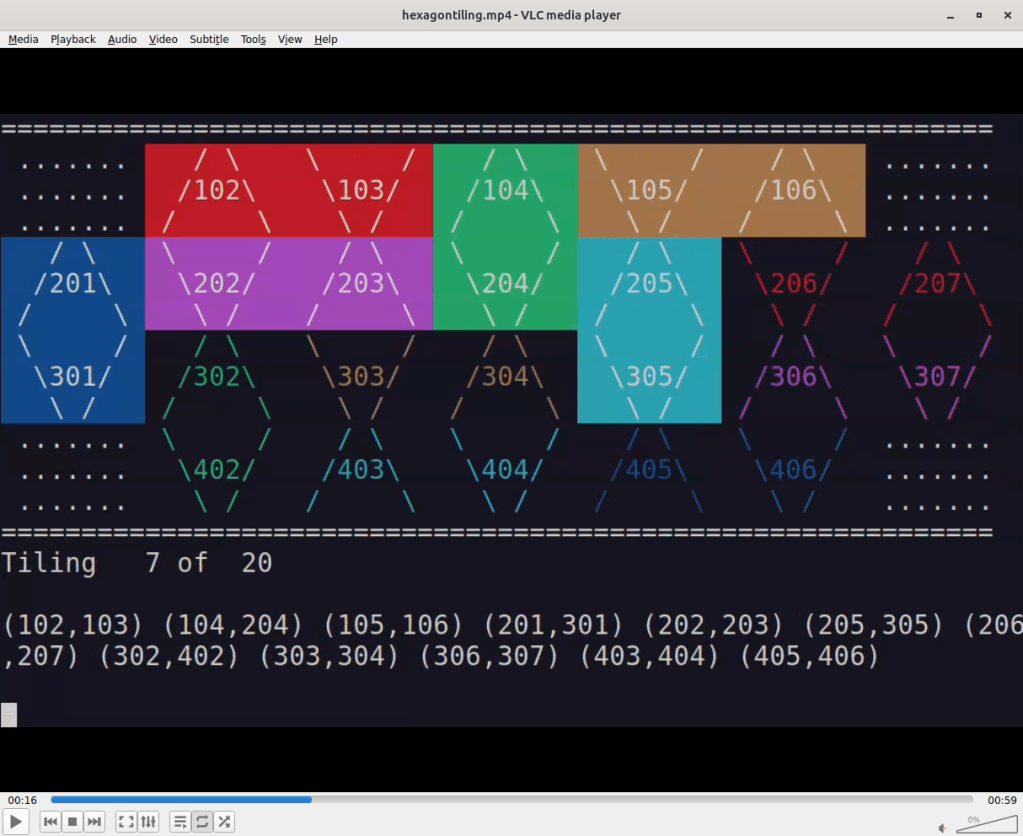
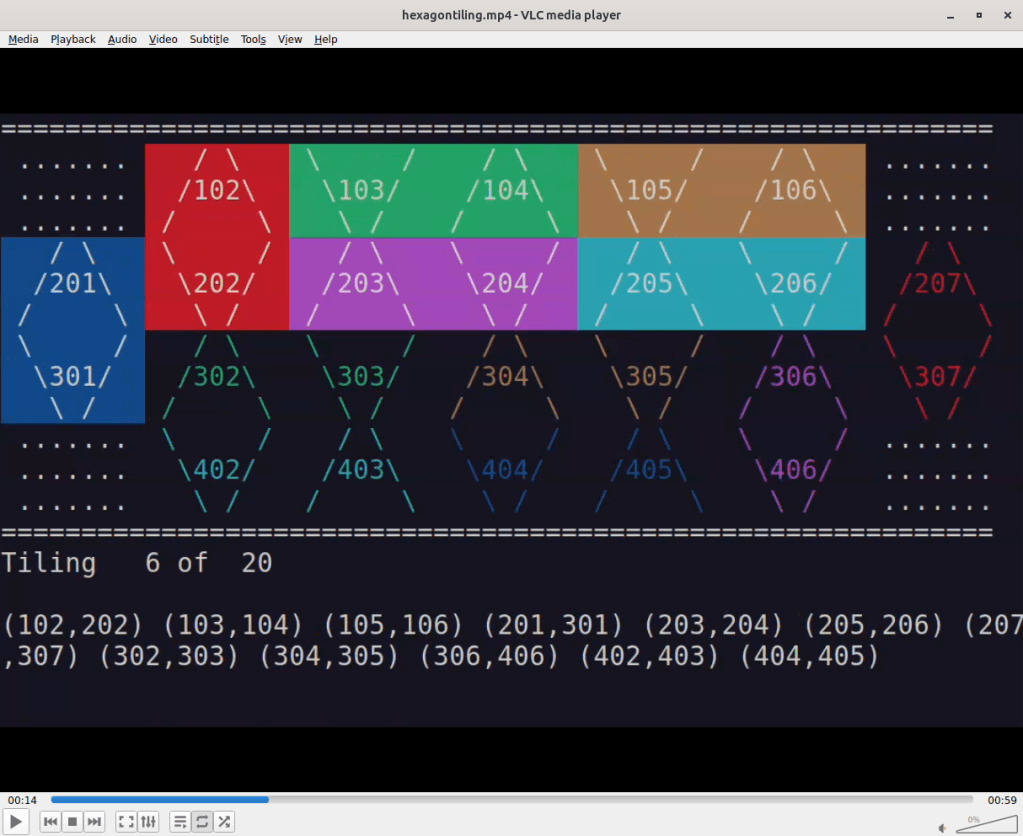
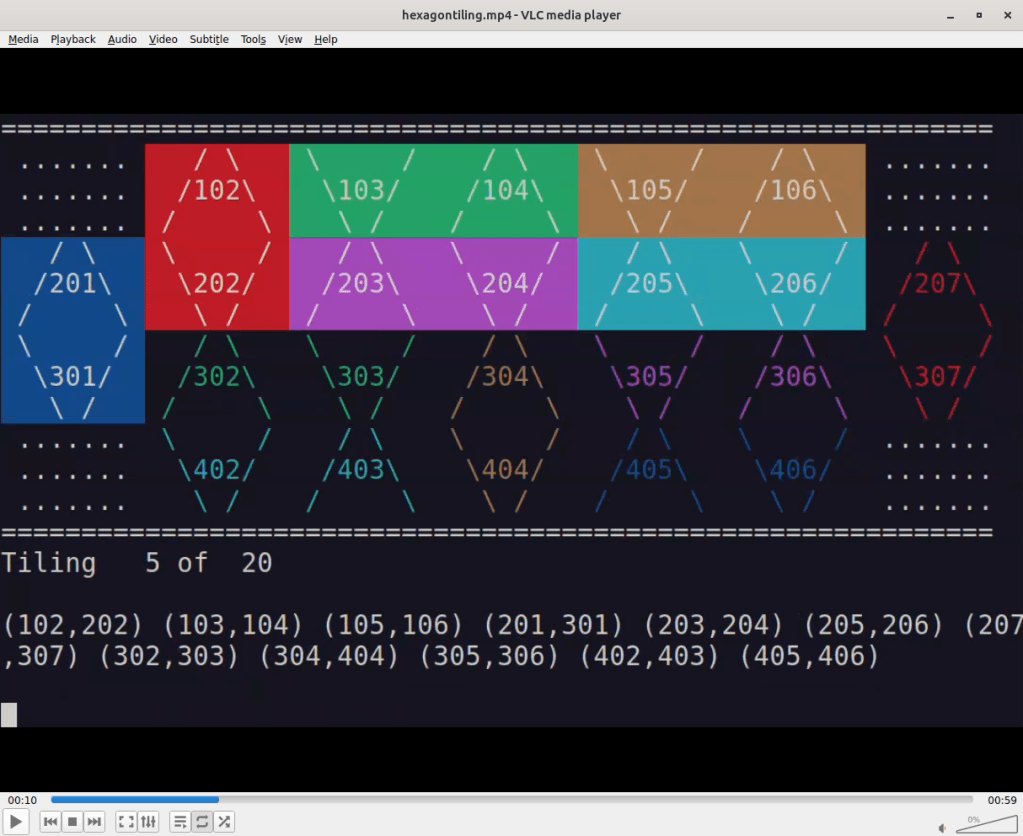
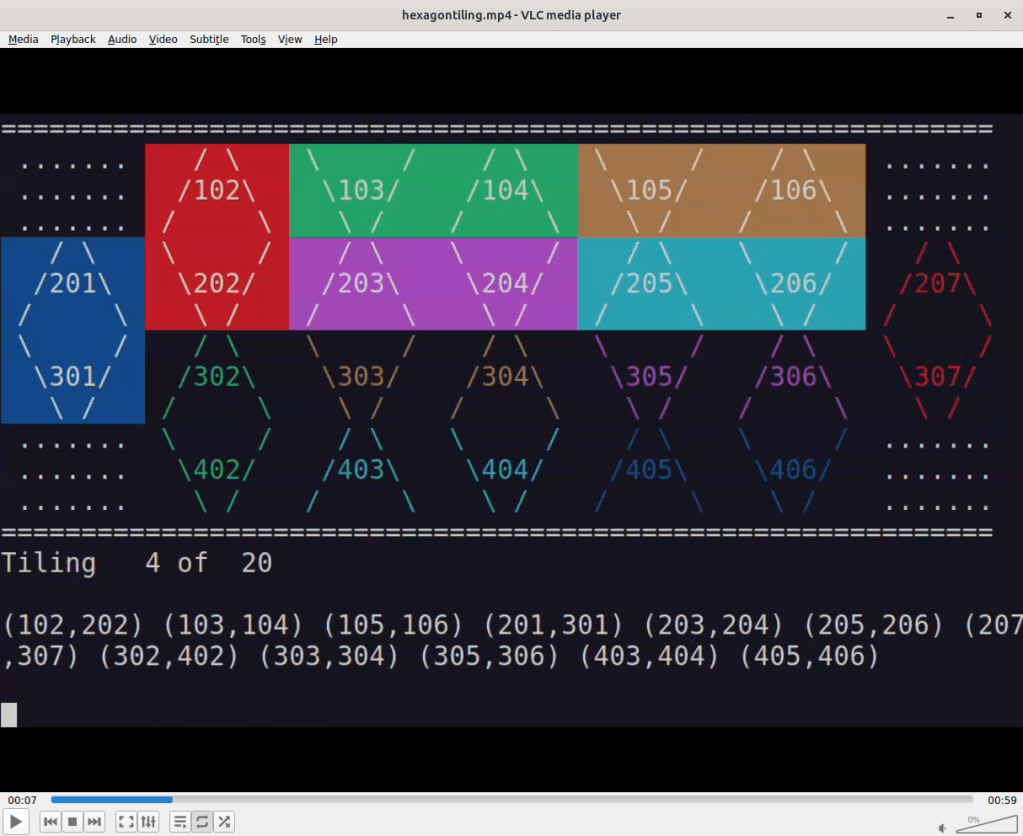
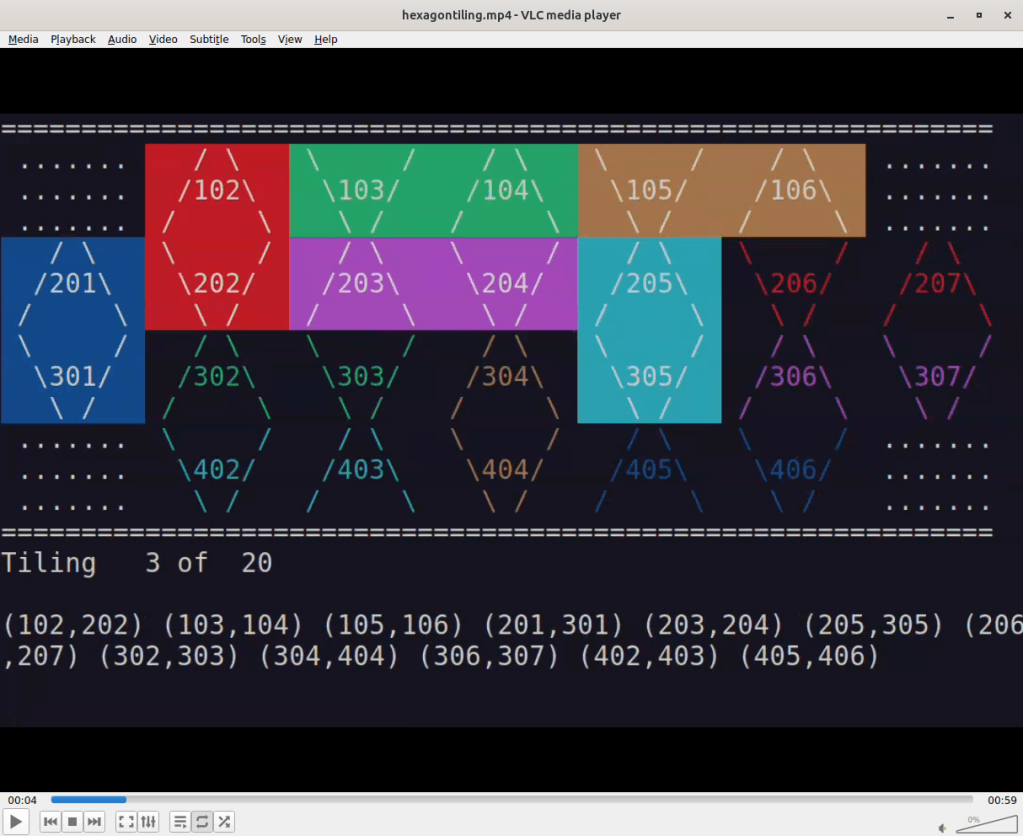
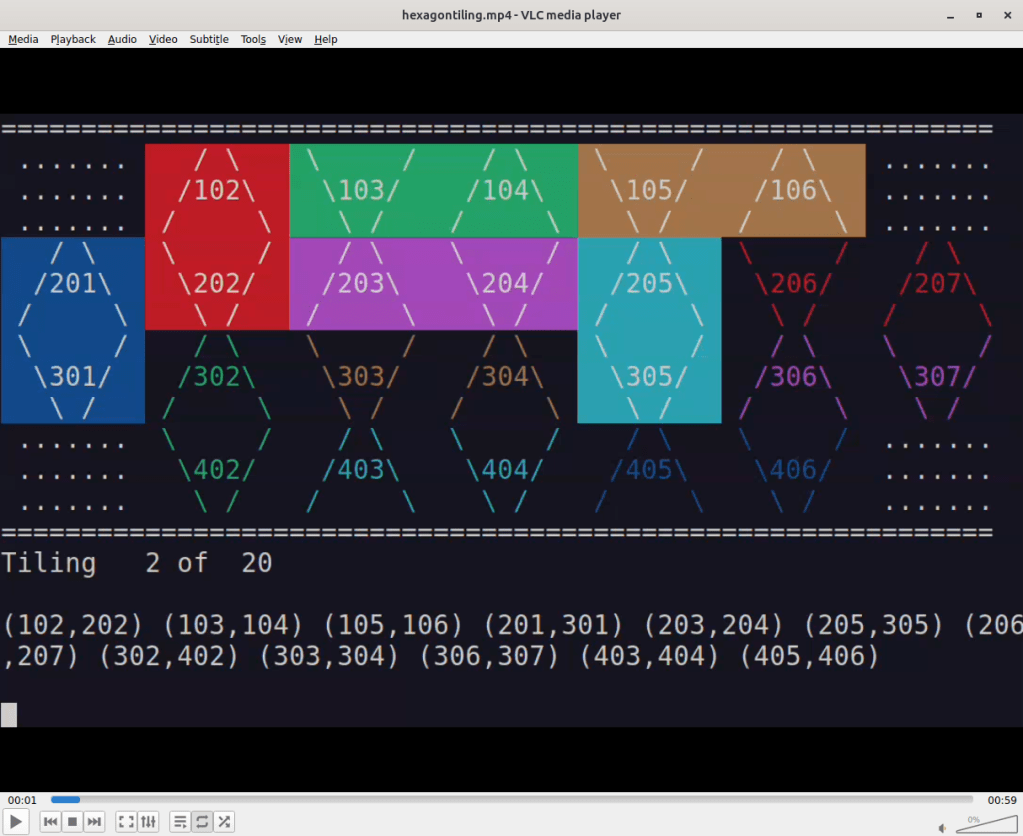
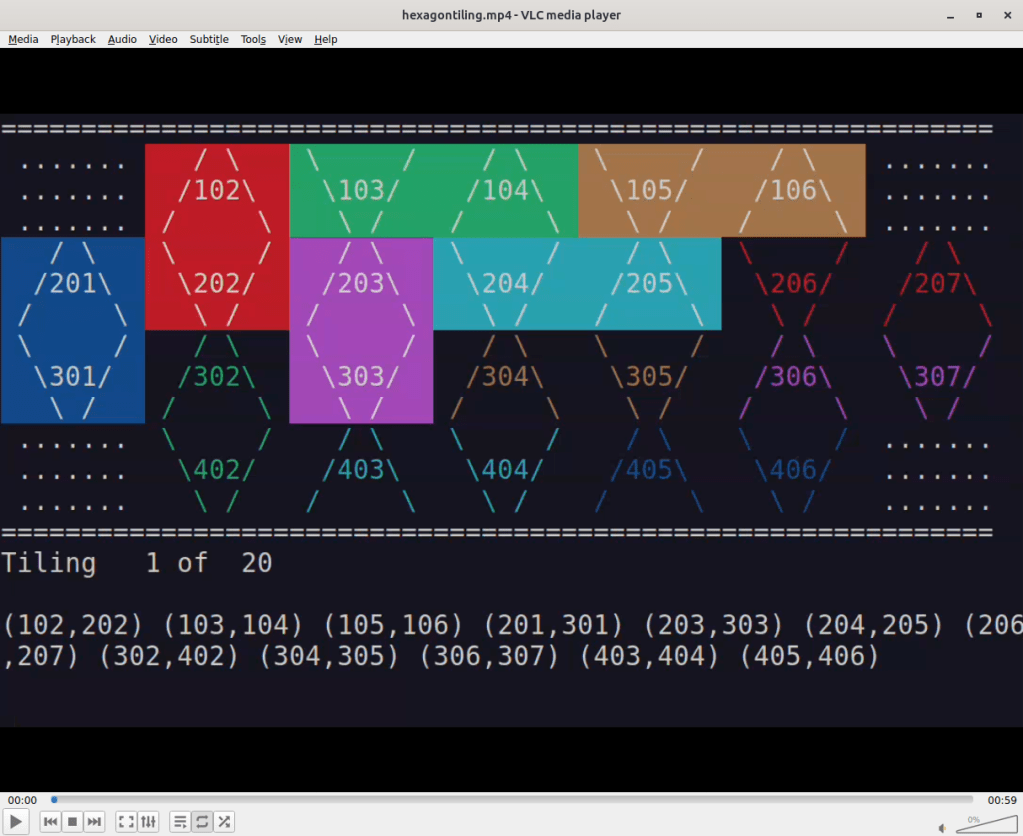
I go through my notes and end up producing small families of solutions, where each family is connected by rotations. Like this one, with 6 rotations of the same solution.
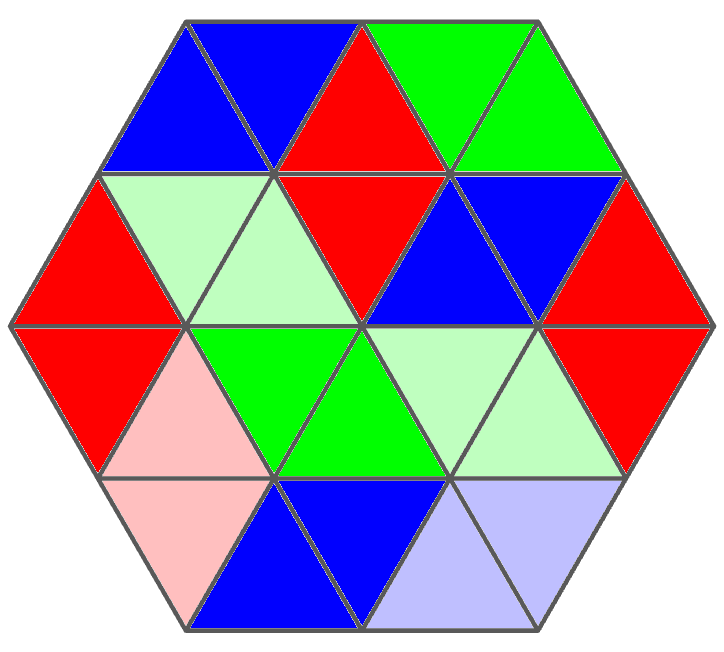
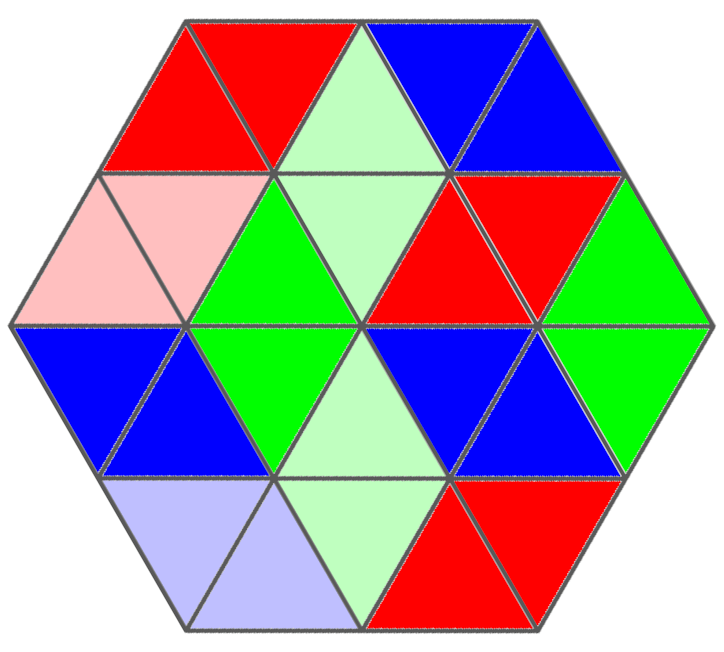
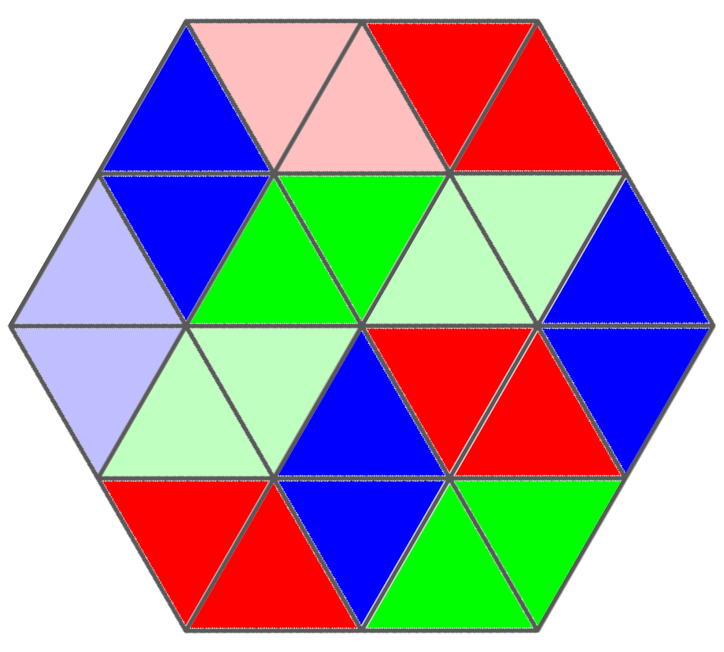
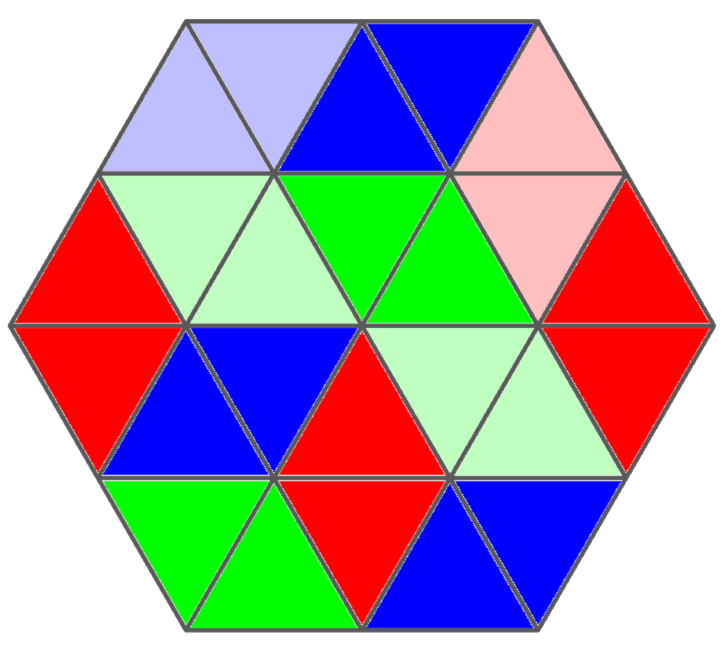
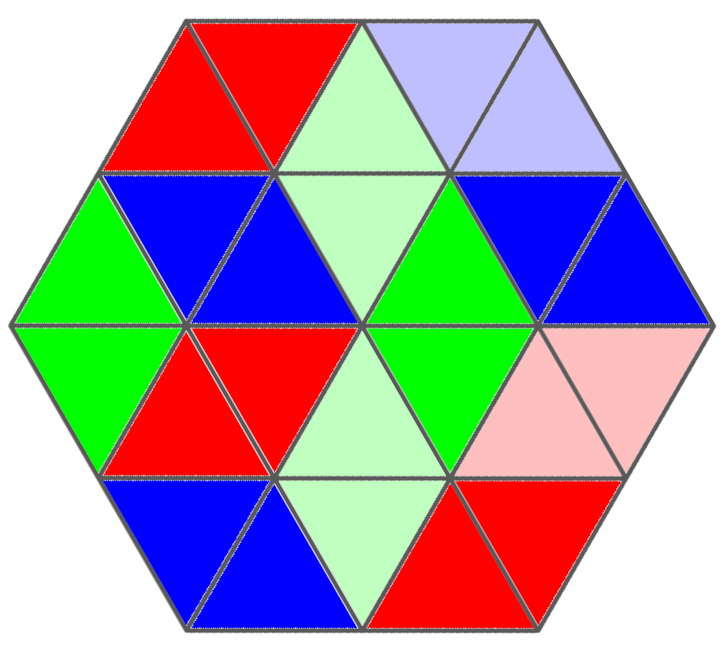
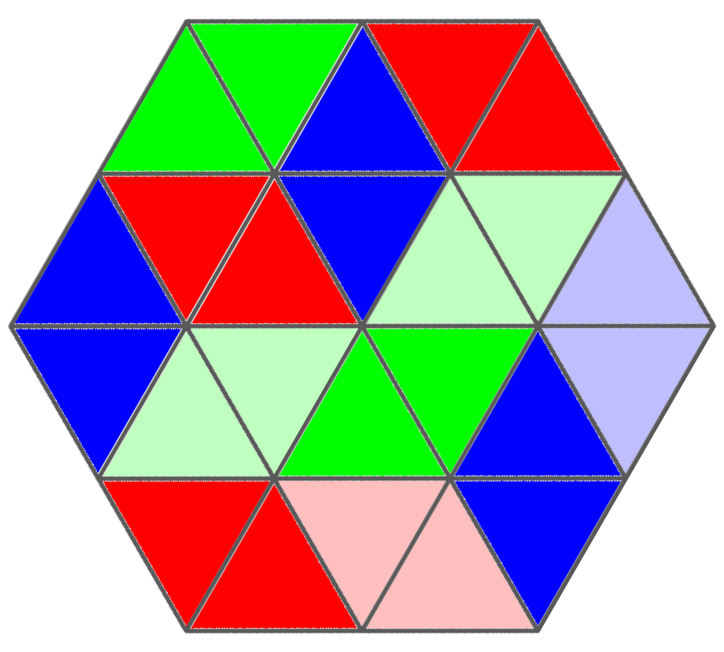
Or this one:
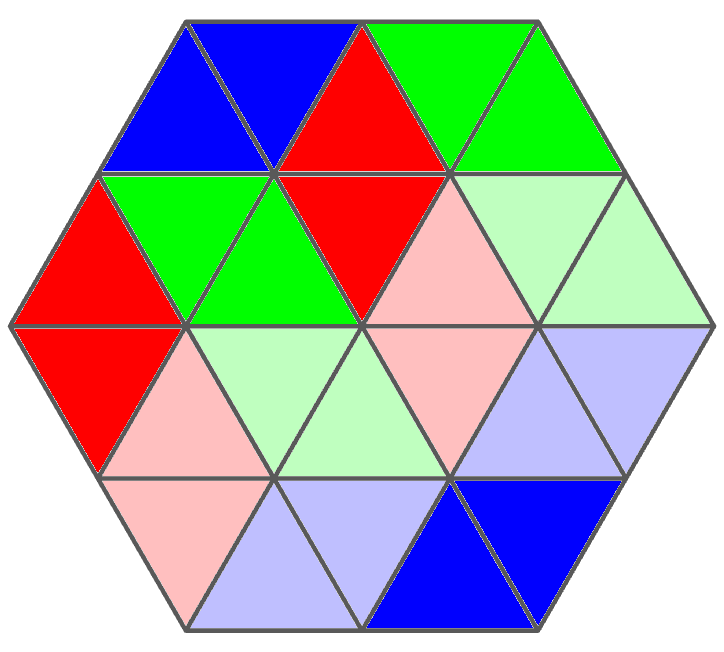
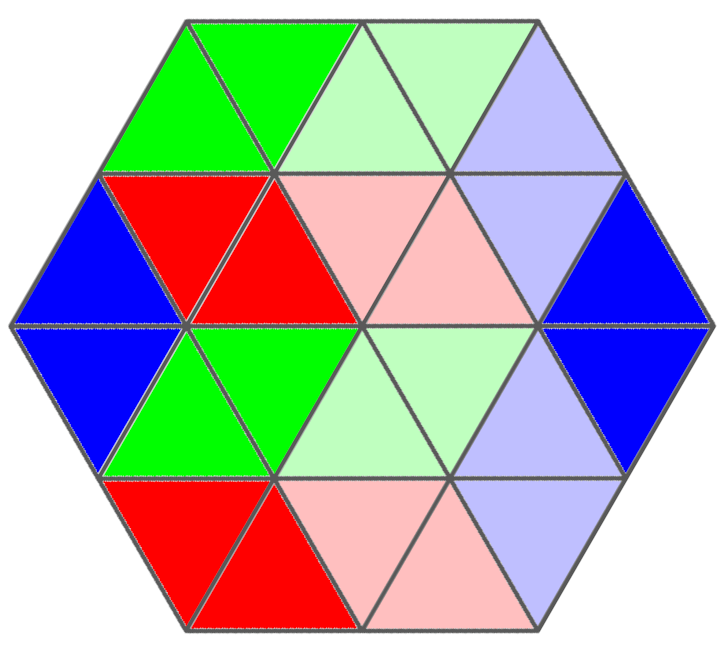
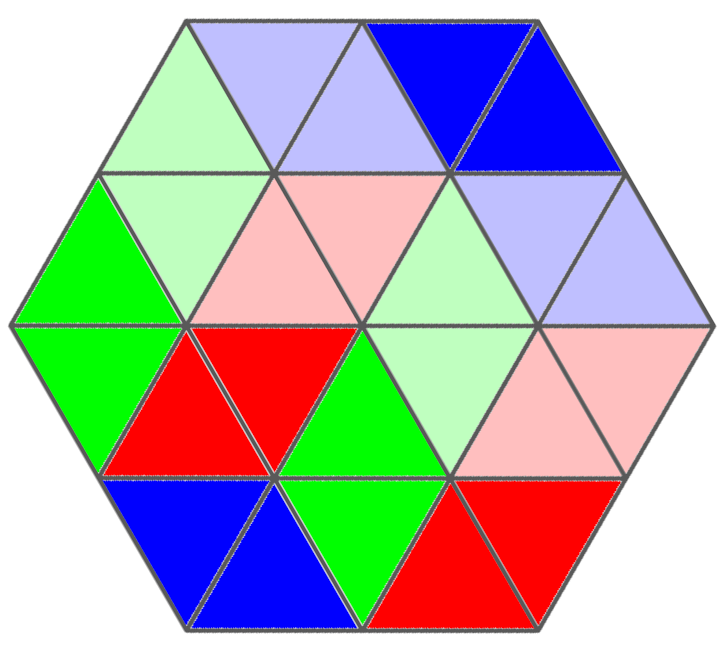
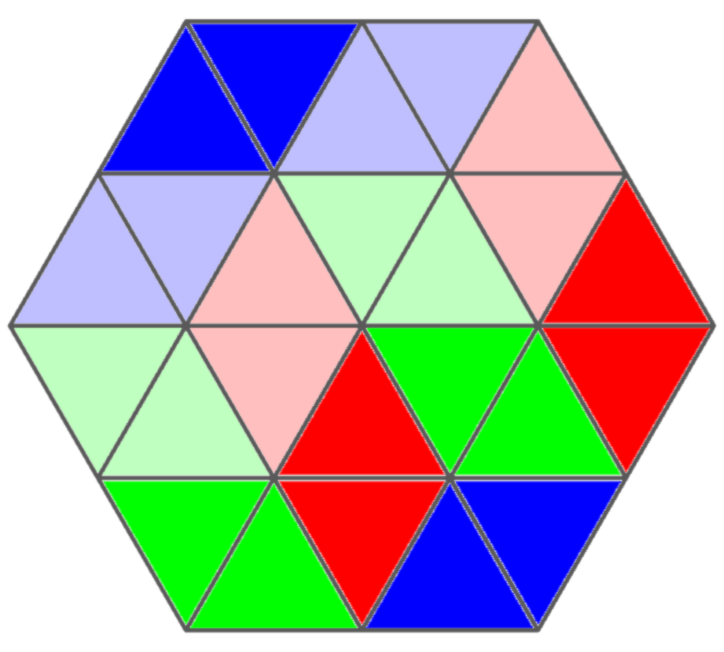
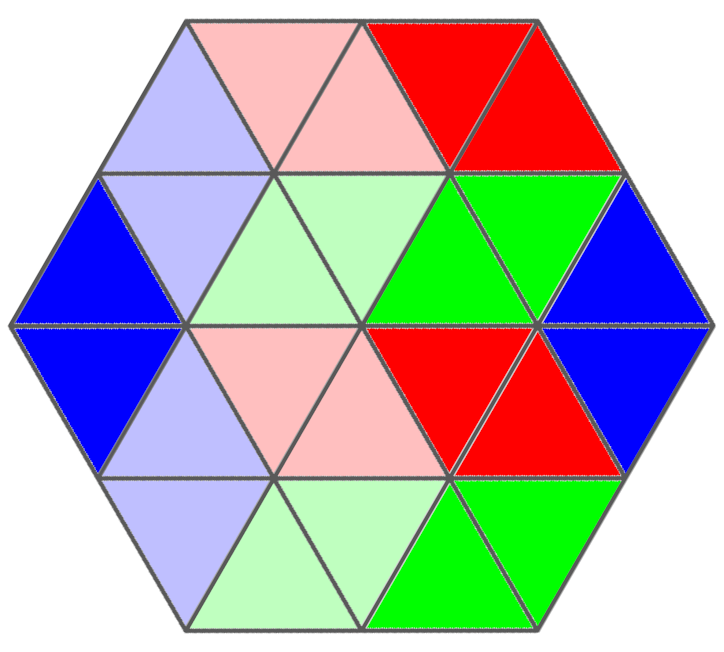
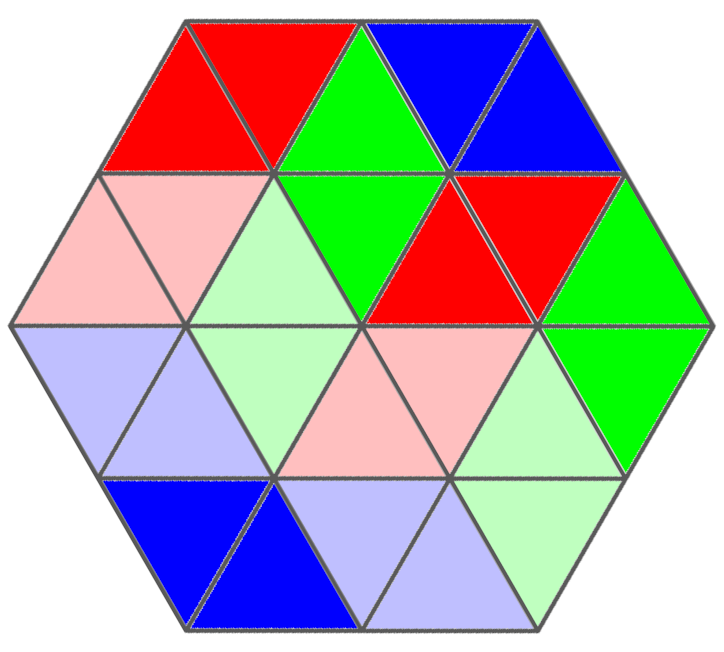
A smaller family.
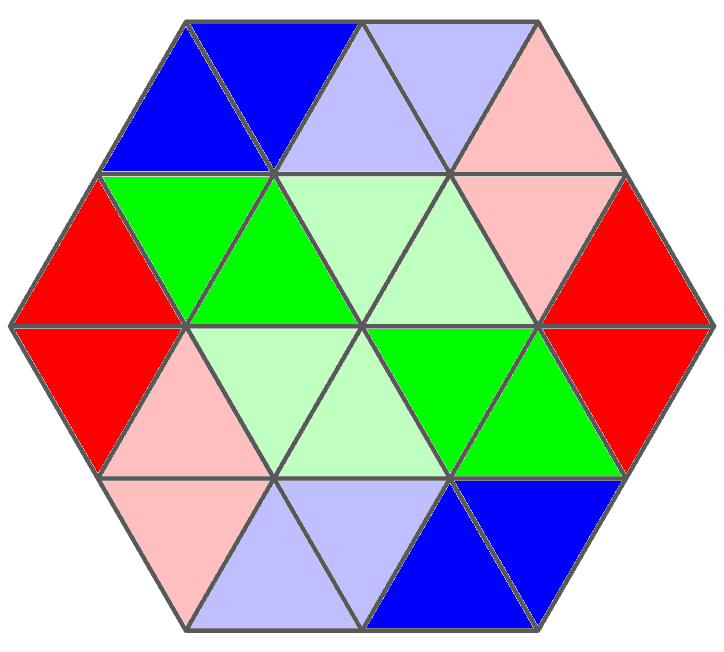
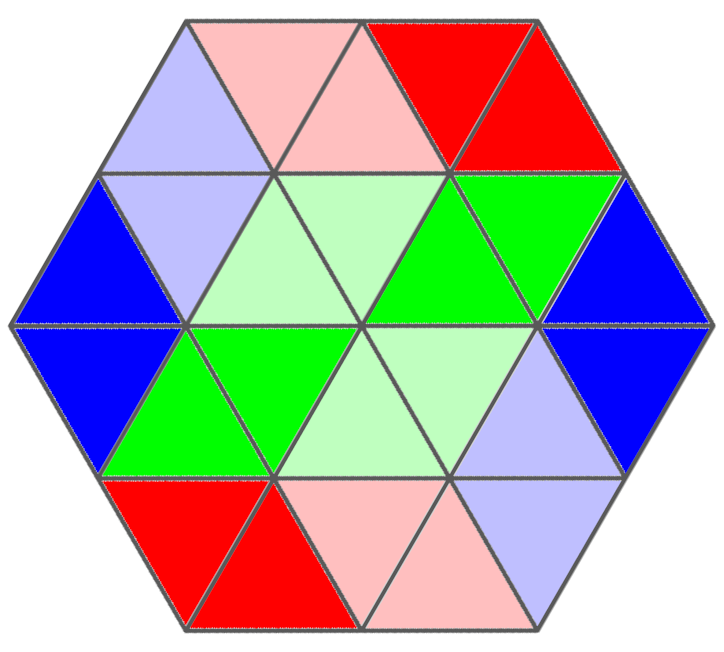
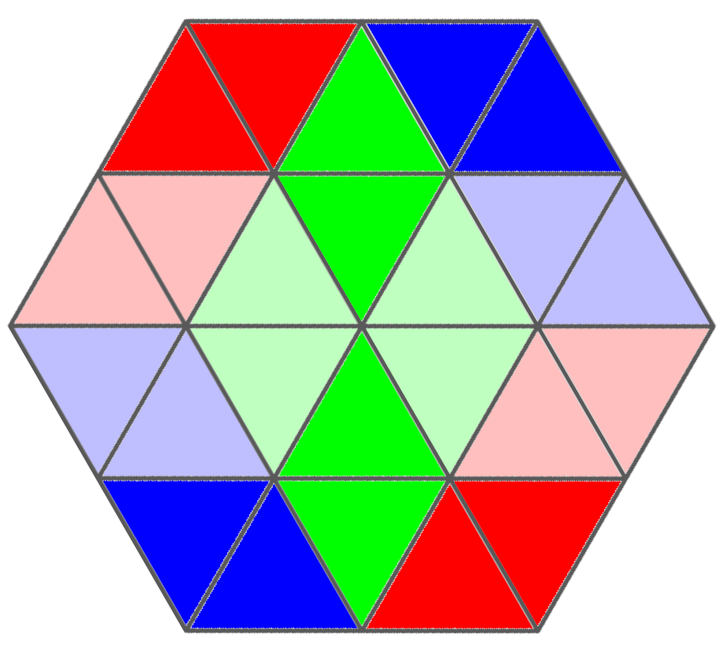
And an even smaller.
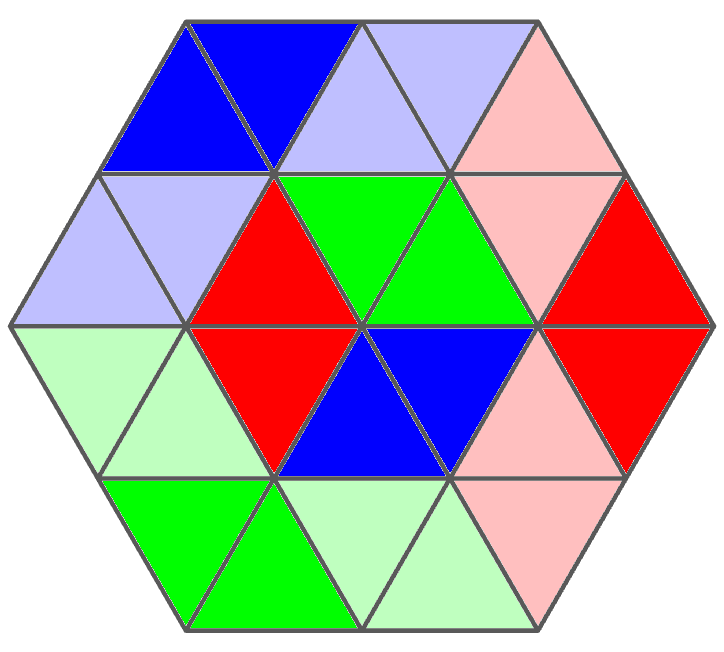
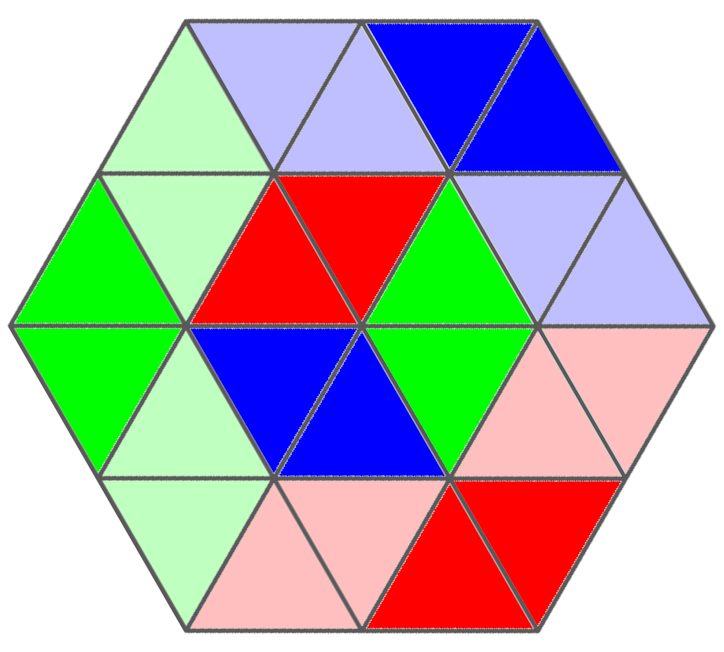
Like this one:
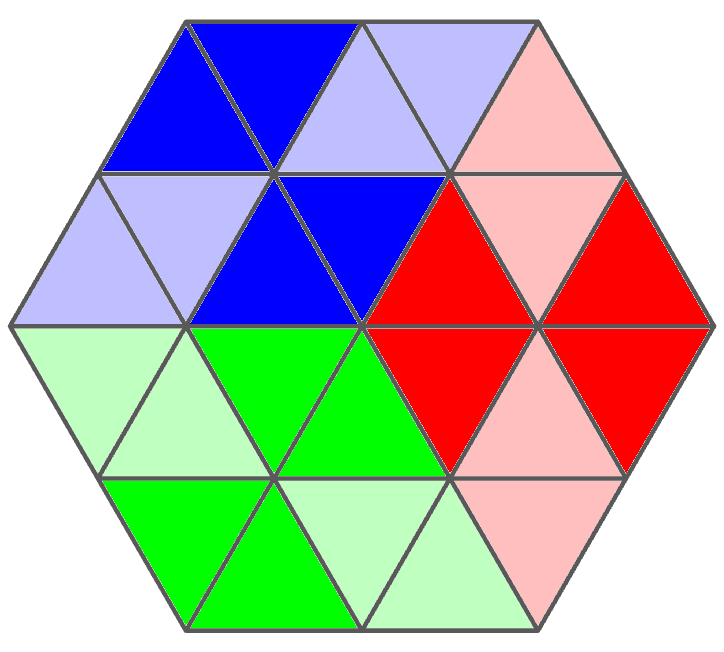
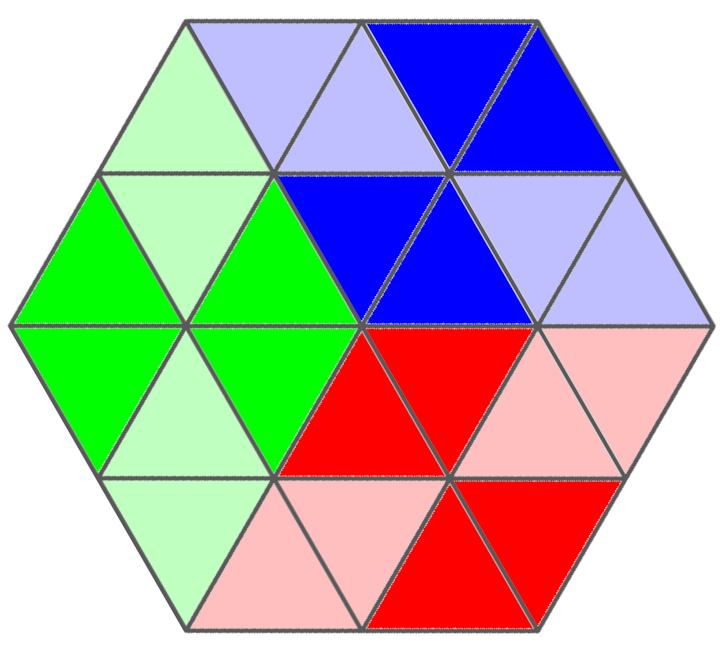
And finally a singleton.
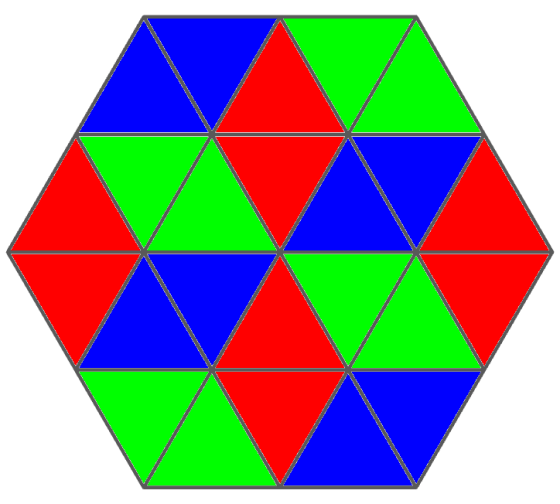
Mirrors just end of producing the same results as rotations.
I will get back to the fiddler again later.
And for extra credit:
Method 1: Run the program again. Ehm. That will take too long. Sigh.
Method 2: Search internet. Hey, what’s this?
“the total number of plane partitions that fit in the box :”

I think the box is if the hexagon tiling is viewed in a 3d way. The “box” has the same side lengths as the hexagon. The plane partitions correspond to the tilings. Yeah, this one confirms it:
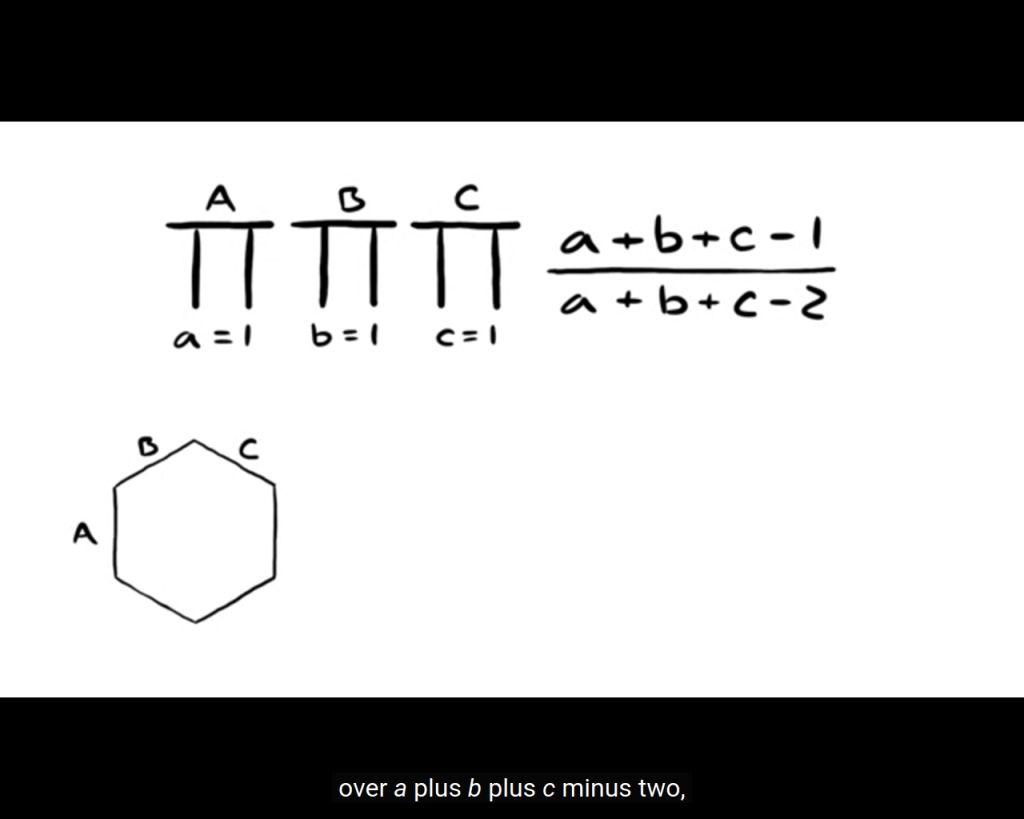
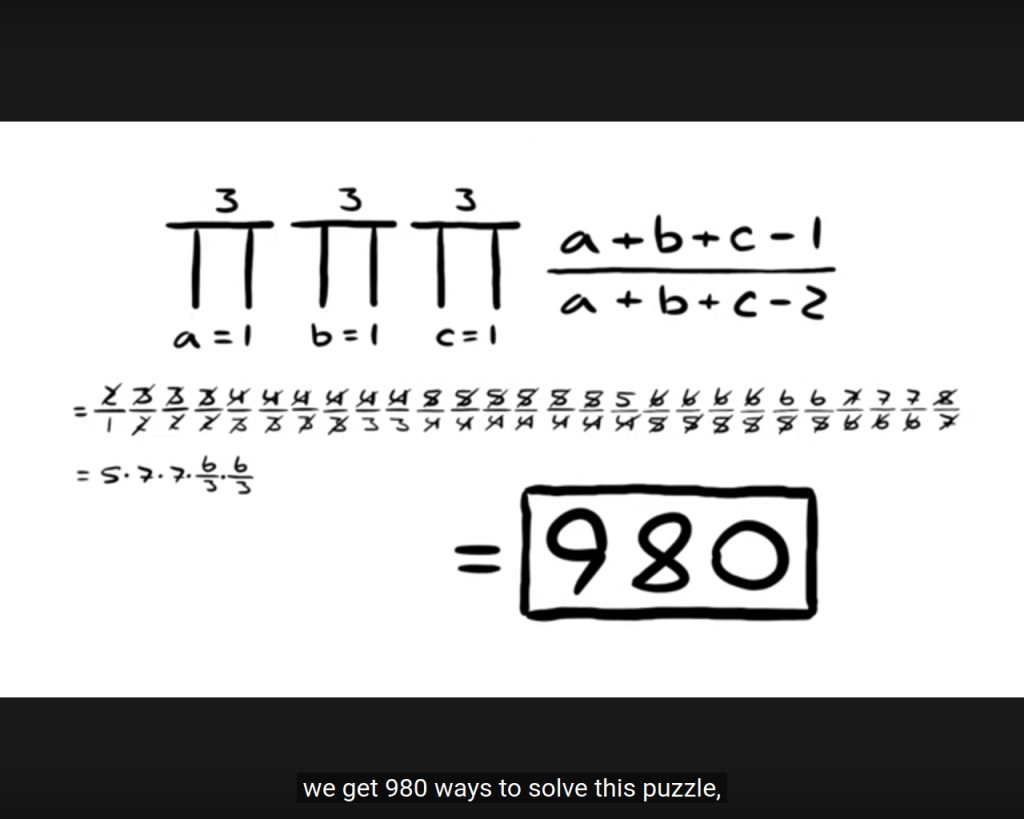
And just to make sure, the fiddler has a 2x2x2 box.
Or, from the other formulation of the count:
Awesome! And the video already did the calculation we want. .
More extra credit later.
The fiddler, again
Studying the sources mentioned above, I find a different method to produce the same solutions, with slightly squinked rhombi:
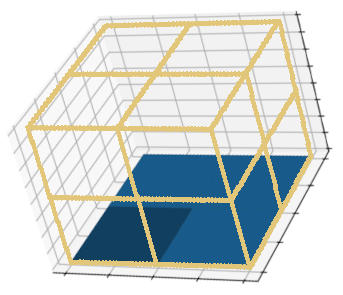
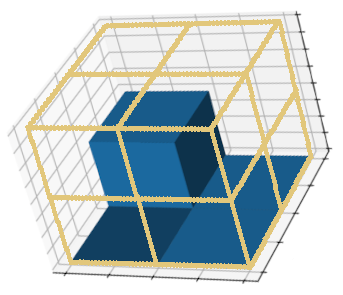
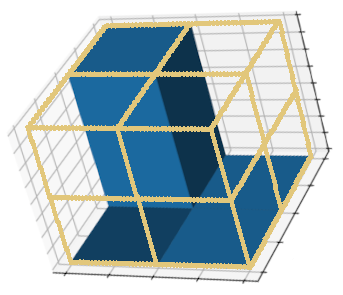
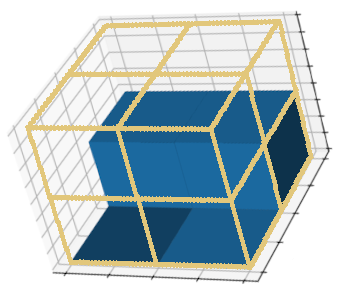
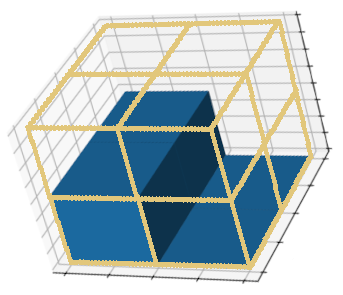
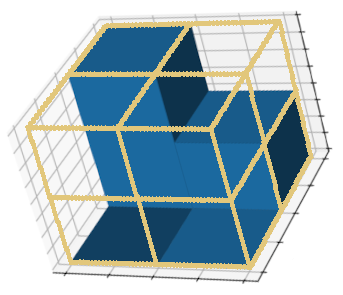
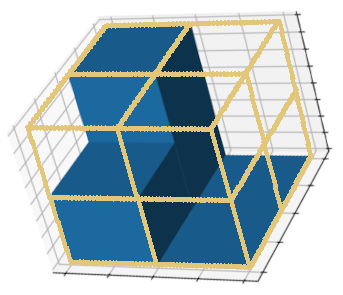
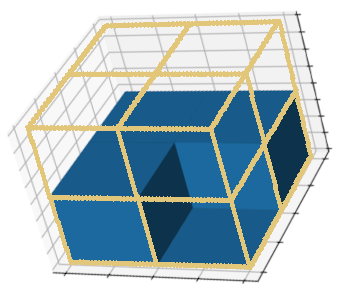
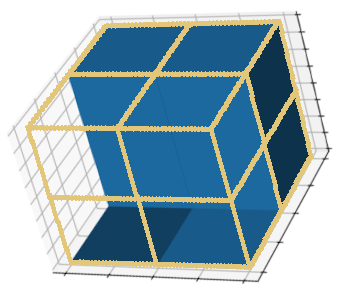
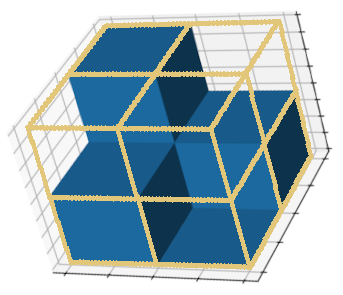
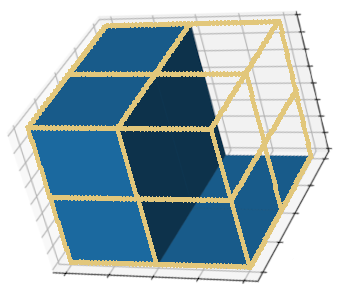
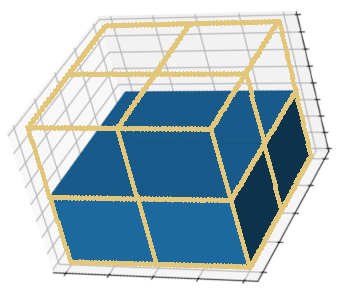
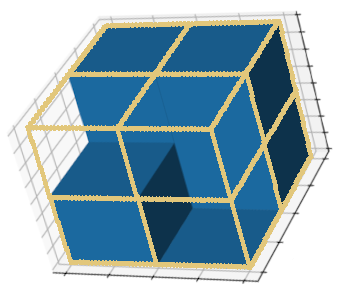
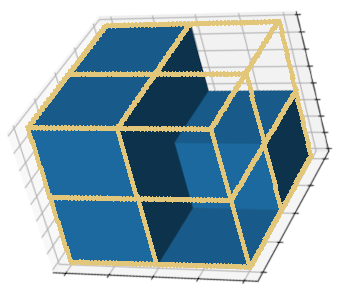
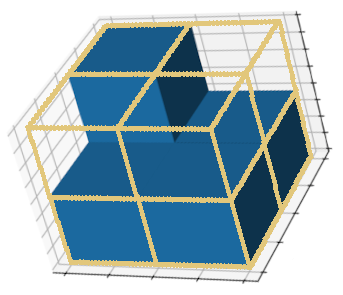
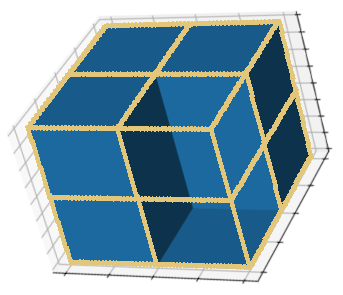
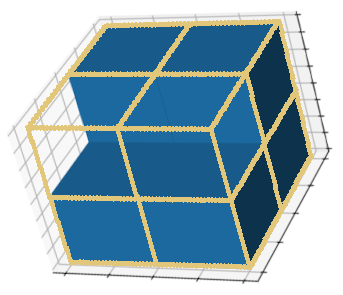
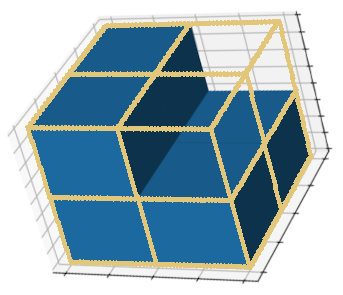
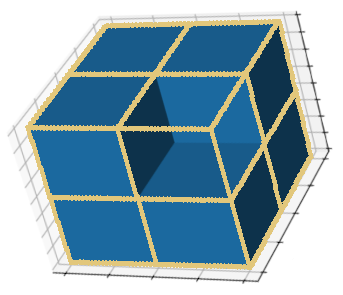
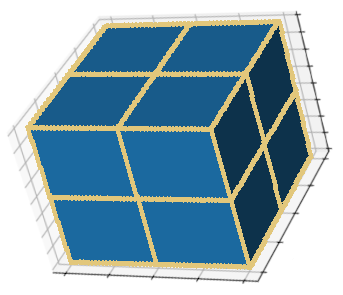
This set is numbered like xy: x cubes, the yth way.
The 2 sets of solutions correspond. To make me (and probably nobody else) happy, here’s the full correspondence description.
| 01 | 1 | 11 | 2 | 21 | 7 | 22 | 4 |
| 23 | 3 | 31 | 9 | 32 | 8 | 33 | 5 |
| 41 | 15 | 42 | 10 | 43 | 12 | 44 | 6 |
| 51 | 16 | 52 | 13 | 53 | 11 | 61 | 18 |
| 62 | 17 | 63 | 14 | 71 | 19 | 81 | 20 |
And just to show that these are the same solutions, here’s a comparison of 2 versions of the same, 9 and 31:
Or maybe it’s easier to compare these 2 prettier versions of the same solution:
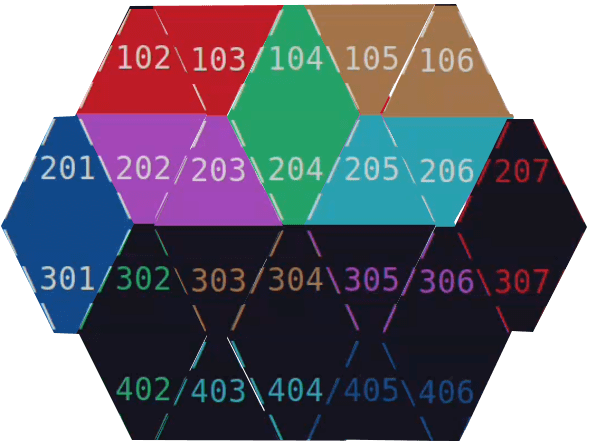
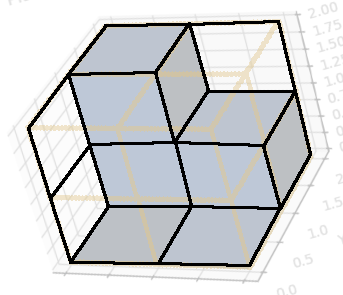
I then proceed to create a new program, to make really pretty versions of these tilings. Here’s you go, fiddler:
And extra credit:

