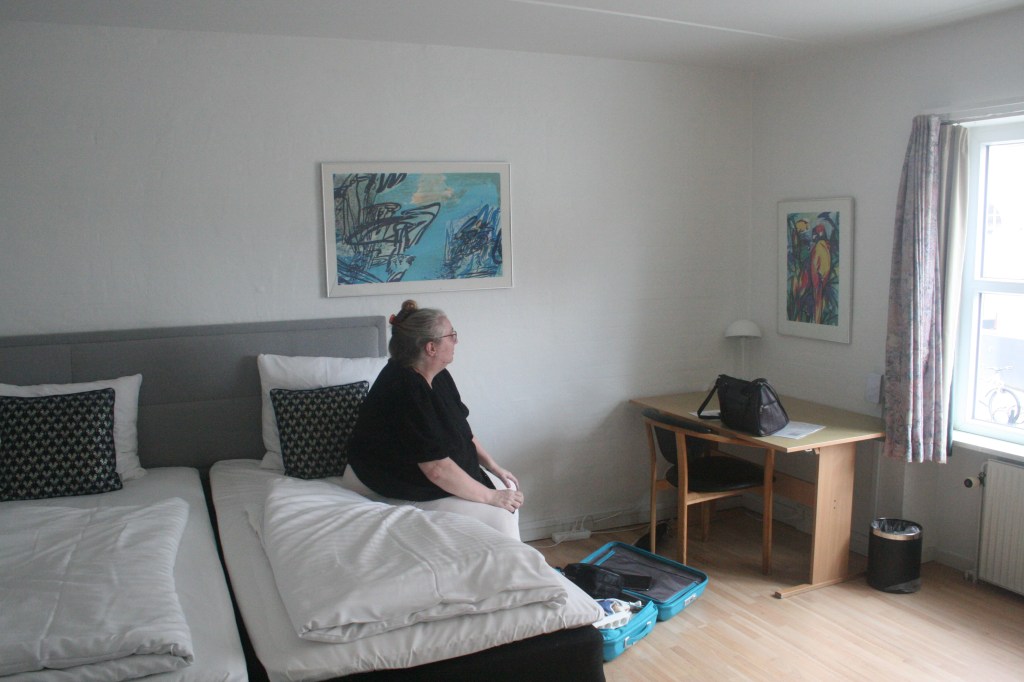
I juli var vi på ferie i #Viborg. Her boede vi på Palads Hotel.
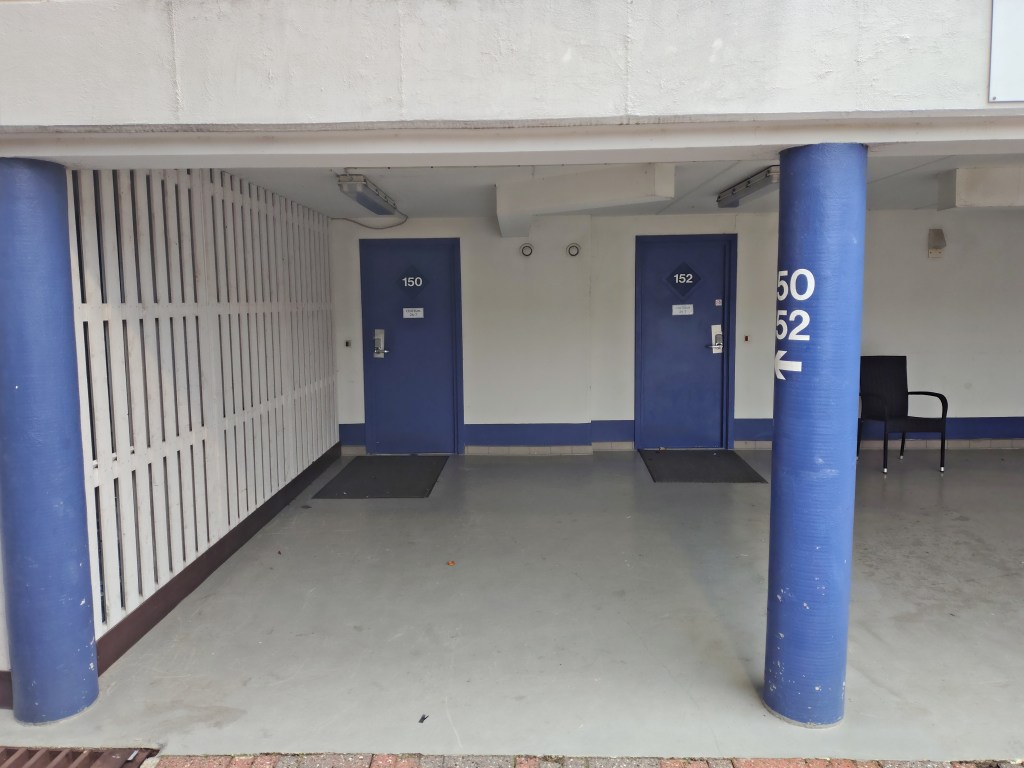
Palads Hotel er svært at komme udenom. Etableret i 1935 på en enkelt adresse breder det sig i dag i flere nabobygninger også, og vi skulle (fra værelse 150) krydse gågaden for at komme til morgenmad. Det var dog også lidt en udfordring på første dag. Bookingen snakkede om Centrum 24-7. Kortet snakkede om Best Western. Og da vi så stod der, så sagde baldakinen Palads. Det var sådan set rigtigt alt sammen, men en kende forvirrende.
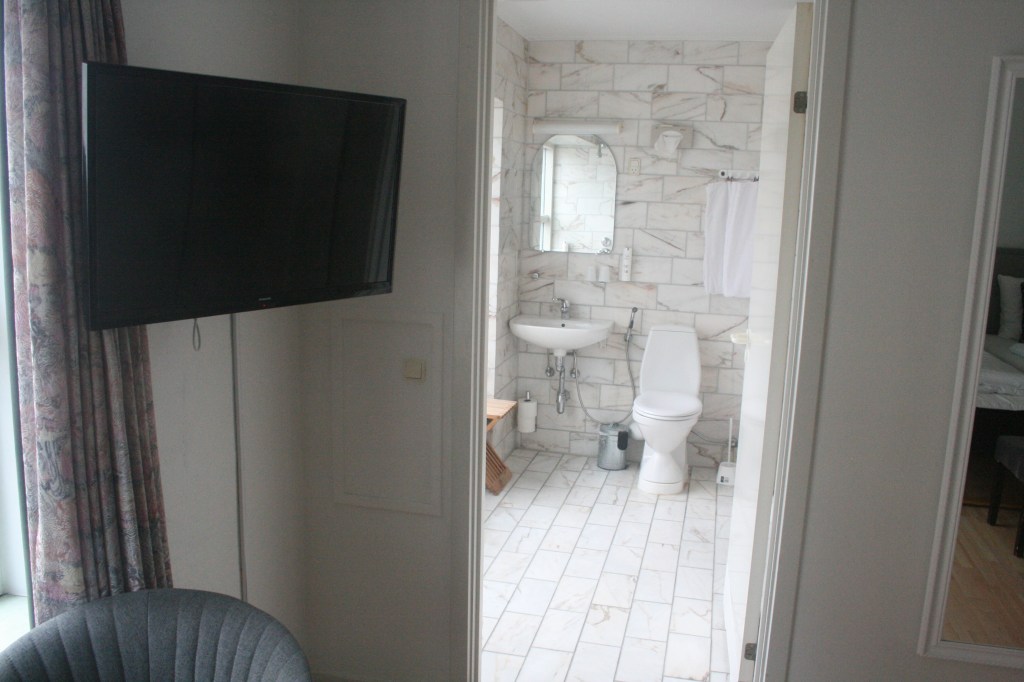
Badeværelset havde 5 brusere! Og sauna! Selve værelset havde et trin, der desværre lå et mørkt sted, når man lige var kommet ind, så det var muligt at falde. Men der var god plads, lækkert.
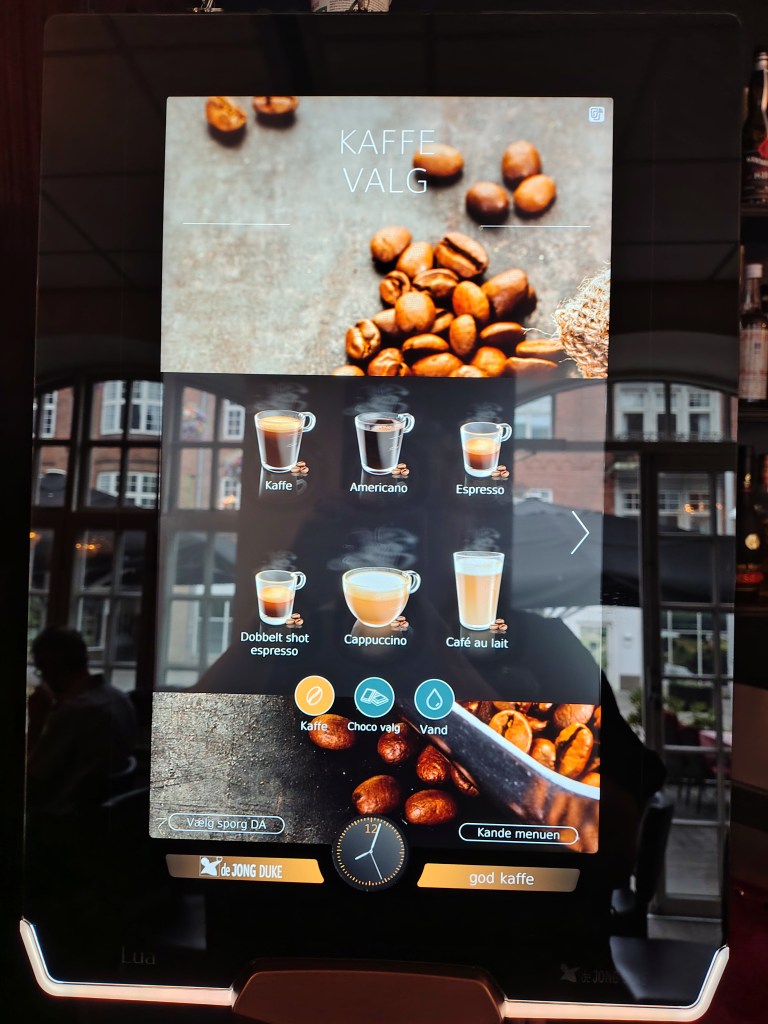
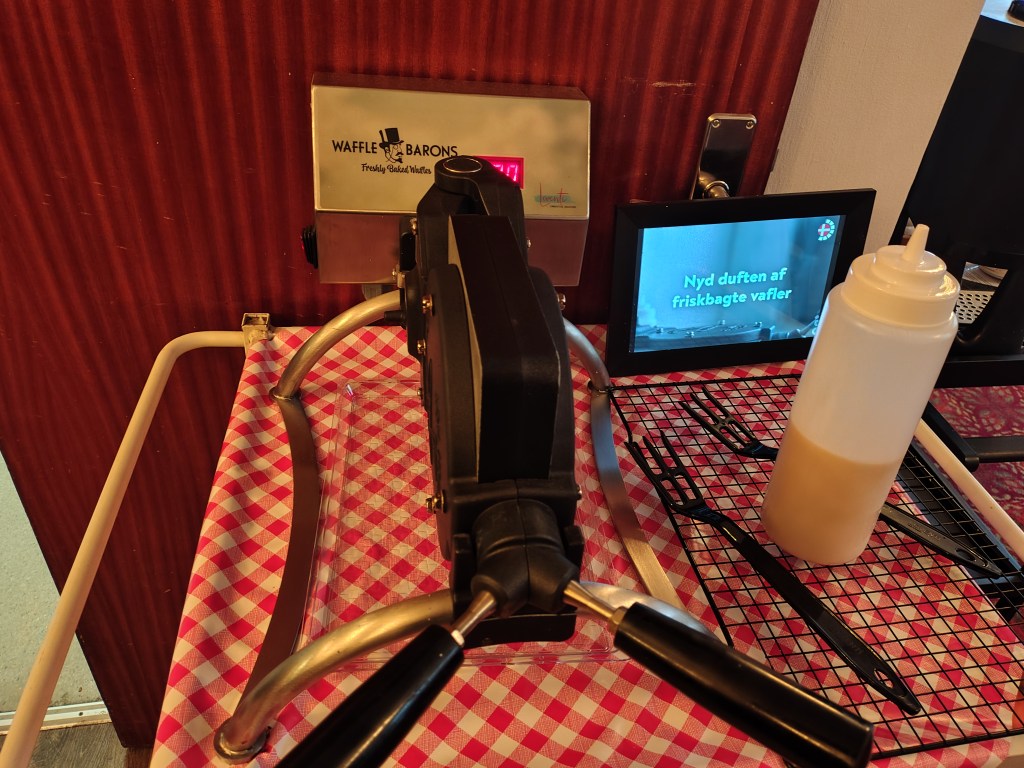
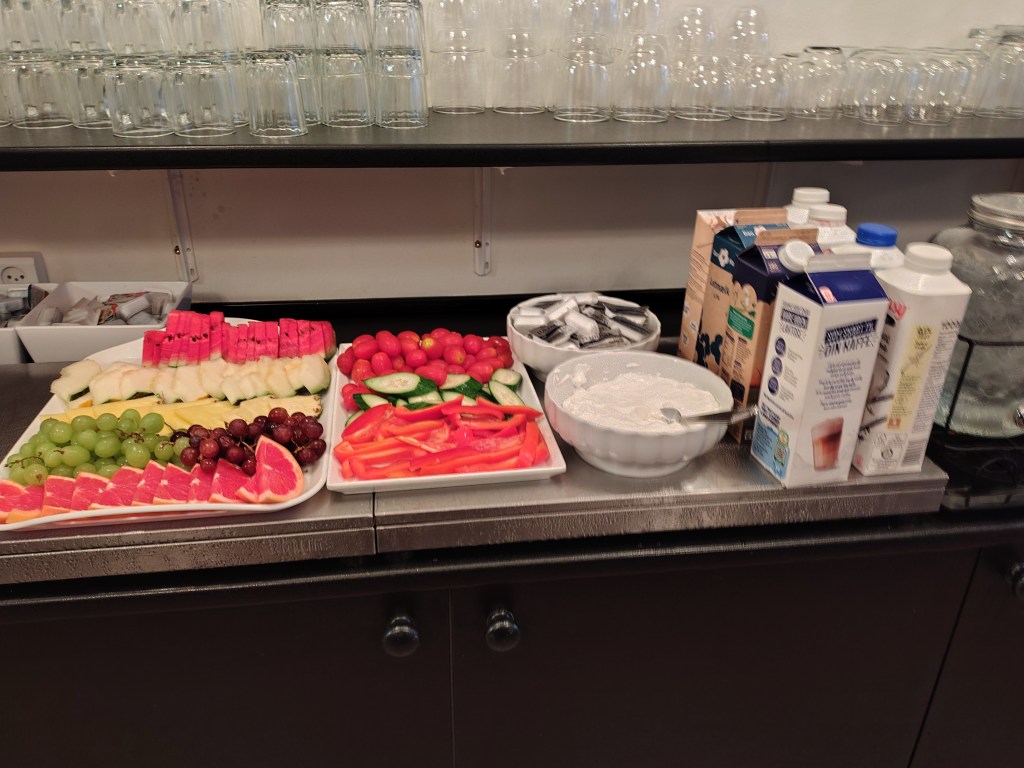
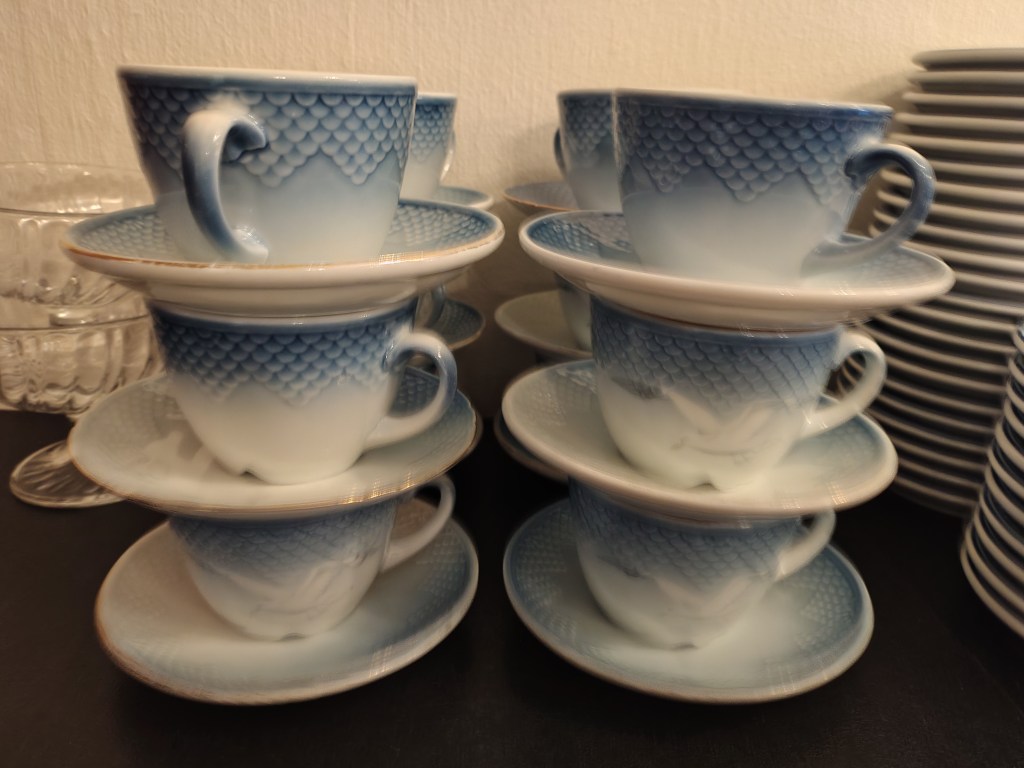
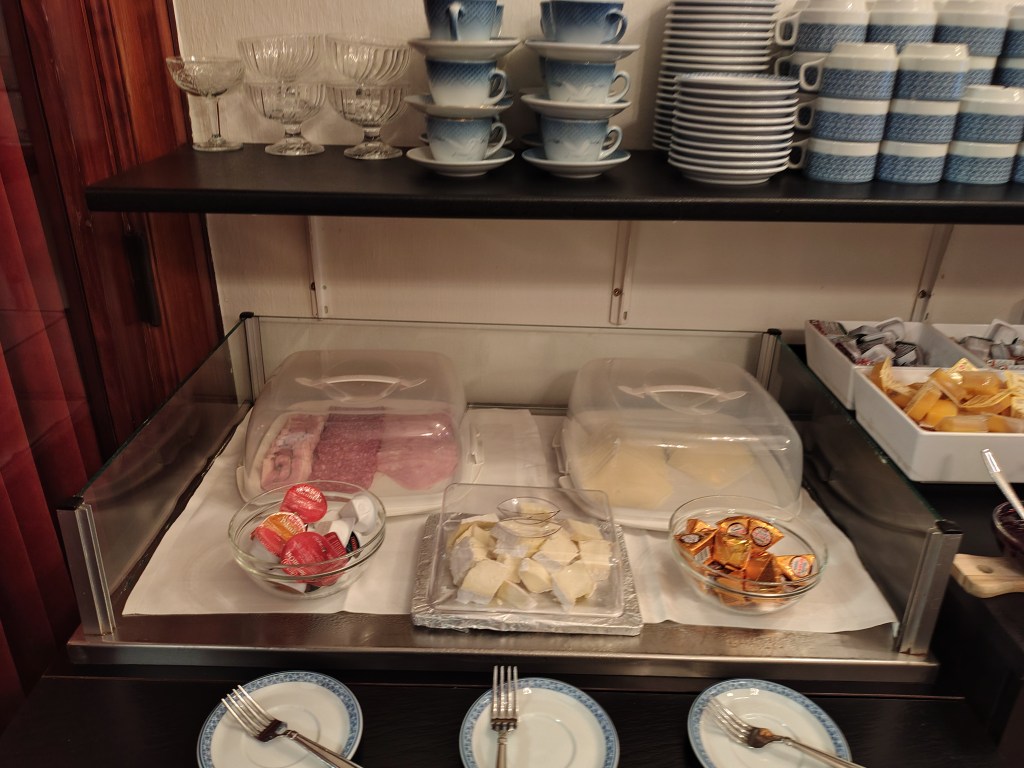
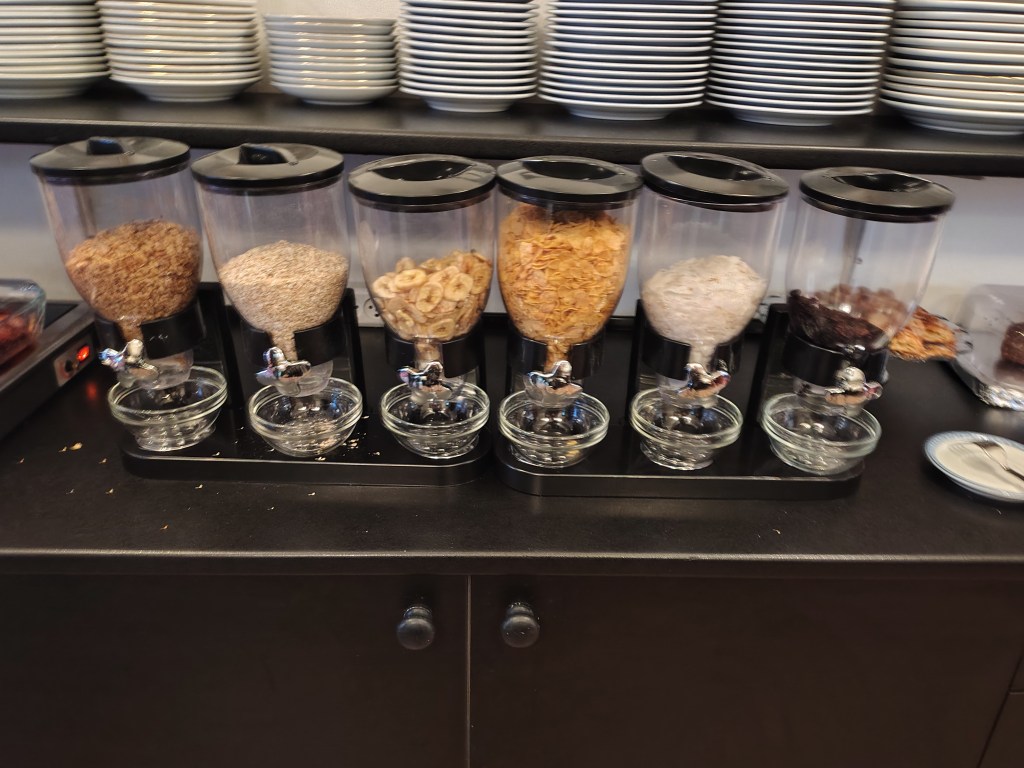
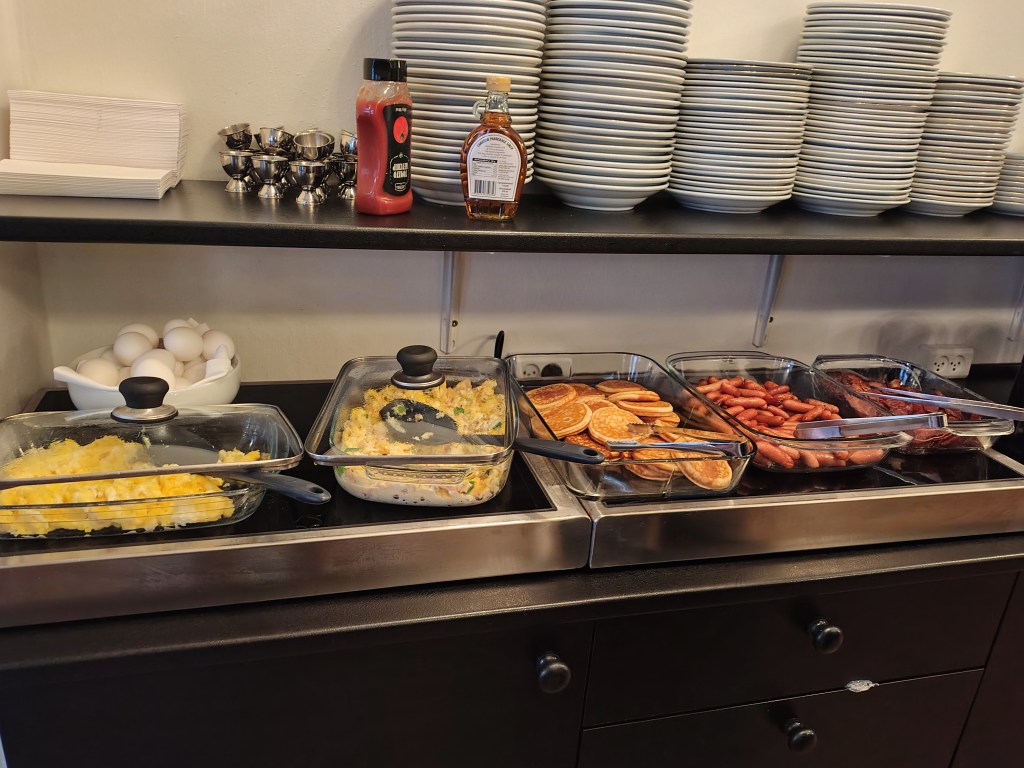
Apropos morgenmad! (Ja, et par af billederne er rystede. Men du ved jo godt, hvordan 2 slags juice ser ud, ikke?)
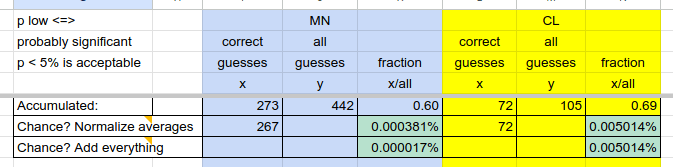
The spreadsheet! If you’ve seen it before: Now it has more formulas!
These next numbers can’t quite be trusted, as I haven’t got all the numbers. But the calculations are in place.
Summary of important advice
Consistency, continuity.
An apocalyptic society with astounding delivery service.
Genius takes forever to solve easy puzzle. Genius is stupid.
Claiming to have done a task, that would take an impossibly long time.
Anachronisms.
The reason for Daito’s name.
Suddenly changing style and using big words.
Basing a book on quotes and references and then berating a guy for stealing a design.
Going outside is overrated / reality is real.
Halliday is a hero but also a monster?
Be exciting. Have stakes.
Don’t interrupt the action with a flashforward.
Don’t interrupt the big climax to tell us what happened seconds before.
Don’t let the climax be an easy puzzle.
Infinite ammo.
No, action in a computer isn’t action.
Flow. Chekhov’s gun.
Suddenly having a long talk about atheism.
Masturbation screed.
Deus ex machina.
Originality.
Using clichés.
Being boring.
Drop Cops.
Inventing new, bad ways to describe things.
Realism. Being human.
The Sorentos walk: Walking for minutes without responding to a statement.
100s have died, nobody’s looking for survivors, jokes are told.
Stereotypical Japanese.
A ticking clock, nobody’s paying attention to it.
There’s life, death and a fortune, and then a prize is chosen based on feelings.
All big companies are evil?
Art3mis changes her mind in seconds.
Hinting at growth, that didn’t actually occur.
Variety.
Repeating information too much.
Repetition of phrases.
Cheshire smile.
Classic.
Details: not too many, not too few.
Being weirdly specific, for no purpose, and not making sense. (Toothpaste.)
Doing “it was like (vague example)”.
Retelling Blade Runner.
Use words and phrases correctly.
Using a “new” word that exists already with a very different definition.
Seem to.
I can only describe this as…
Cheshire smile.
Classic.
Common technical language.
A silent cheer.
Geek film.
Ep. 1, intro + ch. 1-3
Advice
❎ Describing A by saying it’s like B. A variety of 80s dance moves.
❎ Cliche
❎ Repetitiveness
❎ Using a word already having a meaning. Gunter.
❎ Inconsistency. This post apocalyptic society functions really well.
Oops.
Missing that Aech is pronounced “h”. Cleared up in ep. 2.
Mispronouncing JK Rowling.
Ep. 2, ch. 4-8
Advice.
❎ Inconsistency. Taking forever to solve an easy puzzle.
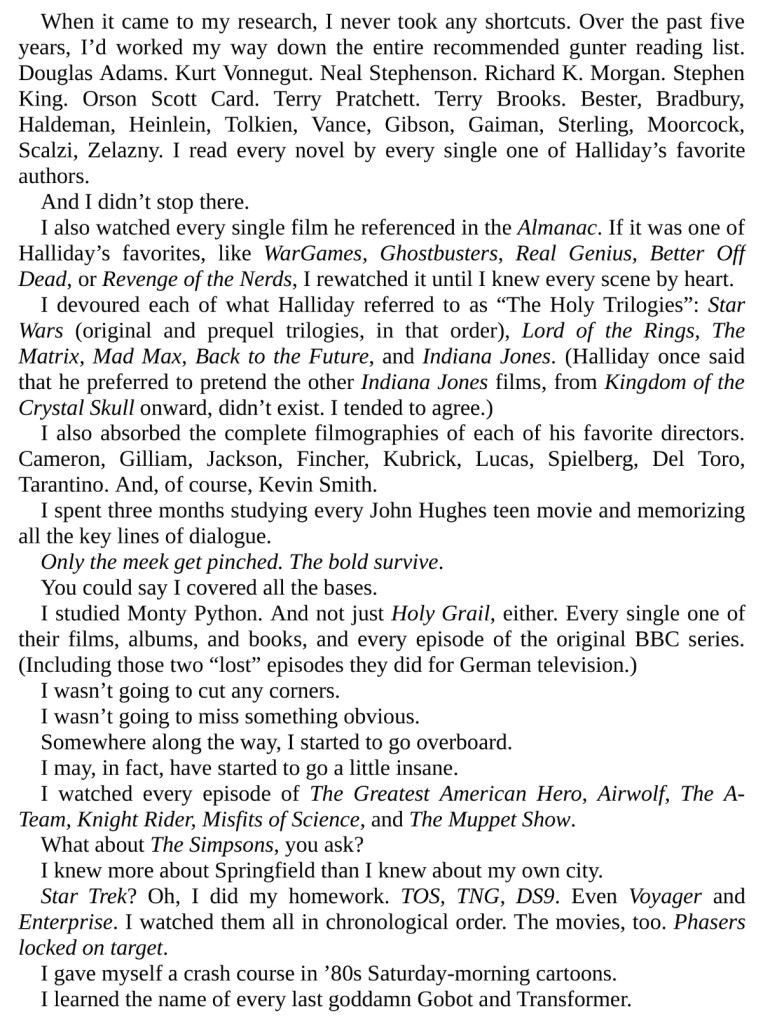
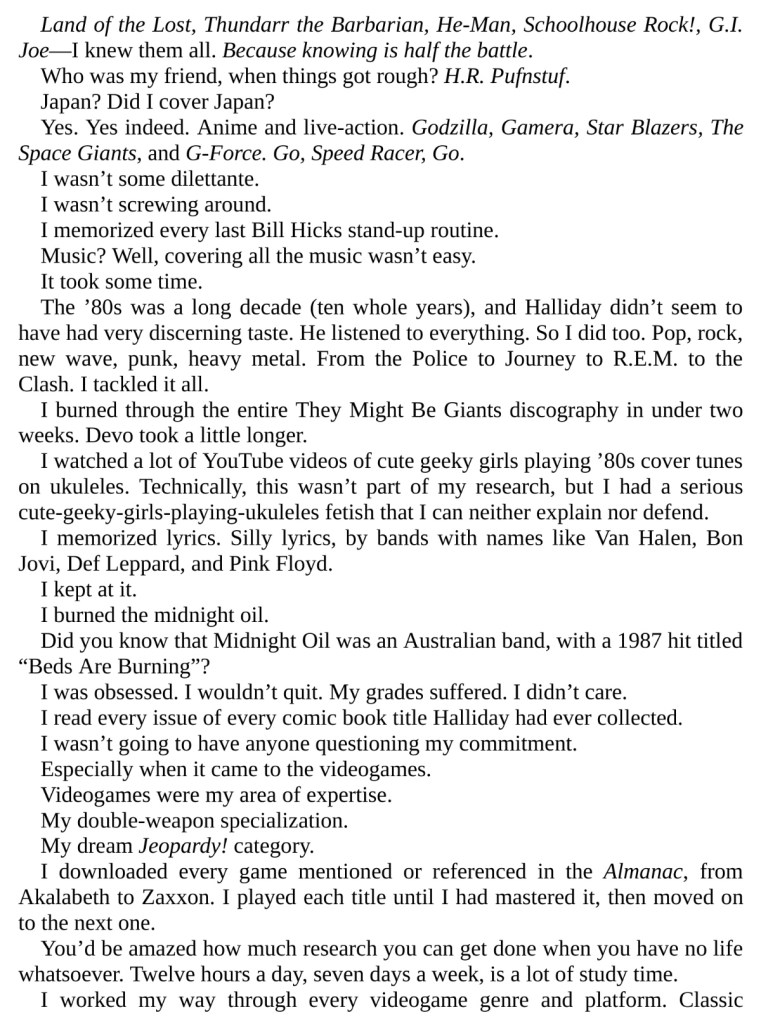
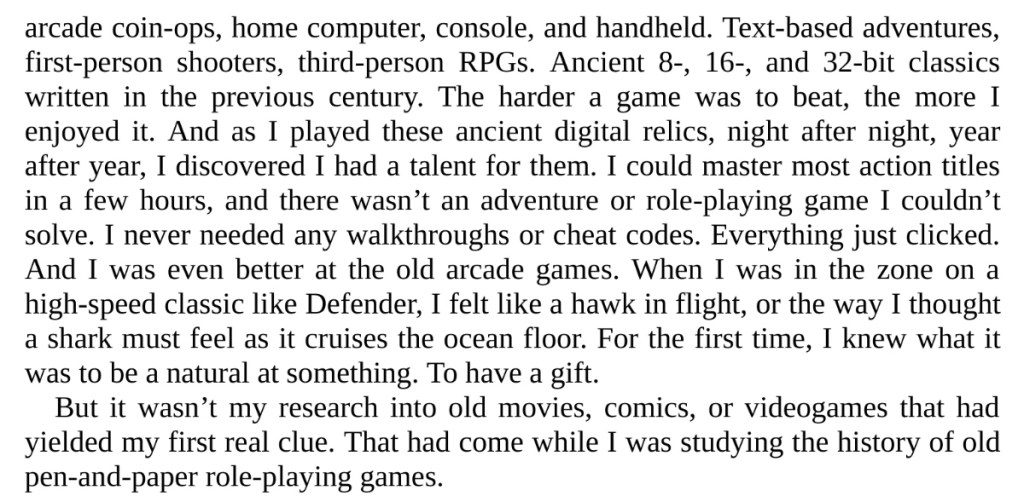
❎ Inconsistency. Claiming to have done The List, but not having enough time to do so. (Quote below.)
❎ Bad extrapolation, progress going backwards.
❎ Including too many details.
❎ Boring.
❎ Clumsy.
❎ Using “seem to” when it obviously is.
❎ Repetitiveness. Cheshire smile. Every time.
Important quote:
“I watched every episode of The Greatest American Hero, Airwolf, the A-Team, Knight Rider, Misfits of Science, and The Muppet Show. What about The Simpsons, you ask? I knew more about Springfield than I knew about my own city. Star Trek? Oh, I did my homework. TOS, TNG, DS9. Even Voyager and Enterprise. I watched them all in chronological order. The movies, too. Phasers locked on target…I learned the name of every last goddamn Gobot and Transformer. Land of the Lost. Thundarr the Barbarian, He-Man, Schoolhouse Rock! G.I. Joe – I knew them all. Because knowing is half the battle!”
Ep. 3, ch. 9-13
Advice.
❎ Anachronisms.
❎ Interrupting the exciting bits with a flashforward.
❎ The climax is easily solving a puzzle.
❎ Is that how we define classic?
❎ Weirdly specific, doesn’t make sense. (Toothpaste.)
❎ The author stepping in: I can only describe this as…
Running gags.
Goods and services. (The actual quote is goods and people.)
I juli var vi på ferie i #Viborg. Her besøgte vi bl.a. Domkirken.
Viborg Domkirke er en lidt pudsig størrelse. På den ene side opførte man kirke fra 1104, men der har muligvis ligget en tidligere. På den anden side blev denne til sidst revet ned stort set 100 % (det bedst bevarede er nok kælderen/krypten), og en ny blev indviet i 1876. Man forsøgte at ramme noget af den stil, den gamle havde haft, og man genbrugte nogle kvadre, men det er svært at komme udenom, at det er en ny kirke.
Da kirken skulle udsmykkes, så valgte man også at ramme en gammel stil, i hvert fald noget af vejen. Det resulterede i nogle interessante 2d-malerier. Efter sigende det største kunstværk en dansker (med samt hans assistenter) har stået for. Der er en virkelig grundig bog, som efter hjemkomsten blev slugt. Mums.
Vi havde gjort tingene i den rigtige rækkefølge. Et par dage før studerede vi nogle skitser til nogen af kunsten. Det var ligesom at samle appetit.
Vi gjorde os umage, så vi kunne få rundvisningen med. Den viste sig dog mest at være en sidde-ned-og-lytte.
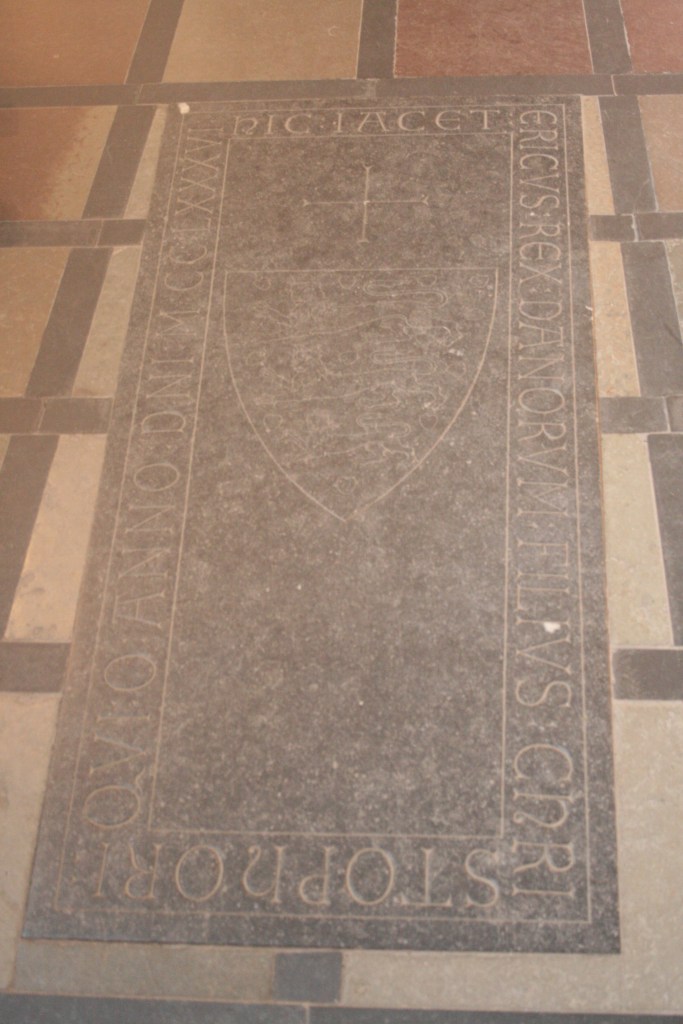
Det sidste billede nedenfor er fra Erik d. 5. Klippings sidste hvilested. Eller i hvert fald hvilestedet for en håndfuld af hans knogler …
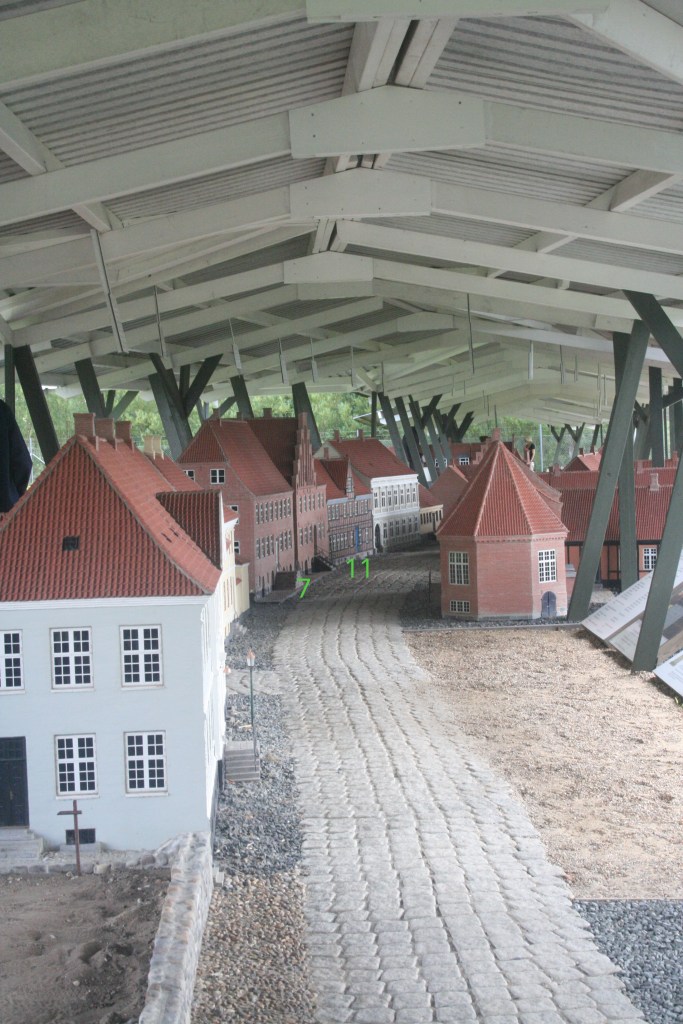
I juli var vi på ferie i #Viborg. Her besøgte vi bl.a. Viborg Miniby.
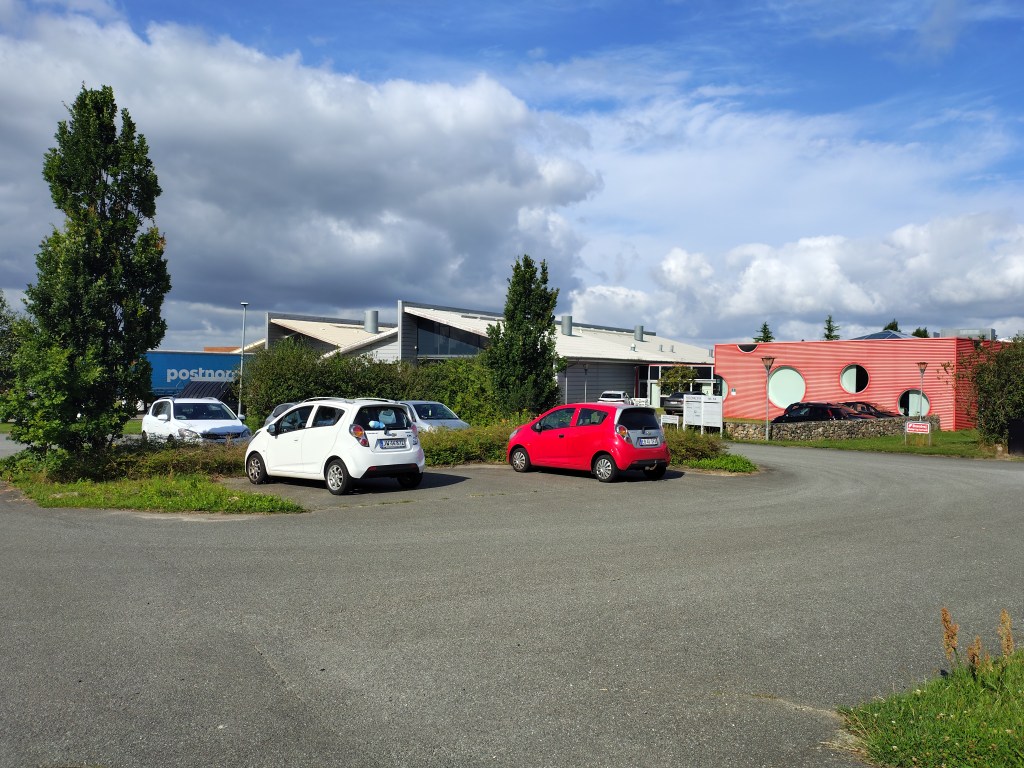
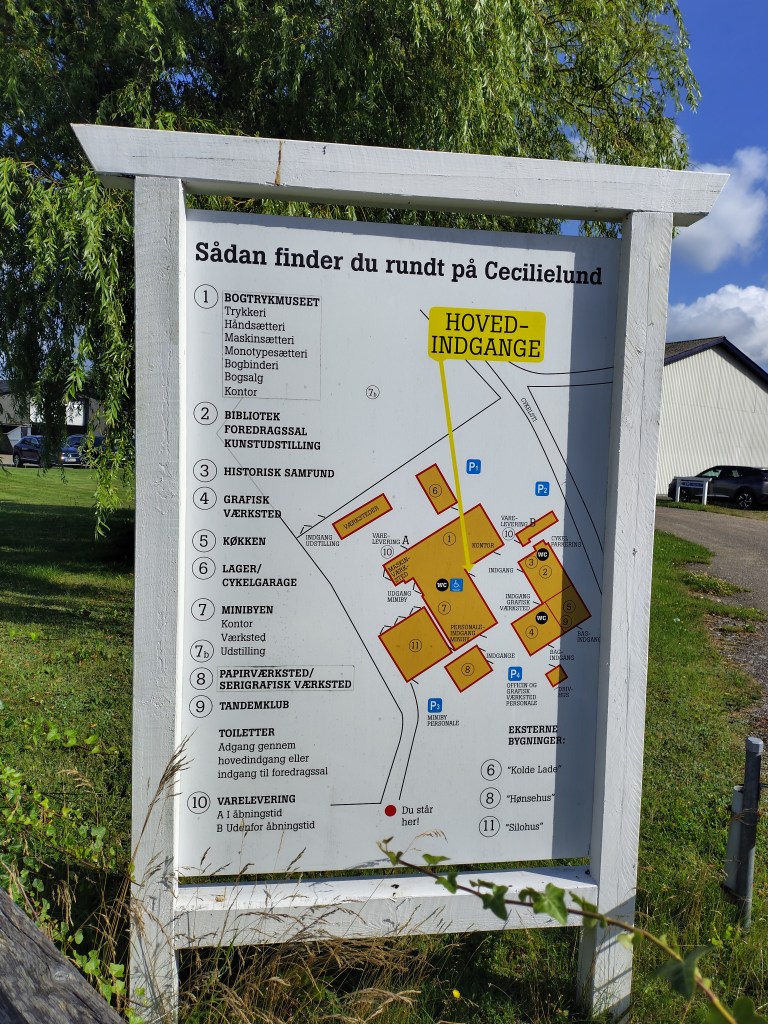
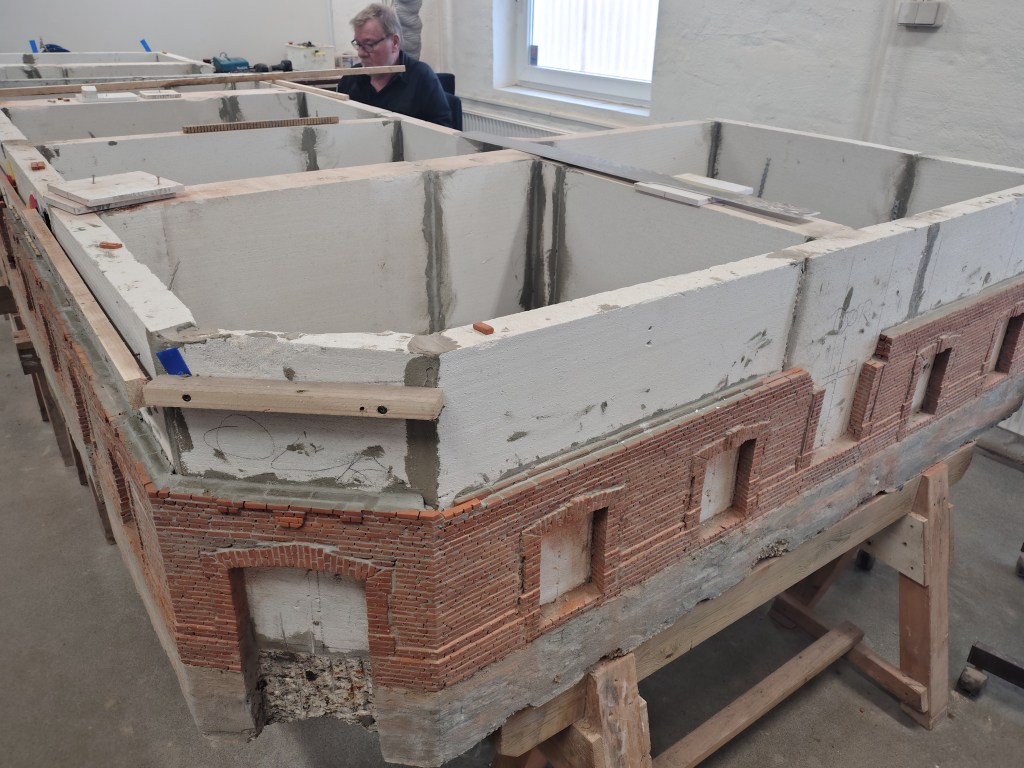
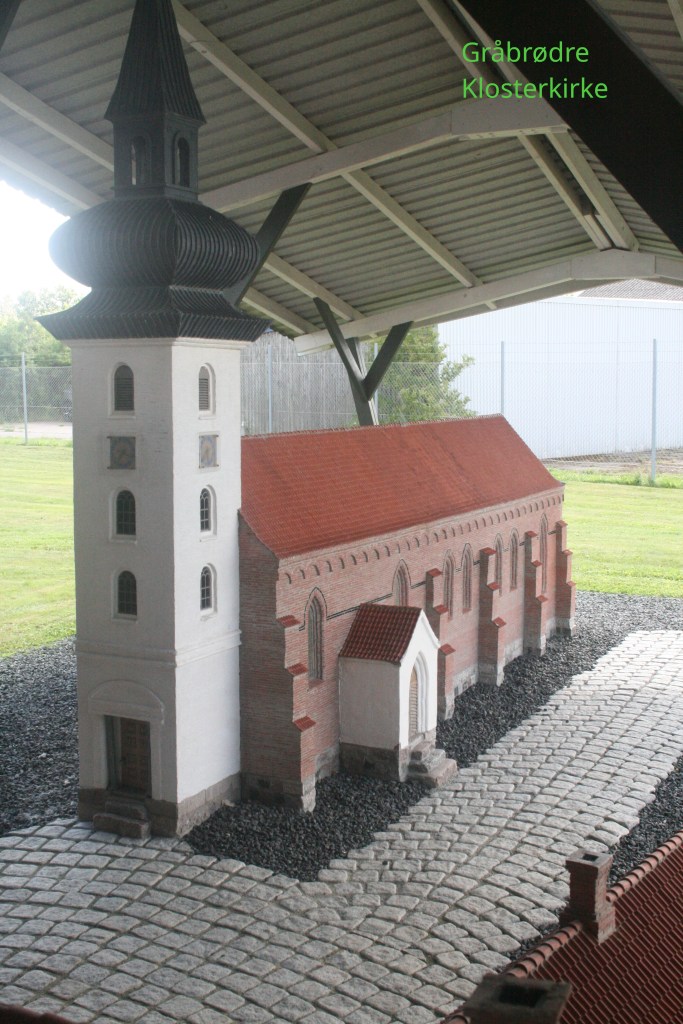
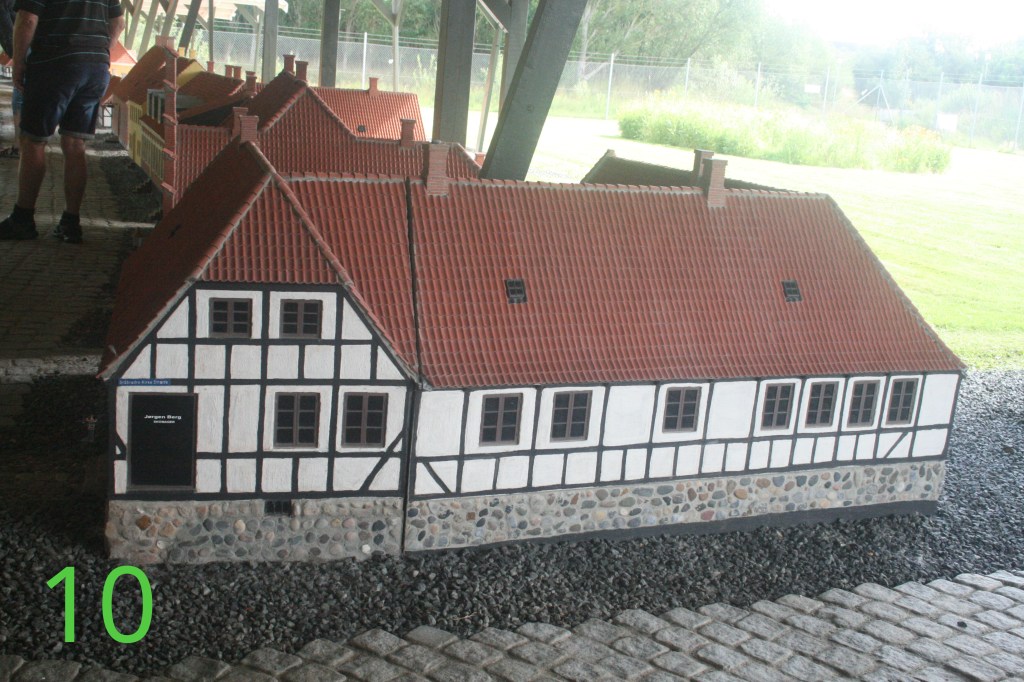
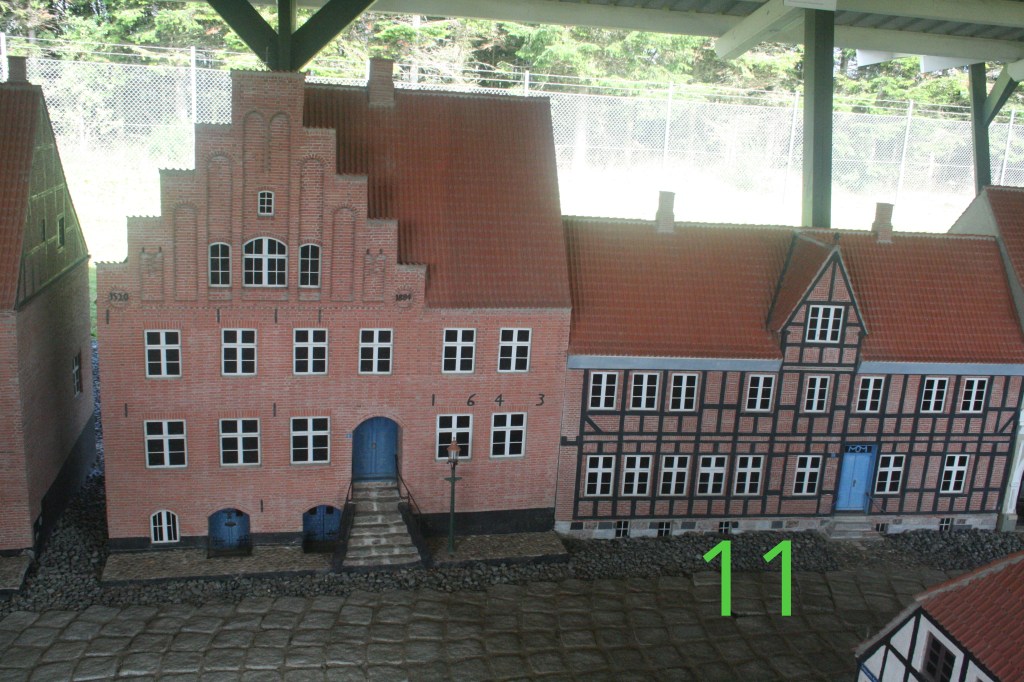
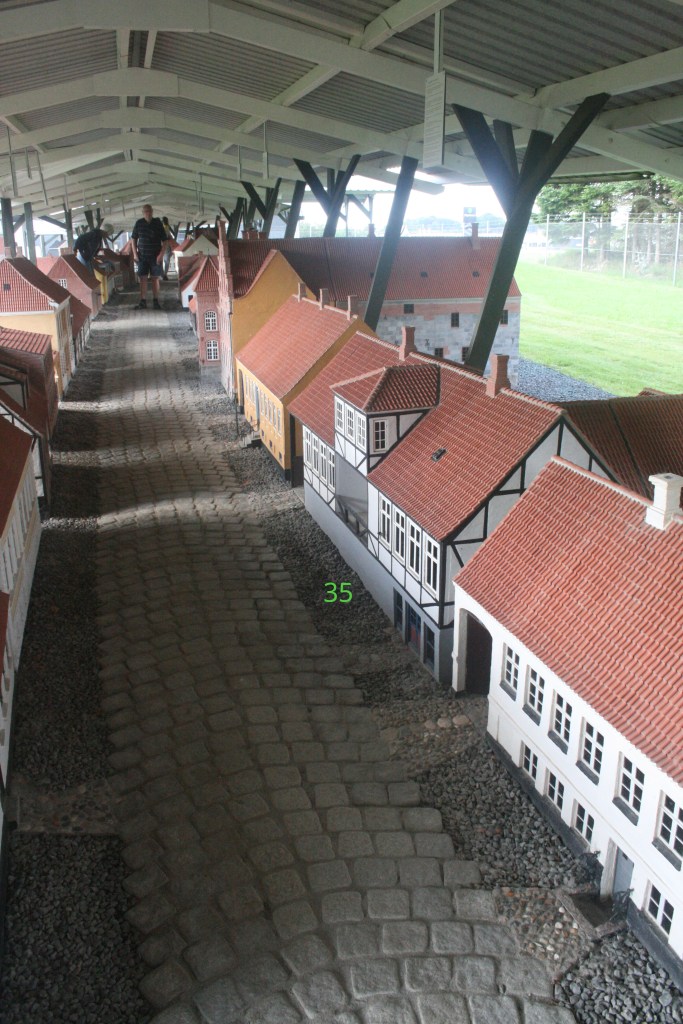
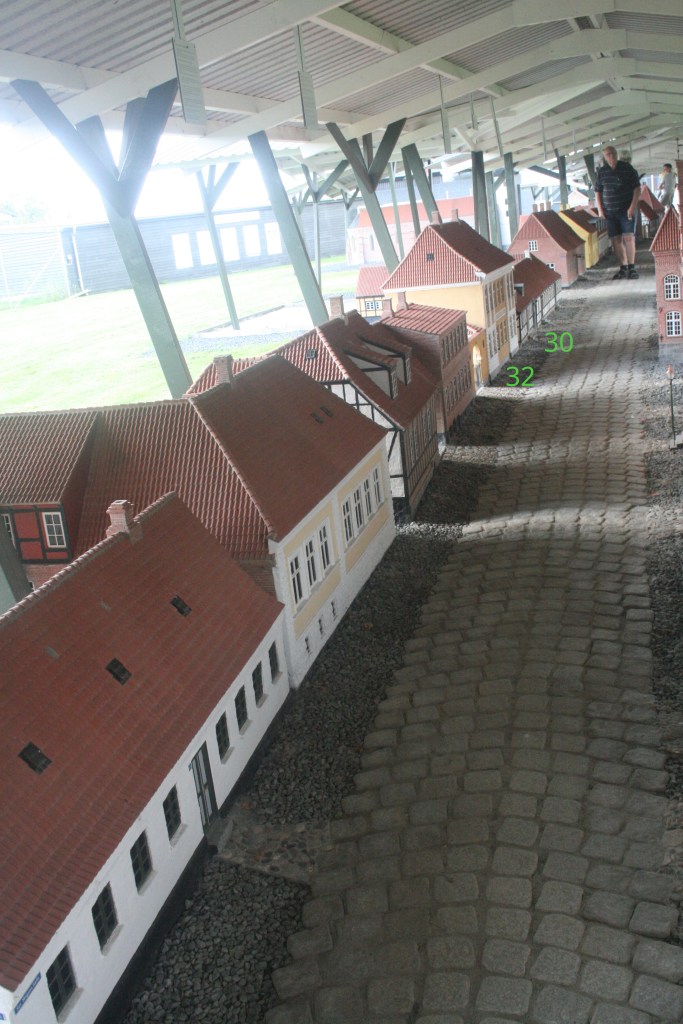
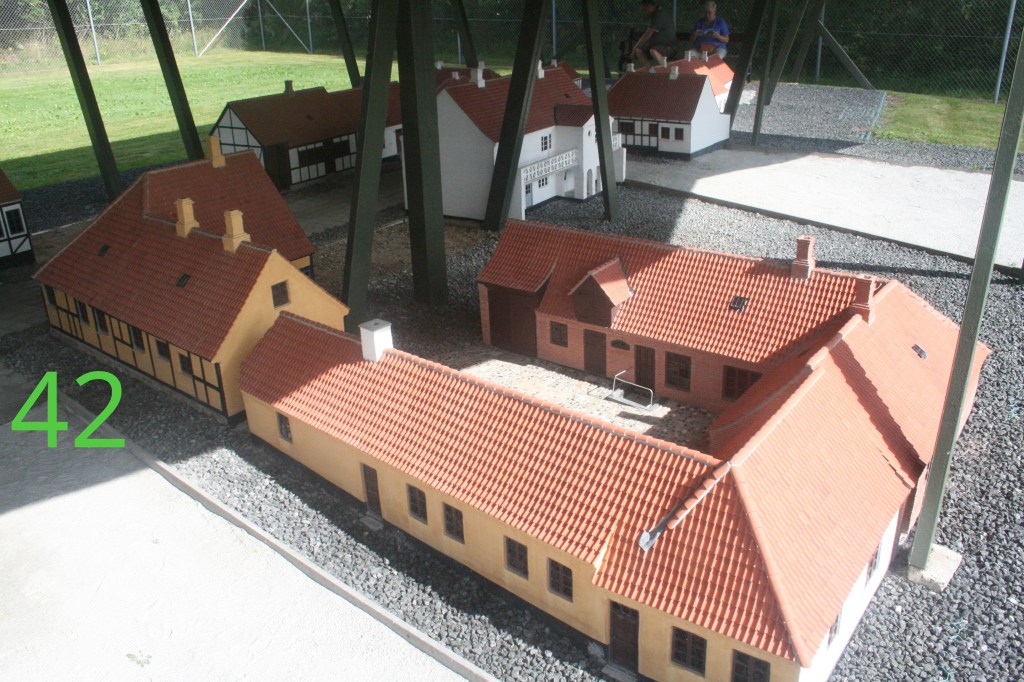
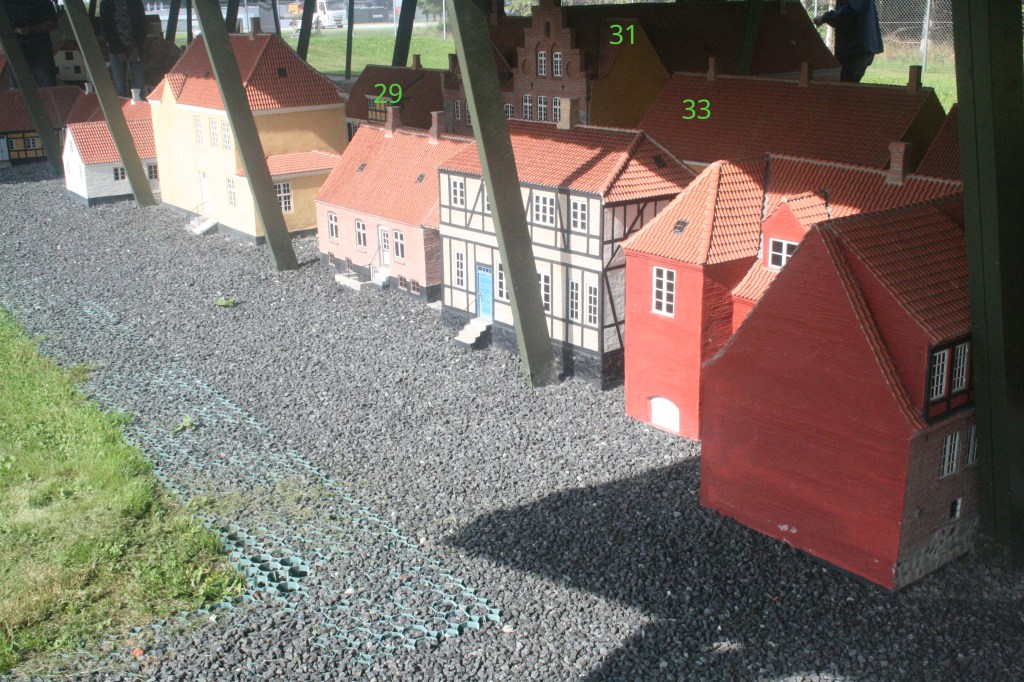
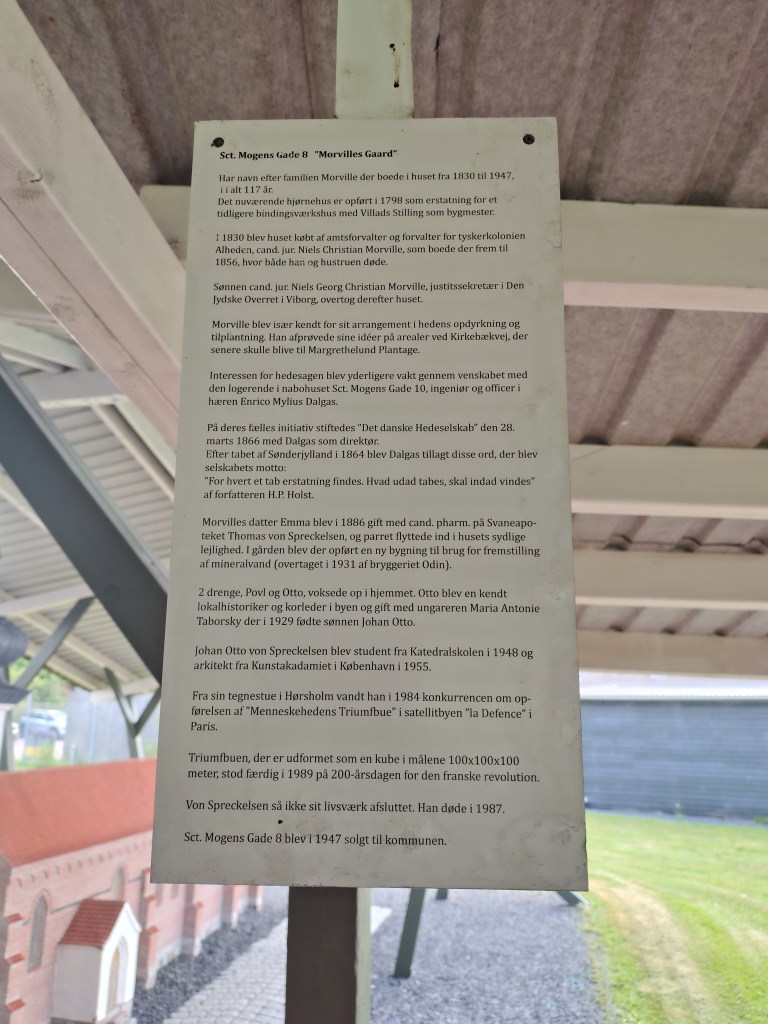
Viborg Miniby er et forsøg på at vise byen, som den så ud i 1850. Den er i forholdet 1:10, og den bliver bygget med rigtige små mursten osv. Men først skulle vi finde stedet. Vi er ved at være tæt på.
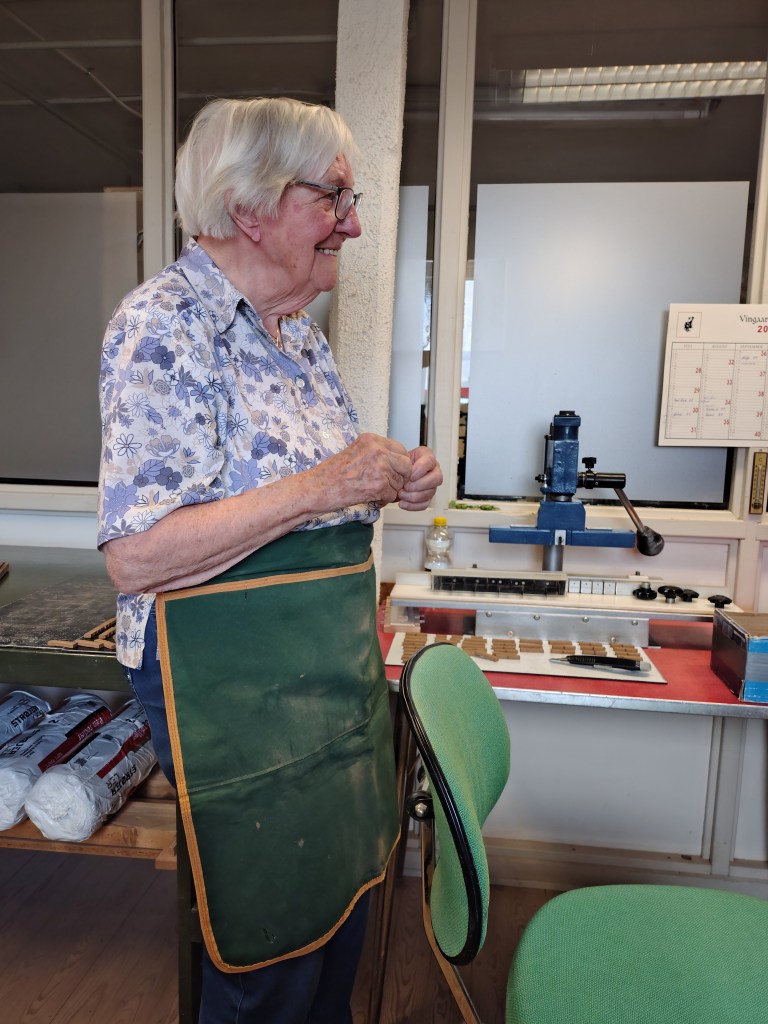
Værkstedet er åbent, så man kan se processen.
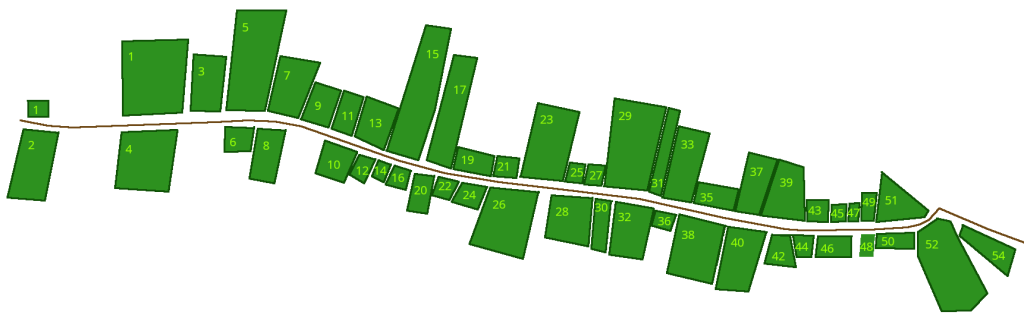
Jeg prøvede på at få overblik over byen på forhånd, og har også arbejdet på sagen senere. Jeg kan ikke få heeelt styr på det, men næsten. Og det er jo nogle gange også godt nok. Lad os starte med, hvordan en for sagen vigtig del af Viborg ser ud i dag. (Fejl kan forekomme.)
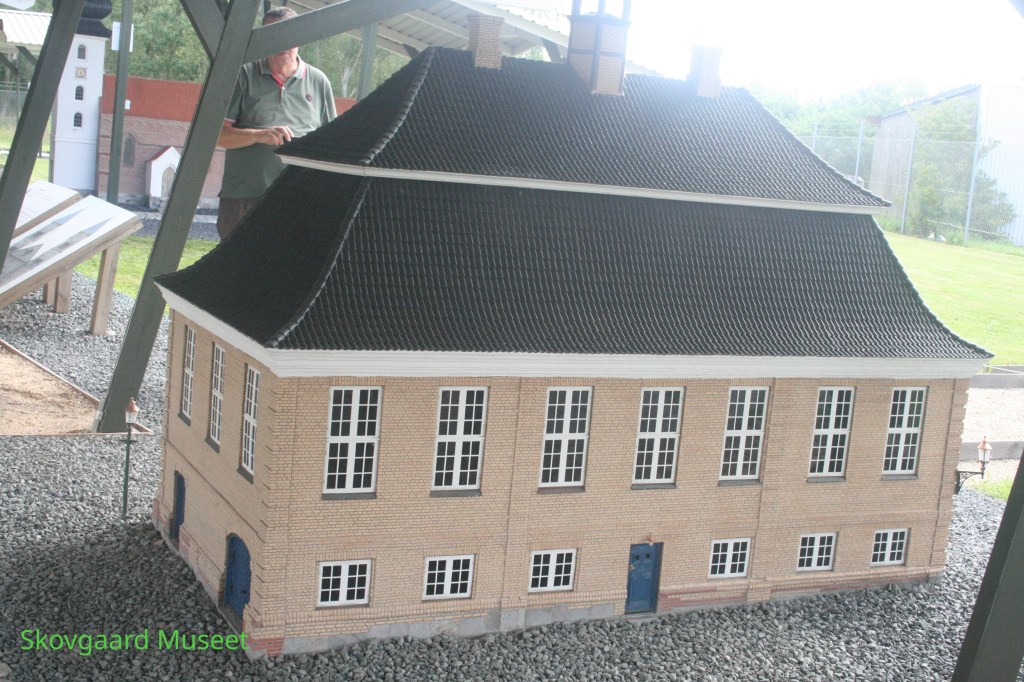
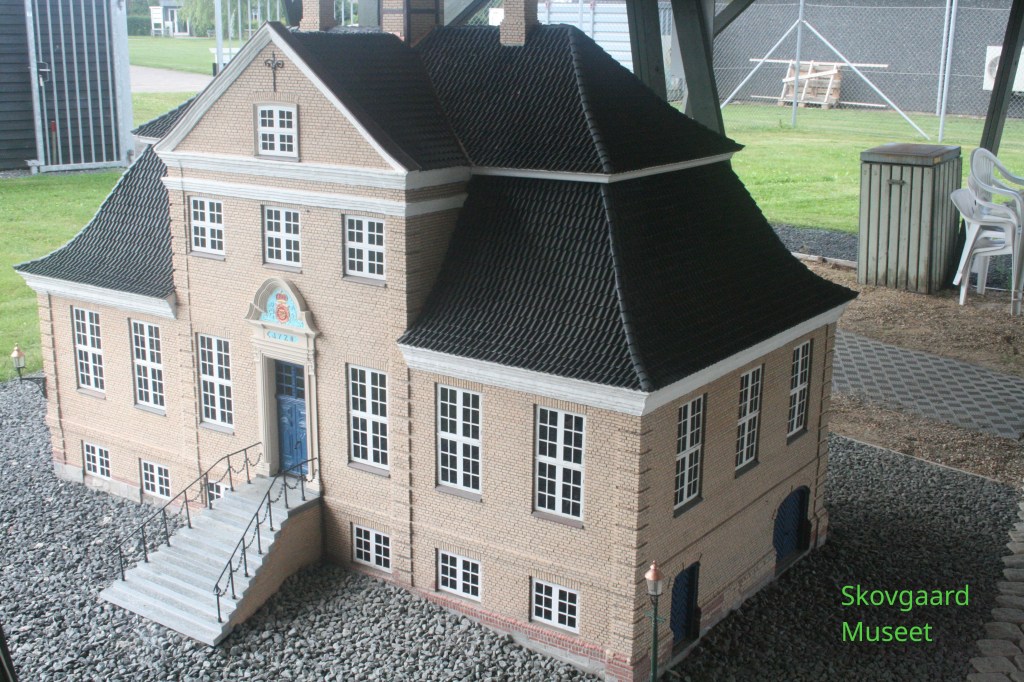
Minibyen er rigtig meget baseret på Sct. Mogens Gade, den del der i dag hedder nr. 1 til 54. Minibyen er ikke helt magen til billedet ovenfor, som jeg selv har strikket sammen. Dels er kortet ovenfor baseret på forholdene i dag, 2025, dels mangler der huse i minibyen (bl.a. domkirken, som den så ud dengang), dels tager minibyen også lidt fra sidegaderne med. Men sådan i det store og hele, ikk?
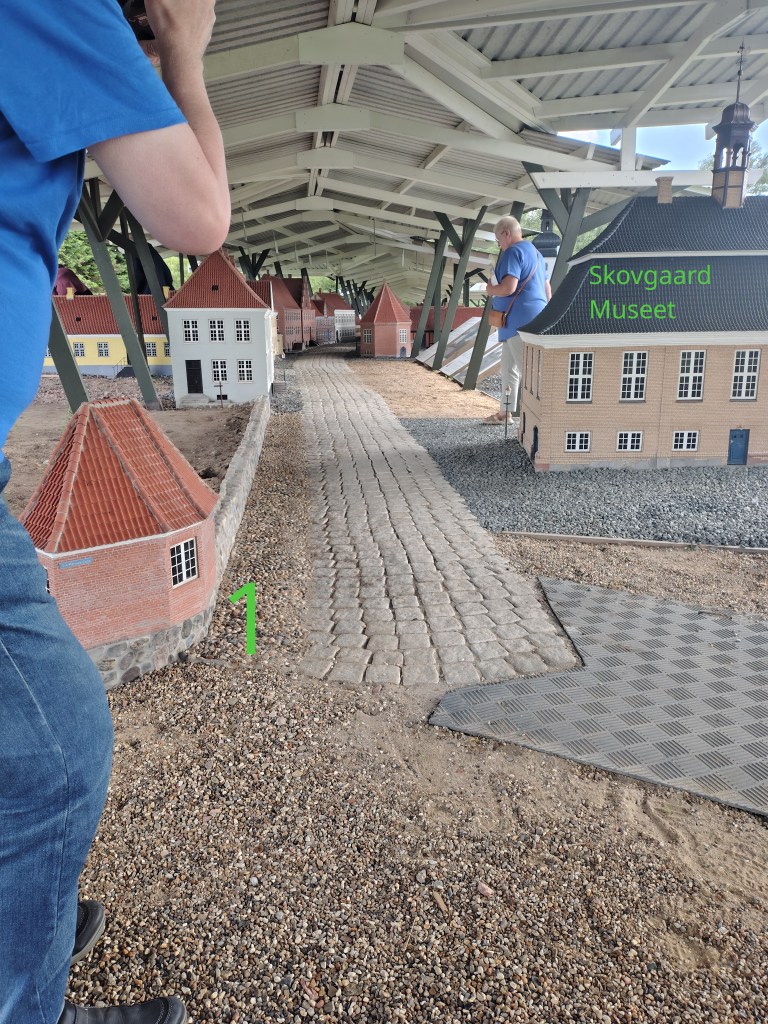
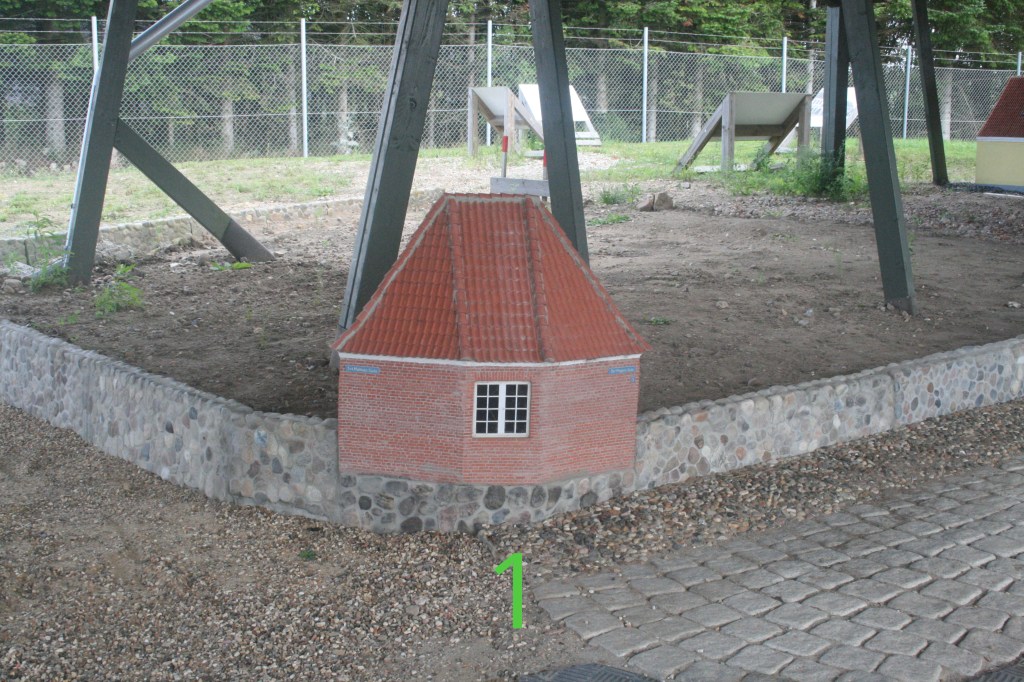
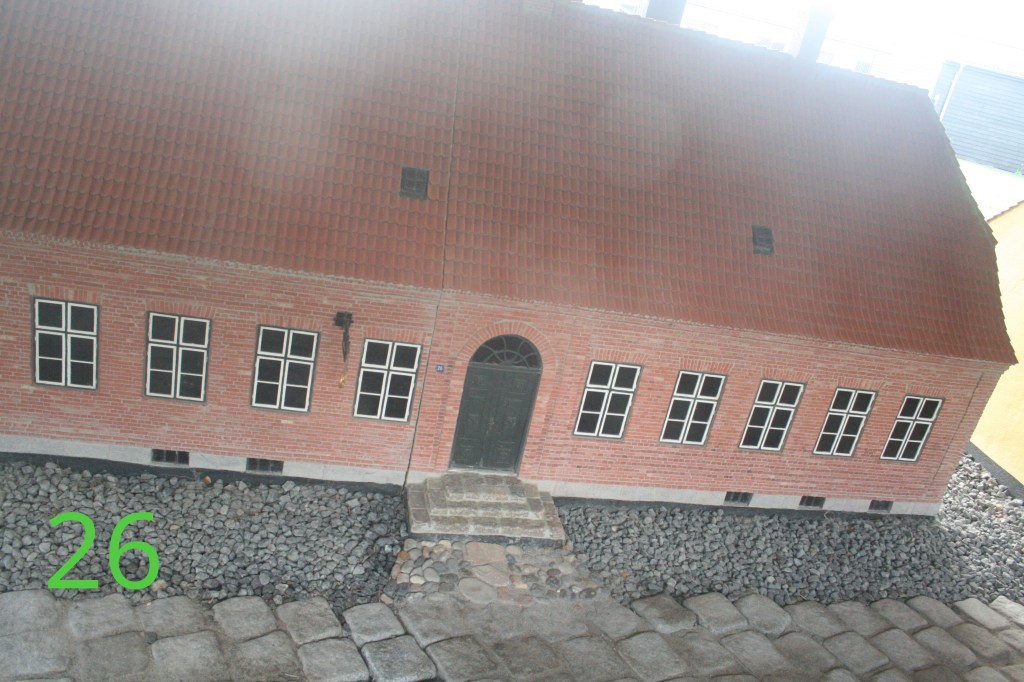
Og lad os så kigge på nogle huse! Når jeg kalder et af dem Skovgaard Museet, så er der tale om det nuværende navn; i sin tid var det et rådhus.
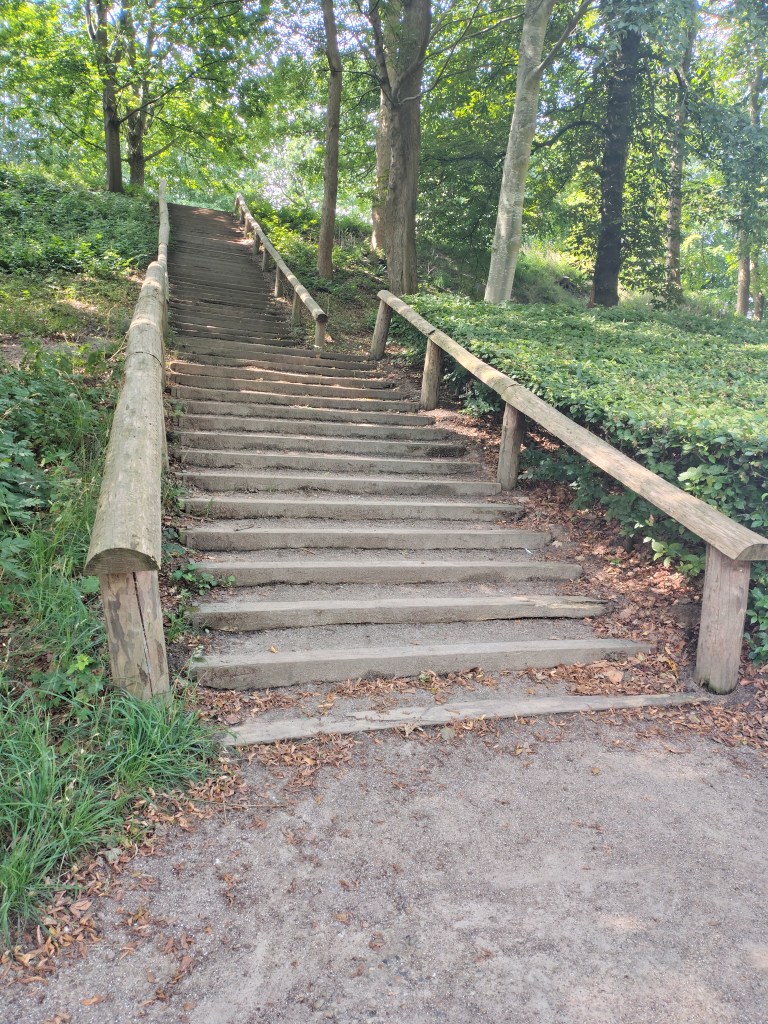
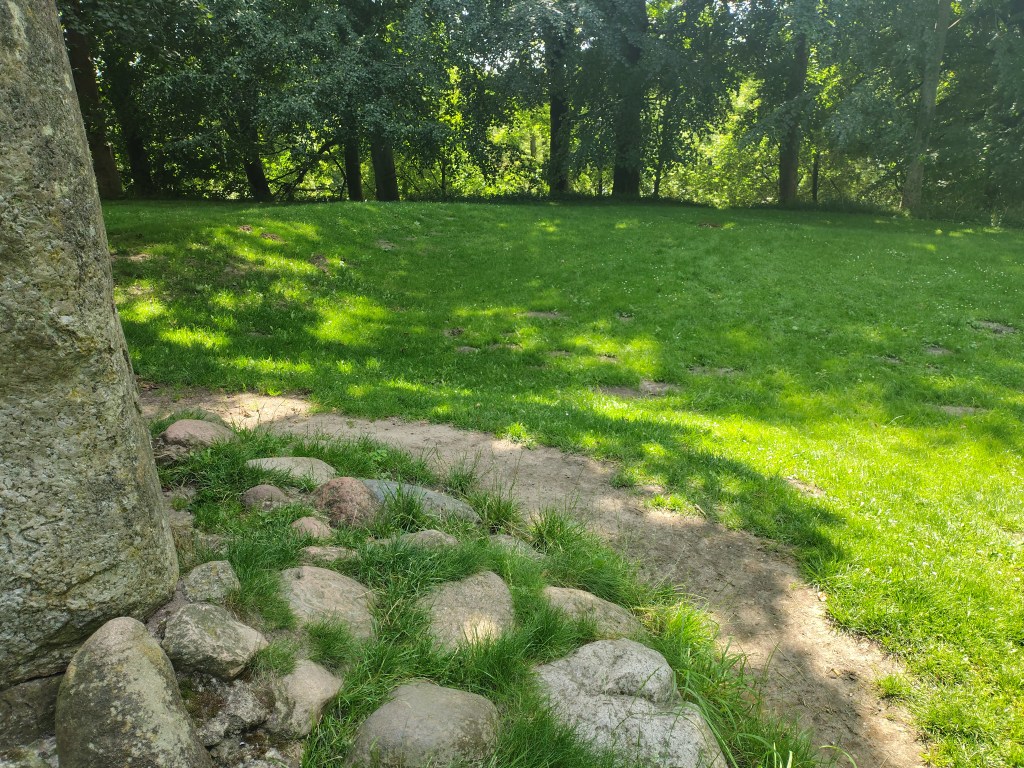
I juli var vi på ferie i #Viborg. Her besøgte vi bl.a. Borgvold.
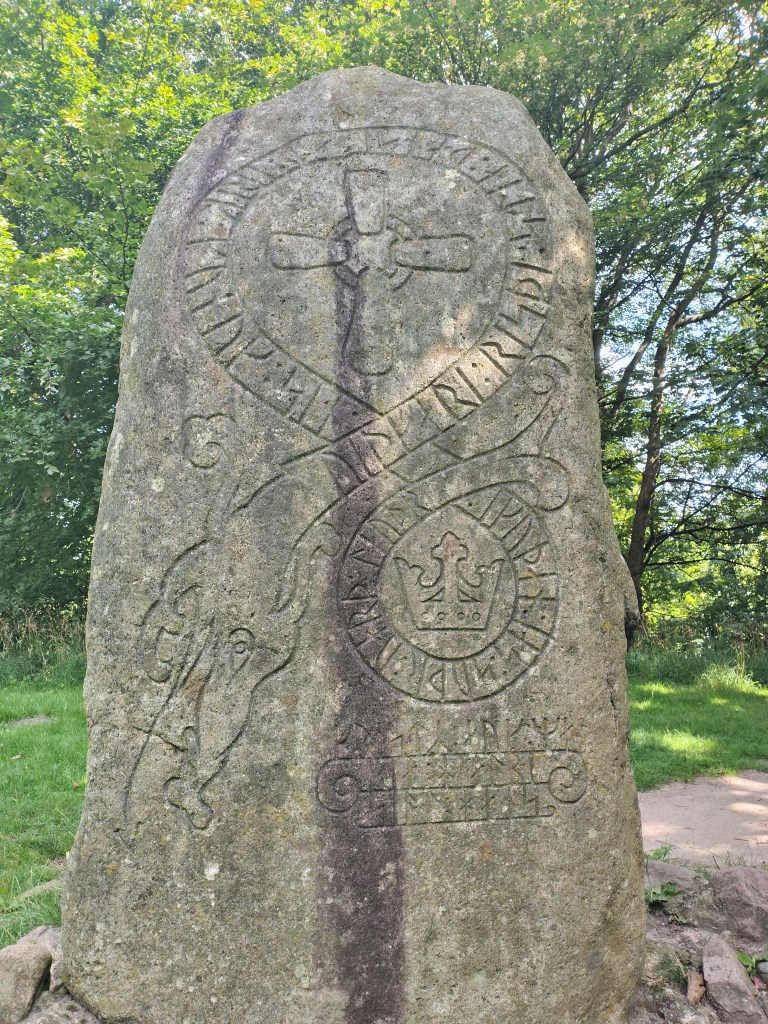
Borgvold, der dateres til 1313, er resterne fra en borg + vold, fantastiske 11 m høj. Den måtte vi jo bestige. Bl.a. fordi vi ved andre lejligheder har fundet og besteget resterne af volde. Når man sidder på toppen, så kan man se det karakteristiske dip, altså at det rundt om toppen går nedad. Også selvom det hele er dækket af græs og svært at fotografere. På forhånd satte vi os ind i tingene via den her rigtig gode beskrivelse, der har et kort over stedet og teksten fra stenen. Bemærk i øvrigt, at “paa” (på) naturligvis staves med stum snegl.
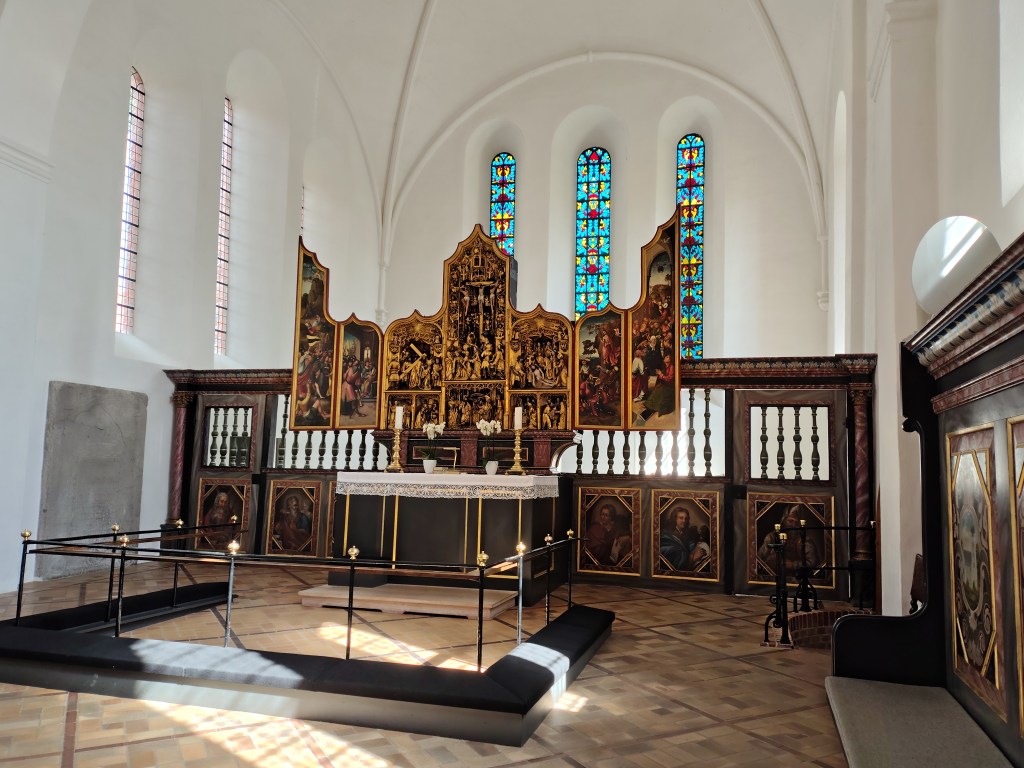
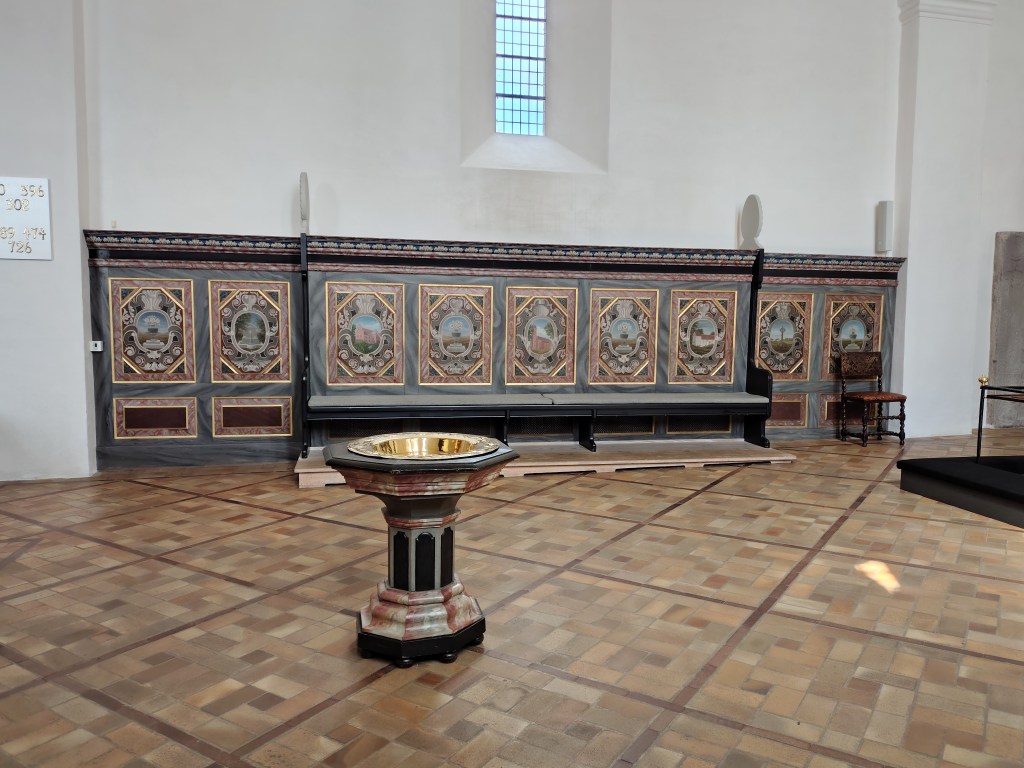
Efter at have set domkirken, der ivrigt (?) prøver at virke gammel, men ikke helt lykkes med det, var det sjovt at komme over i en kirke, der faktisk er gammel og er nænsomt restaureret.
En interessant ting ved kirken er de såkaldte emblemmalerier. De er ikke enestående, men de er sjældne nok til, at jeg blev optaget af dem. Der er også en bog om dem. Og for sådan en som mig, der har brug for et konkret eksempel for at forstå teknikken: Emblem of the Month.
This week the #puzzle is: Can You Box the Letters? #permutations
In the game of Letter Boxed from The New York Times, you must connect letters together around a square to spell out words. However, from any given letter, the next letter cannot be on the same side of the square.
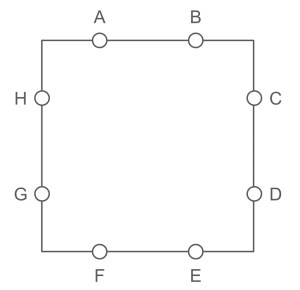
Consider the following diagram, which consists of eight points (labeled A through H), two on each side of the square. A valid “letter boxed” sequence starts at any of the eight points, and proceeds through all of the other points exactly once. However, adjacent points in the sequence can never be on the same side of the square. The first and last points in the sequence can be on the same side, but do not have to be.
As an illustration, AFBCHEDG is a valid sequence of points. However, AFBCHGED is not a valid sequence, since H and G are adjacent in the sequence and on the same side of the square.
How many distinct valid “letter boxed” sequences are there that include all eight points on the square?
And for extra credit:
Instead of two points on each side of the square (and eight points in total), now there are three points on each side (and twelve points in total), labeled A through L in the diagram below.
How many distinct valid “letter boxed” sequences are there that include all 12 points on the square?
There are 4 edges, each with 2 letters. Let’s call these edges group 1-4. (Not necessarily meaning group 1 is {A, B} etc.)
The task is to keep choosing letters, until 0 are left. Also, never choose from the same group twice.
Method 1:
Choose the 1st letter. There are 8 to choose from. Let’s call this a letter from group 1.
Choose the 2nd letter. There are 6 to choose from. Let’s call this a letter from group 2.
Choose the 3rd letter. This could be the remaining letter from group 1, or one of the 4 remaining from unchosen groups. Let’s call the latter a letter from group 3.
It was from group 1. Choose the 4th letter. This could the remaining letter from group 2, or one of the 4 remaining from unchosen groups.
It was from group 2. Choose the 5th letter. There are 4 to choose from. Let’s call this a letter from group 3.
Choose the 6th letter. There are 2 to choose from. Let’s call this a letter from group 4.
Choose the 7h letter. It is the remaining letter from group 3.
Choose the 8th letter. It is the remaining letter from group 4.
All this have 8 * 6 * 1 * 1 * 4 * 2 * 1 * 1 = 384 different permutations.
Of course the full method also investigates all the choices I skipped above. I try to capture all the possibilities in a spreadsheet. Result: 13824.
Method 2:
Write a program to go through (almost) all options. Same result.
And for extra credit:
Method 2, just with 3 elements in each group. Result: 53529984.
This week the #puzzle is: Fine, Maybe Tiling Problems Can Be Fun… #tiling
Question row A:
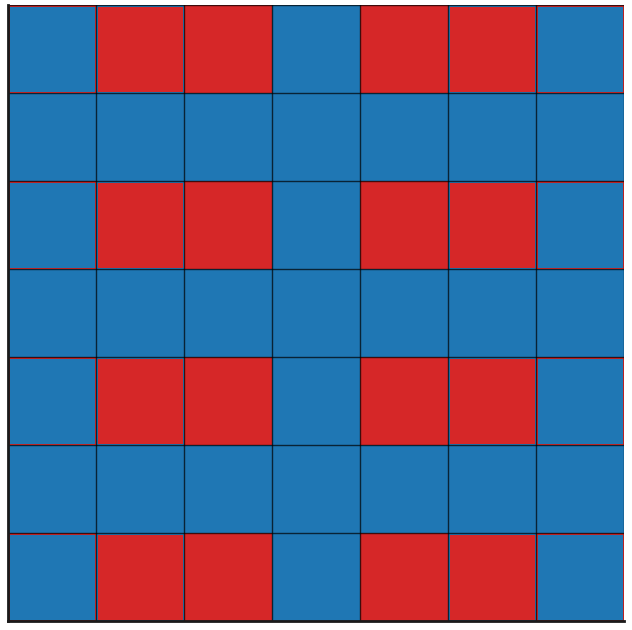
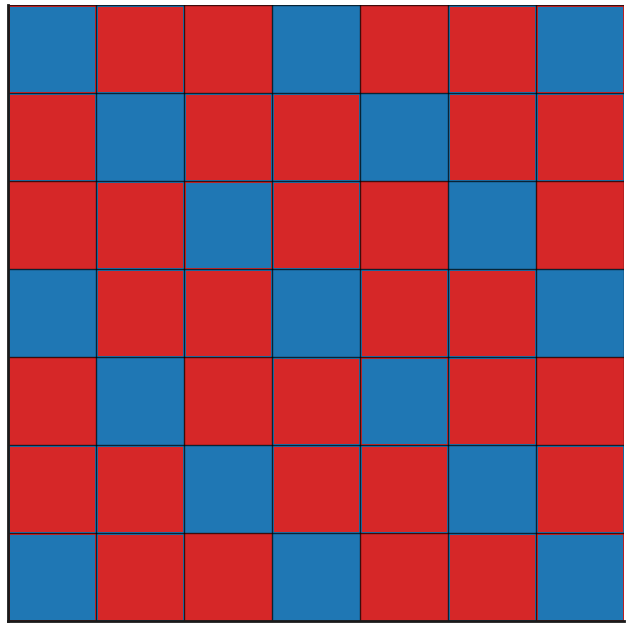
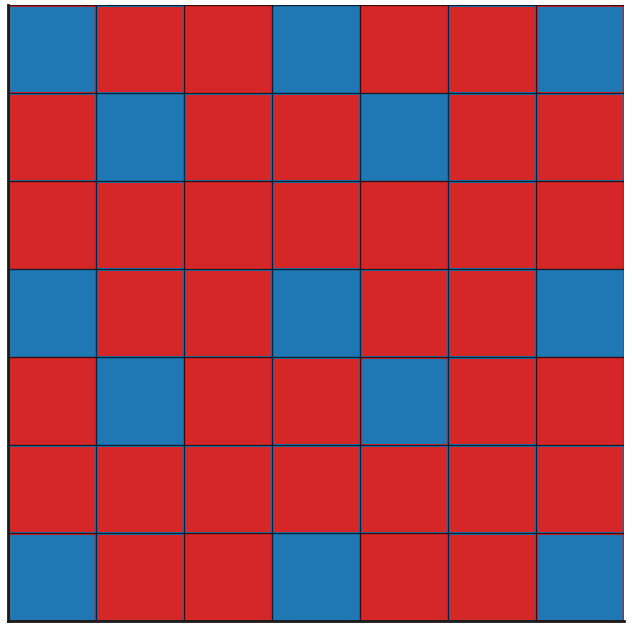
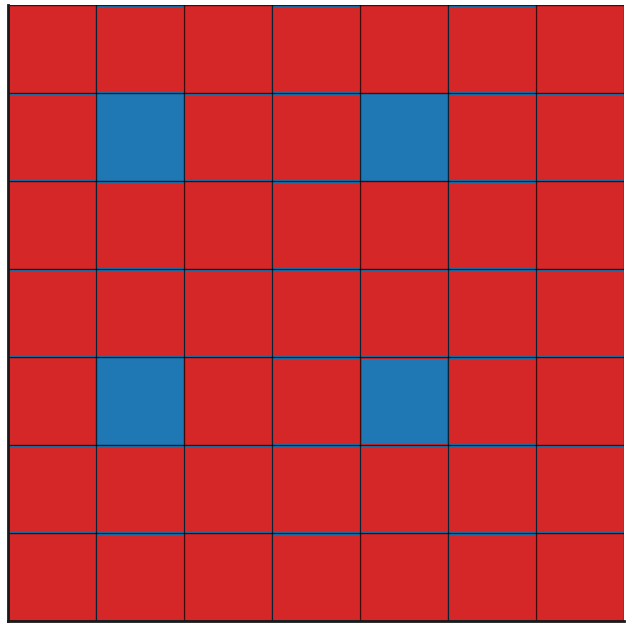
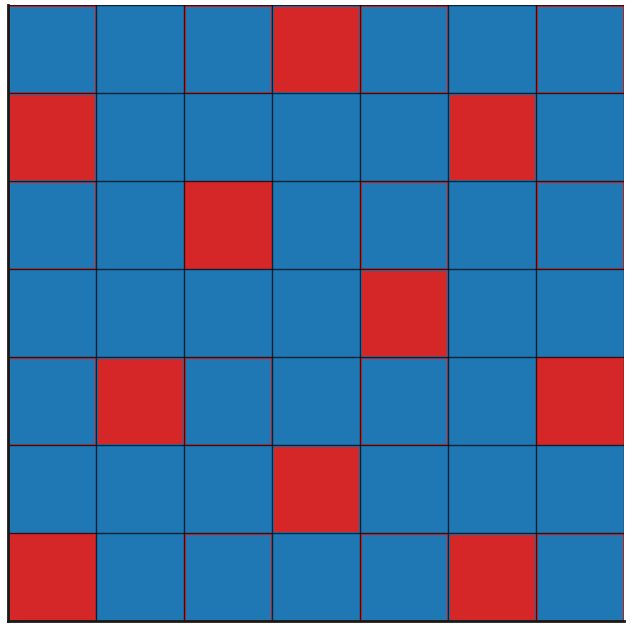
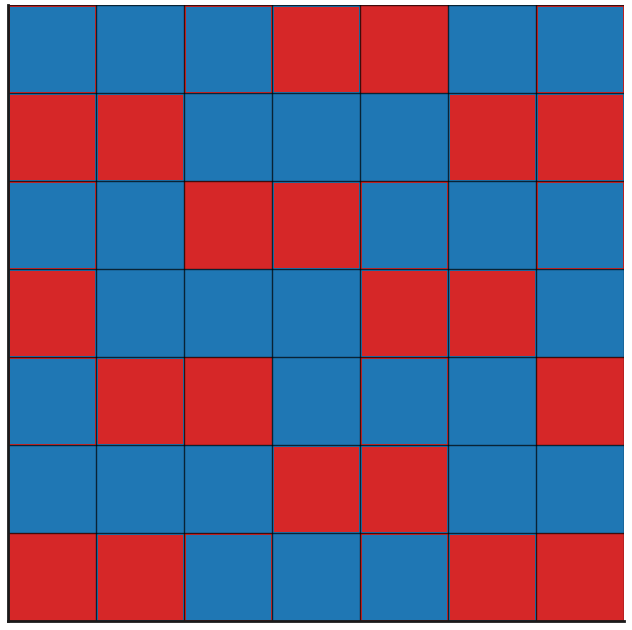
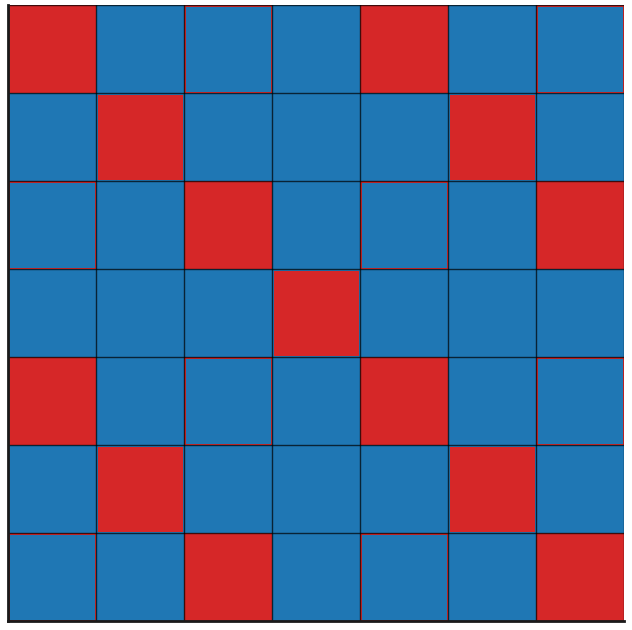
You have an infinite square grid. Each cell in this grid is either red or blue.
Can you create a pattern in which every red cell has exactly:
zero red neighbors, one red neighbor, two red neighbors, ⋮ eight red neighbors?
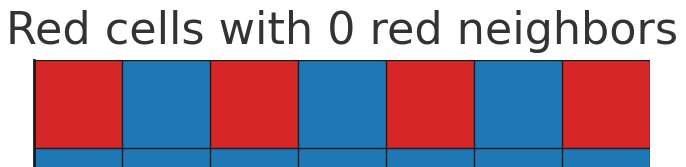
Neighbors include any cell that is directly adjacent or corner-adjacent. To avoid admitting degenerate solutions, your pattern must have at least some fraction 0<r≤1 of the total board composed of red cells.
Question row B:
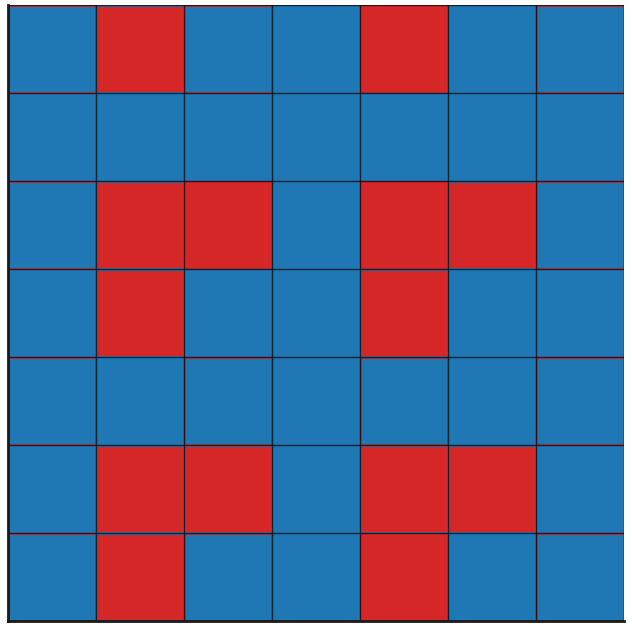
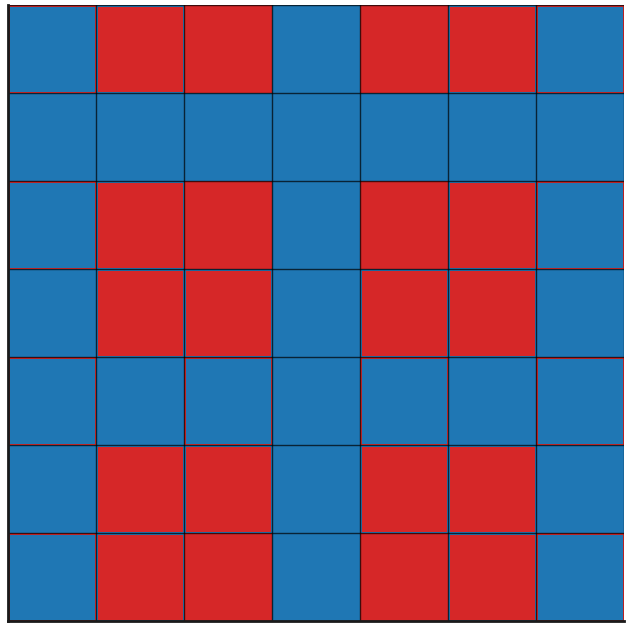
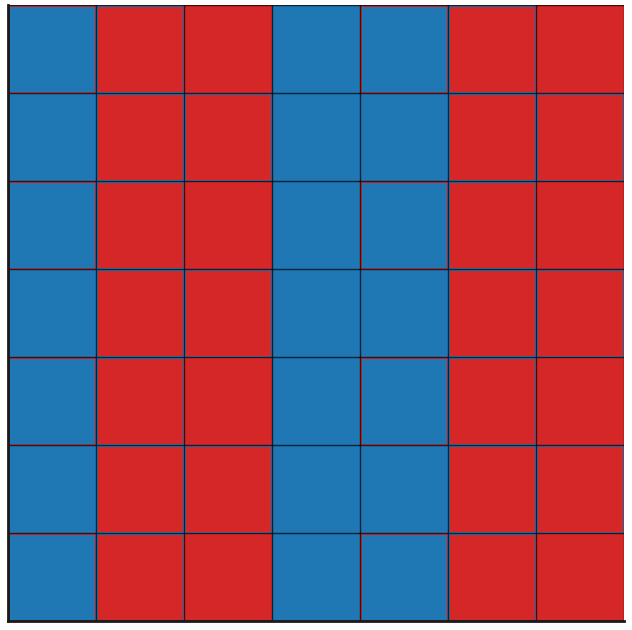
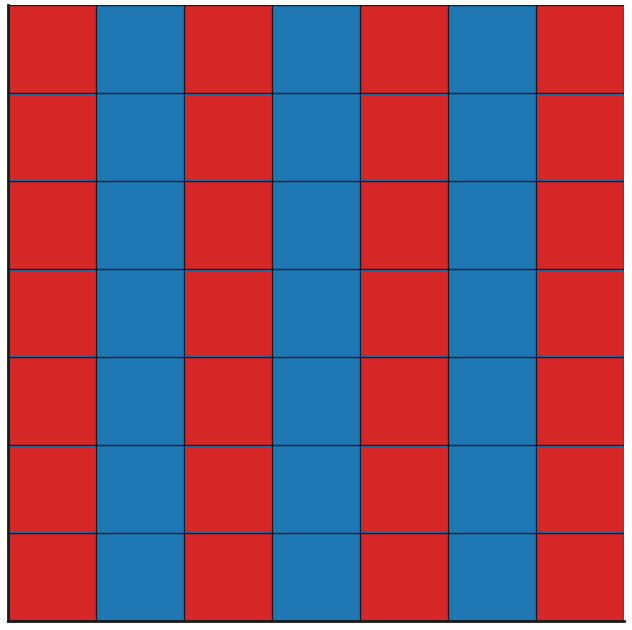
Now we will consider patterns in which every red and every blue cell has exactly the same number—nr and nb, respectively—of same colored neighbors. For example, the image above is not a valid pattern since some of the blue cells have 4 blue neighbors while others have 6.
For which pairs (nr, nb) can we construct valid patterns?
If (nr, nb) = (a,b) is possible, (nr, nb) = (b,a) is also possible, by reversing the colors.
If a red has 0 red neighbors, it will have 8 blue neighbors.
A blue edge neighbor has at least 4 blue neighbors.
A blue corner neighbor has at least 2 blue neighbors.
So the cases of (nr, nb) = (0, 0), (0,1), (0,2), (0,3) aren’t possible.
Similarly for (nr, nb) = (1,0), (2,0), (3,0).
If a red has 1 red neighbor, it will have 7 blue neighbors.
A blue edge neighbor has at least 3 blue neighbors.
A blue corner neighbor has at least 1 blue neighbor.
So the cases of (nr, nb) = (1,1), (1,2) aren’t possible.
Similarly for (nr, nb) = (2,1).
If a red has 2 red neighbors, it will have 6 blue neighbors.
A blue edge neighbor has at least 2 blue neighbors.
A blue corner neighbor might have 0 blue neighbors.
This does not exclude any new cases.
Solution with 8 red and x blue can’t work, because there’s no room for the blue. Similarly for 8 blue and x red.
If a red has 7 red neighbors, it will have 1 blue neighbor.
If this is an edge neighbor, it has at most 3 blue neighbors.
If it is a corner neighbor, it has at most 5 blue neighbors.
So the cases of (nr, nb) = (7, 6), (7,7) aren’t possible.
Similarly for (nr, nb) = (6,7).
If a red has 6 red neighbors, it will have 2 blue neighbors.
A blue edge neighbor has at most 4 blue neighbors.
A blue corner neighbor has at most 6 blue neighbors.
This does not exclude any new cases.
It is however possible to keep building. All the reds have 6 red neighbors. Going through these cases gives a blue cell with at most 5 blue neighbors. (6,6) isn’t possible.
Method: In some cases I think of a regular pattern, create it and count.
Further I built a program to create and test patterns. This is how I found the (2, 6) solution.
This week the #puzzle is: How Low (or High) Can You Go? #probabilities #volume #area #random
You’re playing a game of “high-low,” which proceeds as follows:
First, you are presented with a random number, x1, which is between 0 and 1.
A new number, x2, is about to be randomly selected between 0 and 1, independent of the first number. But before it’s selected, you must guess how x2 will compare to x1. If you think x2 will be greater than x1 you guess “high.” If you think x2 will be less than x1, you guess “low.” If you guess correctly, you earn a point and advance to the next round. Otherwise, the game is over.
If you correctly guessed how x2 compared to x1 then another random number, x3, will be selected between 0 and 1. This time, you must compare x3 to x2, guessing whether it will be “high” or “low.” If you guess correctly, you earn a point and advance to the next round. Otherwise, the game is over.
You continue playing as many rounds as you can, as long as you keep guessing correctly.
You quickly realize that the best strategy is to guess “high” whenever the previous number is less than 0.5, and “low” whenever the previous number is greater than 0.5.
With this strategy, what is the probability you will earn at least two points? That is, what are your chances of correctly comparing x2 to x1and then also correctly comparing x3 to x2?
And for extra credit:
Your friend is playing an epic game of “high-low” and has made it incredibly far, having racked up a huge number of points.
Given this information, and only this information, what is the probability that your friend wins the next round of the game?
As there is no history in probabilities, I simply need to look at 2 guesses in a row. So this time we’re looking at the good part of the area of a unit square. The first guess can be anything. See Desmos for calculation of the area: 0.75.
Just to make absolutely sure, I wrote a small program to simulate winning a lot of times in a row. Behaves as expected.
Alternate answer: My friend is cheating. The probability is 100%.
I decided to take another look at the data. Wrote a better program. Among other things, it produced data for a spreadsheet. What do you know! The data skews somewhat. There’s a good chance, the latest number drawn was in the middle, was close to 0.5. This has an effect on whether my next guess will be correct. My program says:
Probability for win at length 10: 0.72113
Probability for win at length 20: 0.72152
Probability for win at length 30: 0.71378
So instead of 0.75 (or 1), it appears the probability is 0.71 or 0.72.

 er svært at komme udenom. Etableret i 1935 på en enkelt adresse breder det sig i dag i flere nabobygninger også, og vi skulle (fra værelse 150) krydse gågaden for at komme til morgenmad. Det var dog også lidt en udfordring på første dag. Bookingen snakkede om Centrum 24-7. Kortet snakkede om Best Western. Og da vi så stod der, så sagde baldakinen Palads. Det var sådan set rigtigt alt sammen, men en kende forvirrende.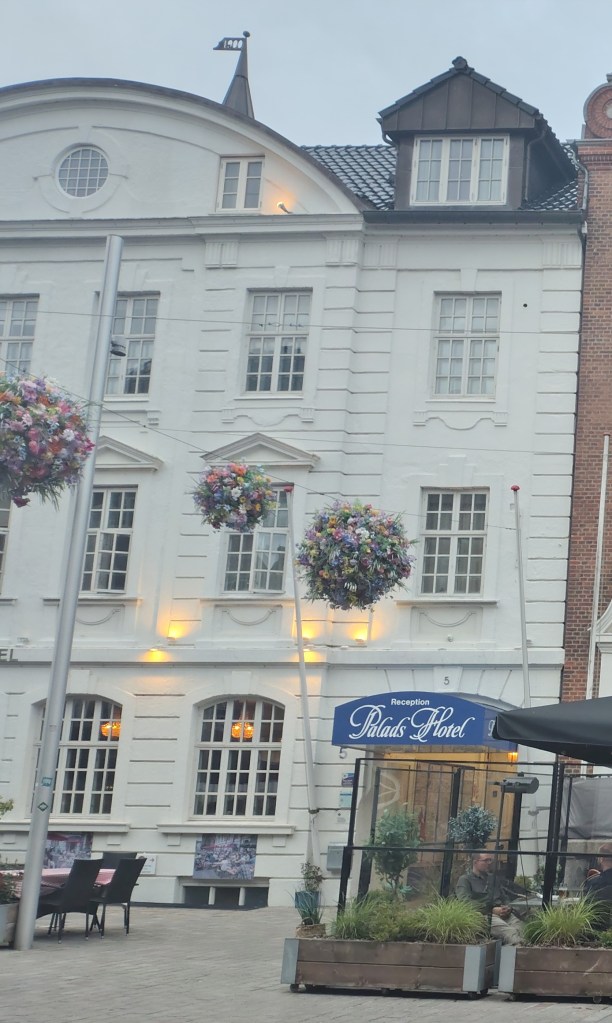



















 Stuff from ommadawn.dk (Lise Andreasen)